Macros for Muscle Gain: Complete Bulking Nutrition Guide
Reviewed by Dr. Michael Torres, PhD
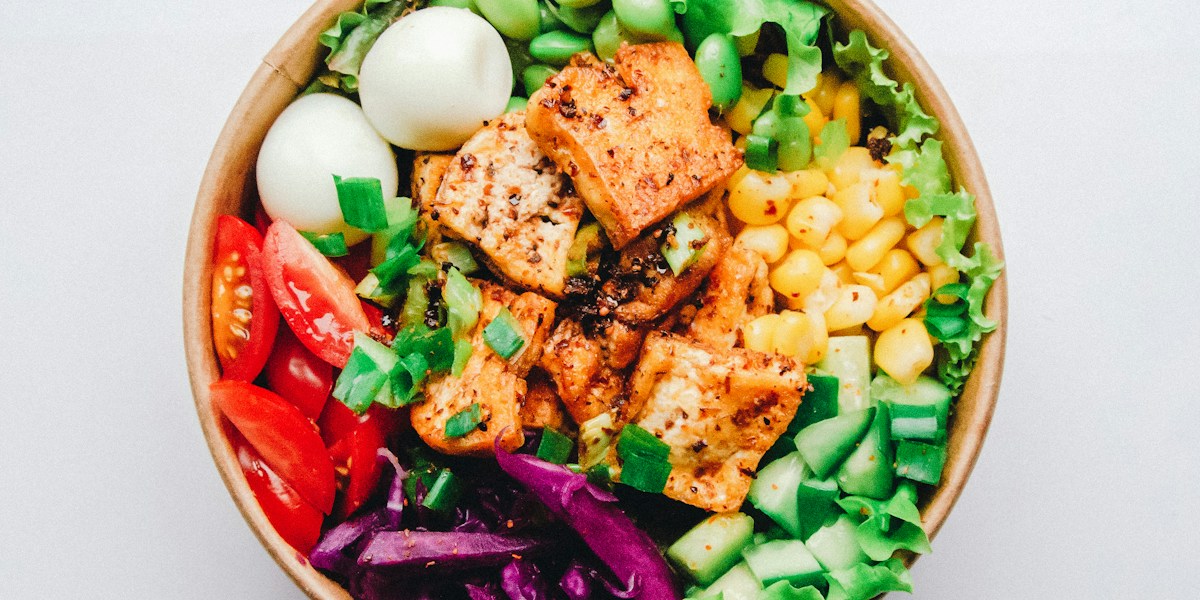
Building muscle isn’t just about lifting heavy things. It’s about what happens when you leave the gym—specifically, what you eat.
Your macros determine whether your body has the raw materials to build new muscle tissue or whether your training goes to waste. Get them wrong, and you’ll either spin your wheels gaining nothing or pack on more fat than muscle.
This guide breaks down exactly how to set up your macros for efficient, lean muscle gain.
The Science of Muscle Building
Before diving into numbers, let’s understand what your body needs to grow.
What Actually Builds Muscle
Muscle growth (hypertrophy) happens when:
- Mechanical tension — You stress your muscles through resistance training
- Metabolic stress — You create fatigue through training volume
- Muscle damage — You create microscopic tears in muscle fibers
But the training is only the stimulus. The actual building happens during recovery, and that requires:
- Adequate protein — The building blocks (amino acids)
- Adequate calories — The energy to build new tissue
- Adequate rest — Time for the process to occur
Without proper nutrition, training stimulus doesn’t translate to muscle growth. You’re tearing down tissue without the materials to rebuild it bigger.
The Caloric Surplus Reality
Here’s the truth that many people don’t want to hear: building muscle optimally requires eating more than you burn.
Why a surplus matters:
- Muscle tissue is metabolically expensive to build and maintain
- Your body prioritizes survival functions first
- In a deficit, your body focuses on preservation, not construction
- Building new tissue requires extra energy
The exception: Beginners, those returning from a layoff, and those with significant body fat can build muscle while in a deficit or at maintenance. But this becomes increasingly difficult as you advance.
The ideal surplus: 200-400 calories above maintenance. More isn’t better—excess calories beyond what you can use for muscle building just get stored as fat.
How Fast Can You Actually Build Muscle?
Realistic muscle gain rates:
| Training Status | Monthly Muscle Gain | Annual Potential |
|---|---|---|
| Beginner (Year 1) | 1.5-2.5 lbs | 15-25 lbs |
| Intermediate (Year 2-3) | 0.75-1.5 lbs | 8-15 lbs |
| Advanced (Year 4+) | 0.25-0.75 lbs | 3-8 lbs |
Women typically gain at about half these rates due to lower testosterone.
Key insight: If you’re gaining 4+ lbs per month, most of that is fat, not muscle. Muscle building is a slow process—there’s no shortcut.
The Muscle-Building Macro Formula
Here’s exactly how to set up your macros for muscle gain.
Step 1: Calculate Your Maintenance Calories
Before you can set a surplus, you need to know your starting point.
Methods:
- TDEE calculator — Quick estimate based on activity level Macro Calculator
- Track and observe — Eat normally for 2 weeks, track everything, see what maintains your weight
- Formula — Bodyweight × 14-16 (depending on activity level)
For most active men training to build muscle, maintenance is typically:
- 150 lbs: 2,100-2,400 calories
- 175 lbs: 2,400-2,800 calories
- 200 lbs: 2,800-3,200 calories
For women:
- 120 lbs: 1,700-1,900 calories
- 140 lbs: 1,900-2,200 calories
- 160 lbs: 2,200-2,500 calories
Step 2: Set Your Surplus
The sweet spot: 200-400 calories above maintenance
| Approach | Surplus | Best For |
|---|---|---|
| Conservative | 200-250 cal | Those prone to fat gain, intermediate/advanced lifters |
| Moderate | 300-400 cal | Most people, beginners |
| Aggressive | 500+ cal | Very hard gainers who struggle to gain any weight |
Why not more?
Your body can only build so much muscle per day. Eating 1,000 calories over maintenance won’t build muscle faster—it’ll just add more fat.
The math: Building 1 lb of muscle requires roughly 2,500 calories over time. At 300 cal surplus, that’s about 8-9 days per pound of potential muscle—which aligns with realistic gains of 1-2 lbs per month.
Step 3: Set Protein (The Muscle Builder)
Target: 0.8-1.2g per pound of bodyweight
Protein provides the amino acids that literally become your muscle tissue. This is non-negotiable.
Why this range?
Research consistently shows 0.7-1.0g/lb is sufficient for muscle growth. We recommend 0.8-1.2g to build in a buffer for:
- Imperfect tracking
- Variable protein quality
- Individual differences
- Optimal satiety
Where in the range?
| Situation | Protein Target |
|---|---|
| Lean bulk, low body fat | 1.0-1.2g/lb |
| Standard muscle building | 0.9-1.0g/lb |
| Higher body fat | 0.8-0.9g/lb |
Practical targets:
| Body Weight | Protein Target |
|---|---|
| 140 lbs | 125-160g |
| 160 lbs | 140-180g |
| 180 lbs | 160-200g |
| 200 lbs | 175-220g |
| 220 lbs | 195-240g |
Important: Going significantly above 1.2g/lb doesn’t provide additional muscle-building benefit. Those calories are better used for carbs and fats.
Step 4: Set Fat (The Hormone Supporter)
Target: 0.3-0.4g per pound of bodyweight
Fat is essential for:
- Testosterone production (critical for muscle building)
- Absorption of fat-soluble vitamins
- Cell membrane health
- Satiety
Where in the range?
For muscle building, the lower end (0.3g/lb) works well because it leaves more room for carbs, which fuel training. However, don’t go below this—hormone production suffers.
Practical targets:
| Body Weight | Fat Target |
|---|---|
| 140 lbs | 42-56g |
| 160 lbs | 48-64g |
| 180 lbs | 54-72g |
| 200 lbs | 60-80g |
| 220 lbs | 66-88g |
Step 5: Fill Remaining Calories with Carbs (The Fuel)
After protein and fat, carbs fill the remaining calories.
Why carbs matter for muscle building:
- Fuel for training — High-intensity lifting runs on carbs (glycogen)
- Protein sparing — Adequate carbs mean protein can be used for building, not energy
- Recovery — Carbs replenish glycogen after training
- Anabolic environment — Carbs raise insulin, which is anabolic
How to calculate:
- Total calories - (protein calories + fat calories) = carb calories
- Carb calories ÷ 4 = grams of carbs
Example: 180 lb man, 2,900 calories for muscle building
- Protein: 180g × 4 cal = 720 calories
- Fat: 60g × 9 cal = 540 calories
- Remaining: 2,900 - 720 - 540 = 1,640 calories
- Carbs: 1,640 ÷ 4 = 410g
Sample Muscle-Building Macro Setups
Example 1: Skinny Beginner Looking to Build Mass
Stats:
- Male, 22 years old
- Height: 5’9”
- Weight: 145 lbs
- Activity: Lifting 4x/week
- Goal: Build first 20 lbs of muscle
Calculations:
- TDEE: ~2,200 calories
- Target: 2,550 calories (+350 surplus)
Macros:
| Macro | Grams | Calories | Percentage |
|---|---|---|---|
| Protein | 155g | 620 | 24% |
| Fat | 50g | 450 | 18% |
| Carbs | 370g | 1,480 | 58% |
Why this works:
- Higher surplus because he’s a hard gainer
- Very high carbs to fuel training and support growth
- Adequate protein for his size
- Lower fat to leave room for carbs
Food focus: Needs to prioritize eating frequently. Classic mistake for skinny guys is thinking they eat a lot when they actually don’t.
Example 2: Intermediate Lifter Adding Quality Mass
Stats:
- Male, 30 years old
- Height: 5’11”
- Weight: 185 lbs
- Activity: Lifting 5x/week
- Goal: Add 8-10 lbs of lean mass this year
Calculations:
- TDEE: ~2,800 calories
- Target: 3,100 calories (+300 surplus)
Macros:
| Macro | Grams | Calories | Percentage |
|---|---|---|---|
| Protein | 200g | 800 | 26% |
| Fat | 65g | 585 | 19% |
| Carbs | 430g | 1,720 | 55% |
Why this works:
- Moderate surplus prevents excessive fat gain
- High protein for his training volume
- High carbs for 5x/week training
- Room to increase if gains stall
Example 3: Woman Building Her First Significant Muscle
Stats:
- Female, 28 years old
- Height: 5’5”
- Weight: 130 lbs
- Activity: Lifting 4x/week
- Goal: Build noticeable muscle, “toned” look
Calculations:
- TDEE: ~1,900 calories
- Target: 2,150 calories (+250 surplus)
Macros:
| Macro | Grams | Calories | Percentage |
|---|---|---|---|
| Protein | 120g | 480 | 22% |
| Fat | 55g | 495 | 23% |
| Carbs | 295g | 1,180 | 55% |
Why this works:
- Smaller surplus matches slower female muscle gain rate
- Adequate protein for muscle building
- Slightly higher fat percentage for hormonal health
- Plenty of carbs for training fuel
Example 4: The Advanced Lifter Making Slow Gains
Stats:
- Male, 35 years old
- Height: 6’0”
- Weight: 210 lbs
- Activity: Lifting 6x/week (serious training)
- Goal: Add 3-5 lbs of muscle this year
Calculations:
- TDEE: ~3,200 calories
- Target: 3,400 calories (+200 surplus)
Macros:
| Macro | Grams | Calories | Percentage |
|---|---|---|---|
| Protein | 210g | 840 | 25% |
| Fat | 75g | 675 | 20% |
| Carbs | 470g | 1,880 | 55% |
Why this works:
- Small surplus—advanced lifters can’t gain muscle quickly
- High protein for his size and training demands
- Very high carbs for training volume
- Conservative approach prevents unnecessary fat gain
What to Eat: Best Foods for Muscle Building
High-Protein Muscle Builders
Lean proteins (build around these):
| Food | Protein | Calories | Notes |
|---|---|---|---|
| Chicken breast | 31g per 4oz | 140 | Staple for a reason |
| Turkey breast | 29g per 4oz | 135 | Great variety |
| White fish | 25g per 4oz | 110 | Very lean |
| Shrimp | 20g per 4oz | 85 | Lowest calorie |
| Egg whites | 11g per cup | 50 | Pure protein |
Higher-fat proteins (good in moderation):
| Food | Protein | Calories | Notes |
|---|---|---|---|
| Salmon | 25g per 4oz | 230 | Great omega-3s |
| Whole eggs | 6g each | 70 | Complete nutrition |
| Ground beef (90/10) | 22g per 4oz | 200 | Natural creatine |
| Steak | 28g per 4oz | 180-250 | Varies by cut |
| Chicken thighs | 24g per 4oz | 180 | More flavor |
Convenient proteins:
| Food | Protein | Notes |
|---|---|---|
| Greek yogurt | 20g per cup | Great for snacks |
| Cottage cheese | 14g per ½ cup | Casein—good before bed |
| Protein powder | 20-25g | Convenient gap-filler |
| Deli meat | 12g per 3oz | Easy sandwiches |
Quality Carb Sources
Complex carbs (primary fuel):
- White rice (45g per cup cooked) — Easy to digest, great post-workout
- Brown rice (45g per cup cooked) — More fiber and nutrients
- Oats (27g per ½ cup dry) — Filling, great for breakfast
- Potatoes (37g per medium) — Nutrient dense
- Sweet potatoes (27g per medium) — Added vitamins
- Pasta (43g per cup cooked) — Calorie-dense for hard gainers
- Bread (15g per slice) — Convenient
Fruits (micronutrients + quick energy):
- Bananas (27g each) — Perfect pre/post workout
- Berries (15g per cup) — Antioxidants
- Apples (25g each) — Fiber
- Oranges (15g each) — Vitamin C
Healthy Fat Sources
- Olive oil (14g per tbsp) — Cook with it
- Avocado (12g per half) — Nutrient-dense
- Nuts (14-18g per oz) — Easy calories
- Nut butters (16g per 2 tbsp) — Convenient
- Fatty fish — Doubles as protein source
- Whole eggs — Doubles as protein source
Protein: The Complete Guide Carbohydrates Explained Healthy Fats: The Complete Guide
Meal Timing for Muscle Building
Does when you eat matter? For muscle building, somewhat.
Pre-Workout Nutrition
Goal: Fuel your session and provide amino acids for muscle protection
Timing: 1-3 hours before training
What to eat:
- 20-40g protein
- 40-80g carbs
- Low fat (slows digestion)
Example meals:
- Chicken breast + rice (2 hours before)
- Protein shake + banana (1 hour before)
- Greek yogurt + oats (2 hours before)
Post-Workout Nutrition
Goal: Begin recovery, replenish glycogen, provide protein for rebuilding
Timing: Within 2-3 hours of training
What to eat:
- 30-50g protein
- 50-100g carbs (more after intense sessions)
- Fat is fine here
Example meals:
- Steak + baked potato
- Chicken + rice + vegetables
- Protein shake + banana + peanut butter
The “Anabolic Window” Truth
The 30-minute post-workout anabolic window is largely a myth. Your body stays in an elevated muscle protein synthesis state for 24-48 hours after training.
What matters more:
- Total daily protein intake
- Spreading protein across 3-5 meals
- Not training completely fasted for long sessions
The practical approach: Eat a solid meal within a few hours of training. Don’t stress about getting a shake down within minutes of your last rep.
Protein Distribution Throughout the Day
Research suggests spreading protein intake across multiple meals optimizes muscle protein synthesis.
The ideal: 4-5 meals with 30-50g protein each
Example for 200g protein target:
| Meal | Timing | Protein |
|---|---|---|
| Breakfast | 7 AM | 40g |
| Lunch | 12 PM | 45g |
| Pre-workout | 3 PM | 35g |
| Post-workout dinner | 7 PM | 50g |
| Before bed | 10 PM | 30g |
| Total | 200g |
Tracking Progress and Adjusting
How to Know If Your Bulk Is Working
Positive signs:
- Weight trending up 0.5-1 lb per week (1-2 lbs for beginners)
- Strength increasing over time
- Muscles looking fuller
- Lifts progressing
- Energy is good
Warning signs (too aggressive):
- Gaining 2+ lbs per week
- Belly growing faster than chest
- Getting winded going upstairs
- Clothes tight in the wrong places
Warning signs (too conservative):
- Weight not moving at all
- No strength increases
- Looking flat in the gym
- Always hungry and low energy
When to Adjust Macros
Increase calories if:
- Weight hasn’t moved in 2+ weeks
- Strength is plateauing
- You’re hungry all the time
- Energy is low
Decrease calories if:
- Gaining more than 1 lb/week (intermediate+)
- Obvious fat gain outpacing muscle
- Clothes getting tight in the midsection
How much to adjust: 100-200 calories at a time. Give it 2 weeks before adjusting again.
The Importance of Patience
Muscle building is slow. Really slow.
Realistic timeline:
- 1-2 months: You feel better, strength goes up
- 3-4 months: You start noticing changes
- 6-12 months: Others start noticing
- 2-3 years: Dramatic transformation
The biggest mistake is expecting rapid change and giving up when it doesn’t happen. Trust the process.
Bulk Phases: When to Cut
The Bulk-Cut Cycle
Most people alternate between:
- Bulk phases: Caloric surplus, focus on building muscle
- Cut phases: Caloric deficit, focus on losing fat
Why cycle?
Building muscle and losing fat simultaneously is inefficient for most experienced lifters. Dedicated phases are more effective.
When to End Your Bulk
End your bulk when:
- Body fat gets uncomfortably high (15-18% for men, 25-28% for women)
- You’ve achieved your muscle-building goal
- You’re losing definition and it bothers you
- You’ve been bulking for 4-6+ months
Transition to Cutting
Don’t crash into a cut. Gradually reduce calories:
Week 1: Reduce to maintenance
Week 2: Reduce by 200 calories
Week 3: Reduce by another 200 calories
Continue until you’re in your target deficit (400-600 below maintenance)
During your cut:
- Keep protein high (1.0-1.2g/lb)
- Reduce carbs and/or fats to create deficit
- Continue training hard
- Accept strength may plateau or slightly decrease
Common Muscle-Building Mistakes
Mistake #1: Eating Too Much (The Dreamer Bulk)
The “eat everything in sight” approach leads to:
- Excessive fat gain
- Longer cuts later
- No additional muscle gain (you max out)
- Health issues
Fix: 200-400 calorie surplus. That’s it.
Mistake #2: Eating Too Little (Spinning Wheels)
You can’t build something from nothing. If you’re not eating enough:
- No surplus for new tissue
- Body stays in maintenance mode
- Progress is painfully slow
Fix: Verify you’re actually in a surplus. Track everything for a week.
Mistake #3: Not Enough Protein
Protein is literally what muscle is made of. Without enough:
- Recovery suffers
- Muscle protein synthesis is limited
- You’ll gain more fat relative to muscle
Fix: Hit 0.8-1.2g/lb daily, every day.
Mistake #4: Neglecting Carbs
“Carbs make you fat” is a myth that kills gains. Without enough carbs:
- Training performance suffers
- Recovery is impaired
- Protein gets used for energy instead of building
Fix: Don’t fear carbs. They fuel your gains.
Mistake #5: Inconsistency
Missing workouts, skipping meals, going off track for weeks—consistency beats perfection.
Fix: Hit your macros 80-90% of the time. Don’t let a bad day become a bad week.
Mistake #6: Not Training Hard Enough
All the food in the world won’t build muscle without the training stimulus.
Fix: Progressive overload. Add weight, reps, or sets over time. Train hard.
FAQ: Muscle Building Macros
Do I need to eat in a surplus to build muscle?
For optimal muscle building, yes. Beginners and those returning from a break can build muscle at maintenance or even a slight deficit, but a surplus is more efficient for most.
How much fat gain is normal during a bulk?
Roughly 50% muscle, 50% fat is realistic for a well-executed bulk. If you’re gaining more than that, your surplus is too aggressive or your training isn’t stimulating enough growth.
Should I do “clean” or “dirty” bulk?
Neither extreme. Eat mostly whole foods (80%) but include foods you enjoy (20%). “Clean” bulking taken to extremes makes it hard to eat enough. “Dirty” bulking leads to excessive fat gain and health issues.
Can I build muscle while losing fat?
Yes, but it’s limited to:
- Beginners
- Those returning after a break
- Those with significant body fat
- When using performance-enhancing drugs
For most experienced lifters, dedicated bulk and cut cycles are more effective.
How long should I bulk for?
4-6 months is a good range. Longer bulks risk excessive fat gain. Shorter bulks may not provide enough time to see meaningful muscle growth.
What if I’m not gaining weight?
You’re not in a surplus. Period. Either your TDEE estimate is wrong or your tracking is inaccurate. Increase calories by 200-300 and reassess in 2 weeks.
Your Muscle-Building Action Plan
Step 1: Verify your training is on point
- Progressive overload program
- Training each muscle 2x per week
- Pushing close to failure
- Recovering between sessions
Step 2: Calculate your macros
- Find TDEE using our Macro Calculator
- Add 200-400 calorie surplus
- Protein: 0.8-1.2g/lb
- Fat: 0.3-0.4g/lb
- Carbs: Fill remaining calories
Step 3: Build your meals
- 4-5 meals spread throughout the day
- 30-50g protein per meal
- Quality carbs around training
- Healthy fats included daily
Step 4: Track and adjust
- Weigh yourself weekly (same conditions)
- Look for 0.5-1 lb gain per week
- Adjust calories if progress stalls or gets too fast
- Take progress photos monthly
Step 5: Stay patient and consistent
- This takes months and years, not weeks
- 80-90% compliance beats 100% for 2 weeks then quitting
- Trust the process
Building muscle is simple. Not easy—simple. Train hard, eat enough protein, be in a surplus, sleep well, stay consistent. The macros outlined here give your body everything it needs. Now it’s on you to execute.
Continue Your Learning:
- What Are Macronutrients? — Master the fundamentals
- Protein: The Complete Guide — Deep dive on the muscle-building macro
- Counting Macros for Beginners — Step-by-step starter guide
- High Protein Macro Meals — Meal ideas for building muscle
Last updated: February 2026

Free Macro Calculator | Calculate Your Macros in 60 Seconds
Use our free macro calculator to find your ideal protein, carb, and fat intake. Get personalized macros for weight loss, muscle gain, or maintenance.


What Are Macronutrients? Everything You Need to Know
Learn what macronutrients are, why they matter, and how protein, carbs, and fats fuel your body. The ultimate beginner's guide to understanding macros.
Macros for Weight Loss: The Complete Guide to Losing Fat
Learn the best macro ratios for weight loss, how to calculate your fat loss macros, and the science behind why tracking macros beats calorie counting.
Disclaimer: This content is for informational purposes only. Consult a healthcare provider before making changes to your diet.