Almonds Macros: Complete Nutrition Facts & Calories
Reviewed by Sarah Chen, MS, RD
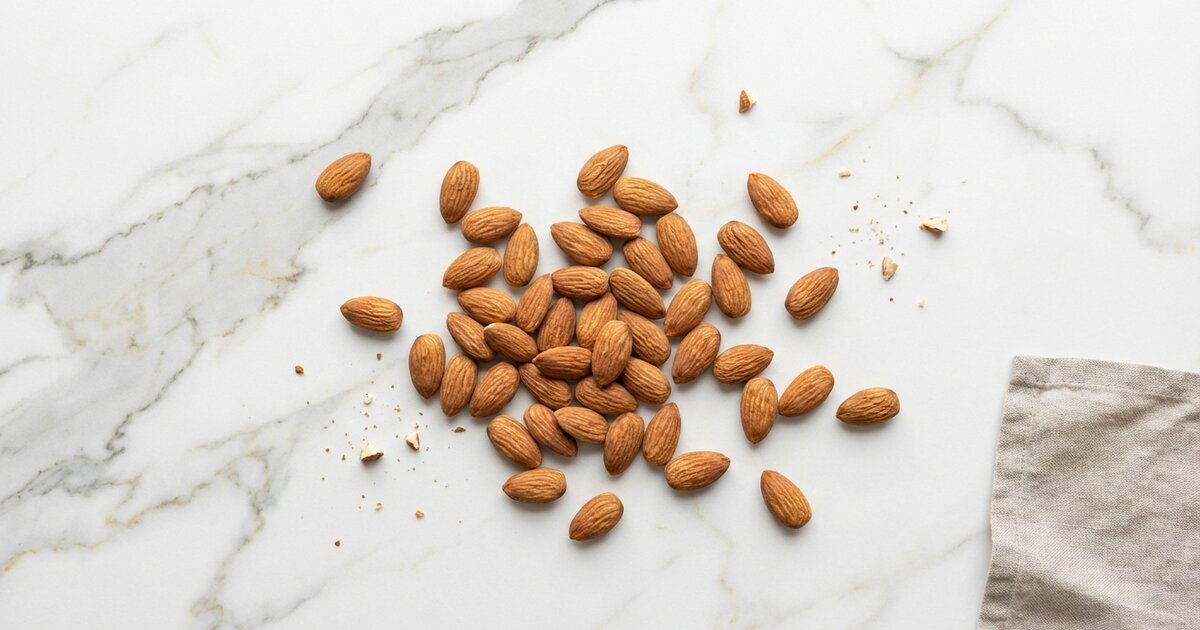
Almonds are one of the most popular healthy snacks—and for good reason. They pack protein, healthy fats, and fiber into a convenient, portable package. But they’re also calorie-dense, which makes tracking them essential if you’re counting macros.
The difference between a handful and a measured ounce can be 100+ calories. This guide breaks down almond macros exactly—by count, weight, and form—so you can enjoy almonds without accidentally blowing your calorie budget.
Related: Learn more about what macros are and how they impact your diet.
Almond Macros: Quick Reference
Here’s what you need to know at a glance for whole raw almonds.
By Weight
| Serving | Calories | Protein | Carbs | Fat | Fiber |
|---|---|---|---|---|---|
| 100g | 579 | 21g | 22g | 50g | 12.5g |
| 1 oz (28g) | 164 | 6g | 6g | 14g | 3.5g |
| 1/4 cup (36g) | 207 | 7.5g | 8g | 18g | 4.5g |
| 1/2 cup (72g) | 414 | 15g | 16g | 36g | 9g |
By Count
| Count | Weight | Calories | Protein | Fat |
|---|---|---|---|---|
| 1 almond | 1.2g | 7 | 0.26g | 0.6g |
| 5 almonds | 6g | 35 | 1.3g | 3g |
| 10 almonds | 12g | 70 | 2.5g | 6g |
| 15 almonds | 18g | 105 | 3.8g | 9g |
| 23 almonds | 28g | 164 | 6g | 14g |
| 30 almonds | 36g | 210 | 7.5g | 18g |
Key insight: The standard “serving” of 23 almonds equals about 1 ounce (28g). This is what nutrition labels reference.
Why Counting Almonds Matters
Almonds are one of the easiest foods to overeat without realizing it. Here’s why precision matters:
The “Handful” Problem
| What You Think | Actual Amount | Calories |
|---|---|---|
| Small handful | ~15 almonds | 105 |
| Medium handful | ~25 almonds | 175 |
| Large handful | ~40 almonds | 280 |
| ”A few handfuls” | ~75 almonds | 525 |
A few mindless handfuls while working can add 500+ calories—an entire meal’s worth.
The Best Way to Track Almonds
Option 1: Count them
- Most accurate for whole almonds
- 23 almonds = 1 oz = 164 calories
- Count them out and stop
Option 2: Weigh them
- Best for sliced, slivered, or when counting is impractical
- 28g = 164 calories
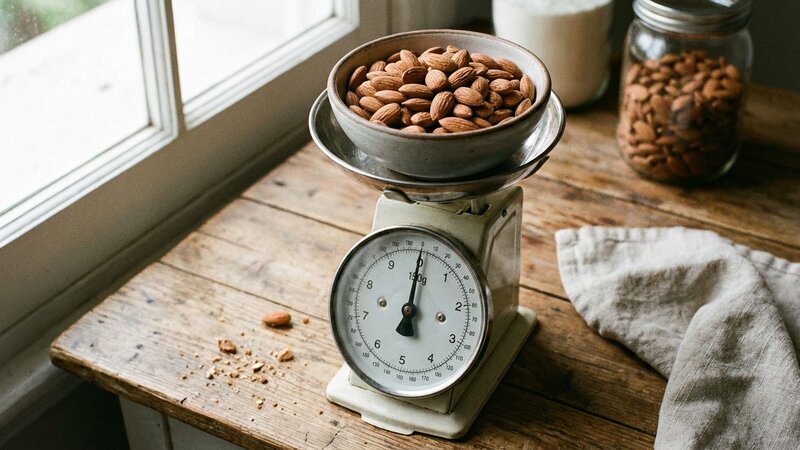
- Use a food scale
Option 3: Pre-portion
- Measure once, grab portions later
- Divide bulk almonds into 1 oz bags
- Eliminates daily measuring
Almond Types and Their Macros
Different preparations have slightly different macros:
Per 1 oz (28g) Serving
| Type | Calories | Protein | Carbs | Fat | Notes |
|---|---|---|---|---|---|
| Raw whole | 164 | 6g | 6g | 14g | Baseline |
| Dry roasted | 170 | 6g | 5.5g | 15g | Slightly more fat |
| Oil roasted | 172 | 6g | 5.5g | 16g | Added oil |
| Honey roasted | 168 | 5g | 8g | 14g | Added sugar |
| Smoked | 170 | 6g | 5.5g | 15g | Flavor only |
| Blanched (no skin) | 165 | 6g | 6g | 14g | Same macros |
| Sliced | 164 | 6g | 6g | 14g | Same as whole |
| Slivered | 164 | 6g | 6g | 14g | Same as whole |
Key insight: The macro differences between preparations are minimal. Raw vs. roasted matters less than portion size.
Flavored Almonds (Watch Out)
Flavored almonds often have added sugar, oil, and salt:
| Flavor | Calories/oz | Added Sugars |
|---|---|---|
| Wasabi | 160 | 1g |
| Sriracha | 165 | 2g |
| Cocoa dusted | 170 | 4g |
| Cinnamon sugar | 175 | 5g |
| Honey BBQ | 180 | 6g |
Recommendation: Stick with raw or dry-roasted for cleanest macros.
Almond Butter Macros
Almond butter concentrates almonds into a spreadable form—making it even easier to overeat.
Basic Almond Butter Macros
| Serving | Calories | Protein | Carbs | Fat | Fiber |
|---|---|---|---|---|---|
| 1 tbsp (16g) | 98 | 3.4g | 3g | 9g | 1.6g |
| 2 tbsp (32g) | 196 | 6.8g | 6g | 18g | 3.2g |
| 1/4 cup (64g) | 392 | 13.6g | 12g | 36g | 6.4g |
Almond Butter vs. Peanut Butter
| Per 2 tbsp | Almond Butter | Peanut Butter |
|---|---|---|
| Calories | 196 | 188 |
| Protein | 6.8g | 8g |
| Carbs | 6g | 6g |
| Fat | 18g | 16g |
| Fiber | 3.2g | 2g |
Bottom line: Almond butter has slightly more calories and fat, slightly less protein. The difference is minimal—choose based on taste and price.
Almond Butter Tips
Measuring properly:
- Don’t eyeball—a heaping tablespoon can be 150+ calories
- Level your spoon
- Or weigh: 32g = 2 tbsp
Natural vs. processed:
- Natural: just almonds (maybe salt)
- Processed: may have sugar, oil, stabilizers
- Check ingredients—natural is usually cleaner macros
Almond Flour and Almond Milk
Almond Flour Macros
Popular in keto and gluten-free baking:
| Serving | Calories | Protein | Carbs | Fat | Fiber | Net Carbs |
|---|---|---|---|---|---|---|
| 1/4 cup (28g) | 160 | 6g | 6g | 14g | 3g | 3g |
| 1/2 cup (56g) | 320 | 12g | 12g | 28g | 6g | 6g |
| 1 cup (112g) | 640 | 24g | 24g | 56g | 12g | 12g |
Baking note: Almond flour has dramatically different macros than wheat flour (120 cal vs 455 cal per cup), but also behaves differently. Recipes aren’t directly interchangeable.
Almond Milk Macros
Much lower calorie than whole almonds due to water dilution:
| Type (1 cup/240ml) | Calories | Protein | Carbs | Fat |
|---|---|---|---|---|
| Unsweetened | 30-40 | 1g | 1-2g | 2.5g |
| Original (sweetened) | 60-80 | 1g | 7-8g | 2.5g |
| Vanilla unsweetened | 30-40 | 1g | 1-2g | 2.5g |
| Chocolate | 100-130 | 2g | 18-21g | 2.5g |
Why so low? Commercial almond milk is mostly water with a small amount of almonds. A cup of almond milk might contain the equivalent of ~4 almonds.
Protein note: Despite coming from almonds, almond milk is NOT a good protein source. Use it for low-calorie milk substitution, not nutrition.
Making Almonds Work for Different Diets
Weight Loss/Cutting
Almonds can help or hurt weight loss depending on how you use them:
The good:
- High satiety per calorie (protein + fat + fiber)
- Studies show almond eaters don’t gain weight
- Convenient, no-prep snack
The risk:
- Easy to overeat by 200-400 calories
- Calorie-dense means small portions
Best practices for cutting:
- Pre-portion into 1 oz servings
- Count, don’t grab
- Eat slowly—savor each almond
- Pair with protein for greater satiety
Smart cutting snack:
- 10 almonds (70 cal) + apple (95 cal) = 165 cal, very filling
Keto/Low-Carb
Almonds are among the best keto nuts:
Net carbs per ounce: 2.5g (6g total - 3.5g fiber)
| Keto Comparison | Net Carbs/oz |
|---|---|
| Almonds | 2.5g |
| Macadamias | 1.5g |
| Pecans | 1.2g |
| Walnuts | 2g |
| Cashews | 8g |
| Pistachios | 5g |
Keto almond uses:
- Straight snacking
- Almond flour for baking
- Almond butter on celery
- Crusting for fish/chicken
High-Protein Diet
Almonds contribute protein but shouldn’t be your primary source:
Per 1 oz (164 cal):
- Protein: 6g
- Protein percentage: 15% of calories
Comparison (same calories):
| Food (164 cal) | Protein |
|---|---|
| Almonds (1 oz) | 6g |
| Chicken breast (3.5 oz) | 31g |
| Greek yogurt (1 cup) | 17g |
| Eggs (2 large) | 12g |
How to use for protein: Add almonds to meals for extra protein (not as primary source). 1 oz on a salad adds 6g protein.
Muscle Building/Bulking
Almonds shine during bulking—easy calories from healthy fats:
High-calorie almond additions:
| Addition | Calories |
|---|---|
| 1/4 cup almonds in oatmeal | 207 |
| 2 tbsp almond butter in smoothie | 196 |
| Handful with protein shake | 164 |
Bulking snack:
- 1.5 oz almonds (246 cal)
- 1 oz dark chocolate (155 cal)
- = 400 calories, portable, no prep
Almonds vs. Other Nuts
How do almonds stack up against the competition?
Per 1 oz (28g)
| Nut | Calories | Protein | Carbs | Fat | Fiber |
|---|---|---|---|---|---|
| Almonds | 164 | 6g | 6g | 14g | 3.5g |
| Walnuts | 185 | 4.3g | 4g | 18.5g | 1.9g |
| Cashews | 157 | 5.2g | 8.6g | 12.4g | 0.9g |
| Pistachios | 159 | 5.7g | 7.7g | 12.9g | 3g |
| Pecans | 196 | 2.6g | 4g | 20g | 2.7g |
| Macadamias | 204 | 2.2g | 4g | 21g | 2.4g |
| Peanuts* | 161 | 7g | 4.6g | 14g | 2.4g |
*Technically a legume
Why Choose Almonds?
Best protein-to-calorie ratio: 6g protein for 164 calories beats most nuts
Highest fiber: 3.5g per ounce (tied with pistachios)
Moderate calories: Not the lowest, but not the highest either
Most versatile: Works whole, sliced, as flour, butter, or milk
When to Choose Other Nuts
- Lowest carb: Pecans, macadamias
- Highest protein: Peanuts (technically legumes)
- Most omega-3s: Walnuts
- Best for snacking portions: Pistachios (in-shell slows eating)
Meal Ideas with Almonds
Breakfast Additions
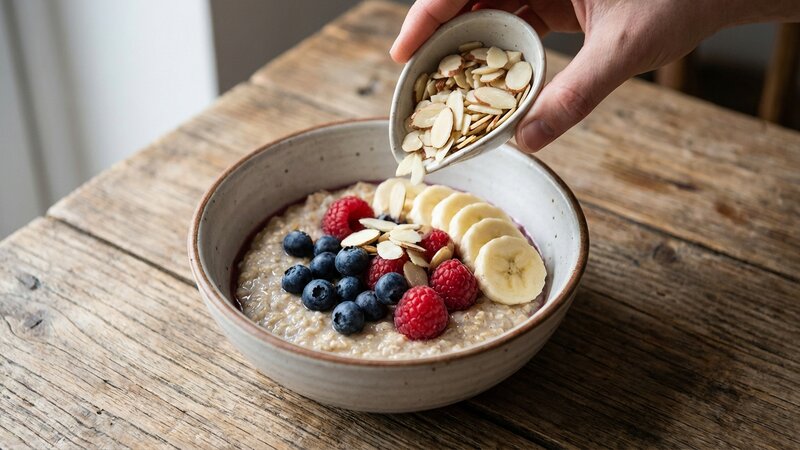
Almond-boosted oatmeal:
| Ingredient | Calories | Protein |
|---|---|---|
| 1/2 cup oats | 156 | 6.8g |
| 1 oz sliced almonds | 164 | 6g |
| 1/2 banana | 53 | 0.6g |
| Total | 373 | 13.4g |
Almond butter toast:
| Ingredient | Calories | Protein |
|---|---|---|
| 2 slices whole grain bread | 160 | 8g |
| 2 tbsp almond butter | 196 | 6.8g |
| Total | 356 | 14.8g |
Snack Combinations
Protein-balanced snacks:
| Combo | Calories | Protein |
|---|---|---|
| 15 almonds + string cheese | 185 | 10g |
| 10 almonds + Greek yogurt (1/2 cup) | 140 | 14g |
| 1 oz almonds + jerky (1 oz) | 244 | 15g |
Sweet snacks:
| Combo | Calories |
|---|---|
| 12 almonds + dark chocolate (0.5 oz) | 162 |
| 1 tbsp almond butter + apple | 193 |
| Almonds (1 oz) + dried apricots (1 oz) | 232 |
Dinner Uses
Almond-crusted chicken:
| Ingredient | Calories | Protein |
|---|---|---|
| 6 oz chicken breast | 281 | 53g |
| 1/4 cup crushed almonds | 207 | 7.5g |
| 1 egg white (binder) | 17 | 3.6g |
| Total | 505 | 64g |
Salad topper:
- Add 1 oz slivered almonds to any salad
- Adds: 164 cal, 6g protein, crunch, healthy fats
Meal Prep and Storage Tips
Portion Control Strategy
Sunday prep:
- Buy bulk almonds (cheaper per ounce)
- Measure into 1 oz portions
- Store in small containers or bags
- Grab one portion = no measuring needed
Storage Guidelines
| Method | Duration | Notes |
|---|---|---|
| Pantry (sealed) | 3-4 months | Cool, dark location |
| Refrigerator | 6-12 months | Best for long-term |
| Freezer | 1-2 years | Thaw at room temp |
Signs almonds have gone bad:
- Rancid smell (like paint)
- Bitter taste
- Shriveled appearance
Buying Tips
Best value:
- Bulk bins or warehouse stores
- Raw over roasted (cheaper, same nutrition)
- Whole over sliced (cheaper, same nutrition)
Cost per serving (approximate):
| Source | Cost per oz |
|---|---|
| Bulk store | $0.40-0.60 |
| Grocery store | $0.60-0.90 |
| Pre-portioned packs | $0.90-1.50 |
Common Tracking Mistakes
Mistake #1: Grabbing Handfuls
A “handful” isn’t a measurement. What feels like 20 almonds might be 35.
Fix: Count them out or weigh them. Every time.
Mistake #2: Ignoring Almond Butter Servings
Almond butter spreads, and so do the calories. A “tablespoon” on your knife might be 1.5 or 2.
Fix: Weigh almond butter (32g = 2 tbsp) or level carefully.
Mistake #3: Forgetting Trail Mix Almonds
Mixed into trail mix, almonds get lost—but the calories don’t.
Fix: Log trail mix accurately or make your own with measured portions.
Mistake #4: Treating Almond Milk Like Almonds
Almond milk has almost no protein despite coming from almonds.
Fix: Use almond milk for low-cal dairy substitution, not protein.
Mistake #5: Not Accounting for “A Few More”
Starting at 15 almonds, having “just a few more,” then a few more = 30+ almonds.
Fix: Portion out what you’ll eat, put the bag away.
Health Benefits Beyond Macros
Per 1 oz almonds:
| Nutrient | Amount | % Daily Value |
|---|---|---|
| Vitamin E | 7.3mg | 37% |
| Magnesium | 76mg | 19% |
| Riboflavin | 0.3mg | 17% |
| Phosphorus | 136mg | 14% |
| Copper | 0.3mg | 14% |
Research-backed benefits:
- May reduce LDL cholesterol
- Supports blood sugar control
- Linked to reduced heart disease risk
- May help with weight management (despite calories)
The Bottom Line
Almonds are a nutritional powerhouse that fit most diets:
- 164 calories per ounce — Know this number
- 6g protein — Best protein-to-calorie ratio among nuts
- 14g healthy fats — Mostly monounsaturated
- 3.5g fiber — Keeps you satisfied
Key tracking rules:
- Count or weigh—never estimate
- Pre-portion for foolproof tracking
- 23 almonds = 1 oz = standard serving
- Log added almonds in recipes separately
Almonds can support weight loss or muscle gain depending on how you use them. The key is accurate tracking—because a 100-calorie estimation error is easy to make and adds up fast.
Related guides:
Related Articles

Dragonfruit Macros: Complete Nutrition Guide for Pitaya
Complete macro breakdown of dragonfruit (pitaya). Learn the calories, protein, carbs, and...
Read guide →
Bulgur Macros: Complete Nutritional Guide & Health Benefits
Discover bulgur's complete macro breakdown, nutritional benefits, and how to incorporate...
Read guide →
Radish Macros: Nutrition Facts and Health Benefits
Complete guide to radish macros and nutrition. Learn calories, protein, carbs, and health...
Read guide →Note: Nutrition values are approximate and may vary based on preparation method and source.