Avocado Macros: Complete Nutrition Breakdown
Reviewed by Dr. Michael Torres, PhD
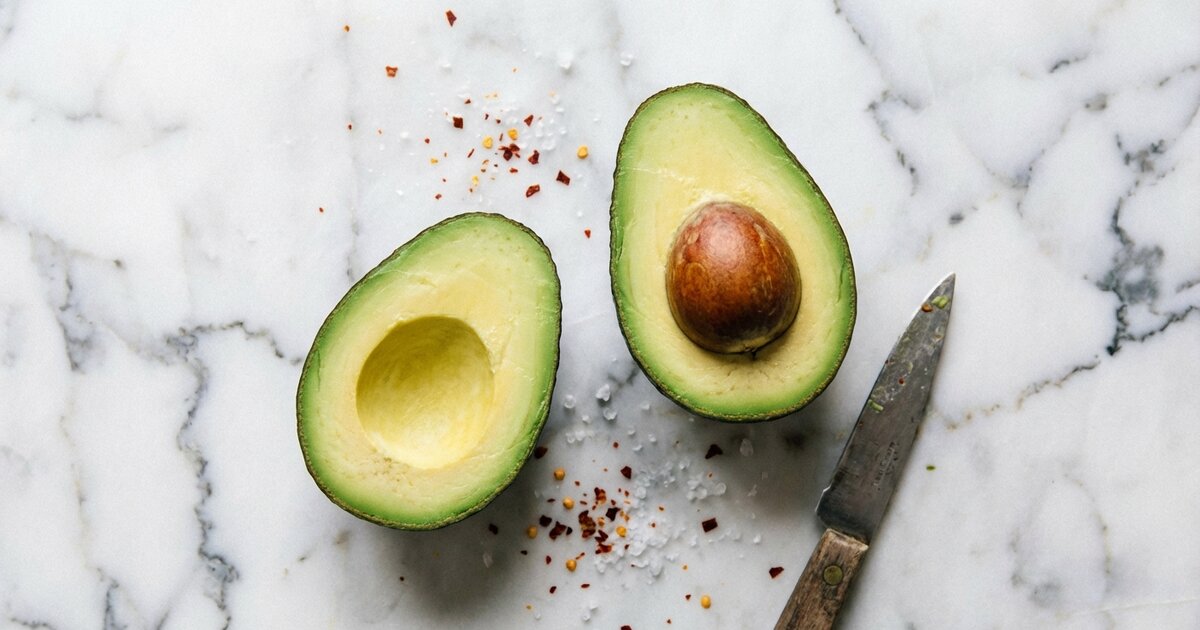
Avocados are one of the most unique foods for macro tracking. Unlike most fruits that are primarily carbohydrates, avocados are dominated by healthy fats, making them a staple for keto dieters, those seeking satiety, and anyone wanting to boost their healthy fat intake.
Quick Macro Summary
Per 100g (raw):
| Macro | Amount |
|---|---|
| Calories | 160 kcal |
| Protein | 2g |
| Carbohydrates | 8.5g |
| Fat | 15g |
| Fiber | 6.7g |
| Net Carbs | 1.8g |
Per medium avocado (200g, with pit removed):
| Macro | Amount |
|---|---|
| Calories | 320 kcal |
| Protein | 4g |
| Carbohydrates | 17g |
| Fat | 30g |
| Fiber | 13.4g |
| Net Carbs | 3.6g |
Per half avocado (100g):
| Macro | Amount |
|---|---|
| Calories | 160 kcal |
| Protein | 2g |
| Carbohydrates | 8.5g |
| Fat | 15g |
| Fiber | 6.7g |
| Net Carbs | 1.8g |
Why Avocados Are Unique
Avocados stand apart from almost every other fruit:
- 77% of calories come from fat — mostly monounsaturated
- Extremely low in sugar — only 0.7g per 100g
- High fiber content — 6.7g per 100g
- Very low net carbs — keto-friendly at 1.8g per 100g
- Good source of potassium — more than bananas
Detailed Nutritional Breakdown
Fat Profile (The Star Macronutrient)
Avocado fat is primarily healthy unsaturated fat:
| Fat Type | Per 100g | % of Total Fat |
|---|---|---|
| Total Fat | 15g | 100% |
| Monounsaturated | 9.8g | 65% |
| Polyunsaturated | 1.8g | 12% |
| Saturated | 2.1g | 14% |
Oleic acid makes up the majority of avocado fat — the same heart-healthy monounsaturated fat found in olive oil.
Carbohydrate Profile
Avocados are remarkably low in net carbs:
| Carb Component | Per 100g |
|---|---|
| Total Carbs | 8.5g |
| Fiber | 6.7g |
| Net Carbs | 1.8g |
| Sugar | 0.7g |
This makes avocados one of the most keto-friendly whole foods available.
Protein Content
While not a high-protein food, avocados provide 2g per 100g — more protein than most fruits.
Key Micronutrients
Avocados are nutritional powerhouses:
| Nutrient | Per 100g | % Daily Value |
|---|---|---|
| Potassium | 485mg | 14% |
| Vitamin K | 21mcg | 26% |
| Folate | 81mcg | 20% |
| Vitamin C | 10mg | 17% |
| Vitamin B6 | 0.26mg | 13% |
| Vitamin E | 2.1mg | 10% |
| Magnesium | 29mg | 7% |
Notably: Avocados contain more potassium than bananas (485mg vs 358mg per 100g).
Avocado Sizing Guide
Avocado sizes vary significantly at the store:
| Size | Weight (flesh only) | Calories | Fat | Net Carbs |
|---|---|---|---|---|
| Small | 136g | 218 | 20g | 2.4g |
| Medium | 200g | 320 | 30g | 3.6g |
| Large | 300g | 480 | 45g | 5.4g |
| 1/4 avocado | 50g | 80 | 7.5g | 0.9g |
| 1/2 avocado | 100g | 160 | 15g | 1.8g |
Pro tip: Restaurant and meal prep portions often use 1/4 to 1/3 of an avocado (50-66g), which is about 80-106 calories.
How Avocados Fit Different Macro Goals
For Keto and Low-Carb
Avocados are a keto staple:
- Only 1.8g net carbs per 100g
- High fat content for satiety and ketone production
- Natural source of electrolytes (potassium, magnesium)
Keto daily recommendation: 1/2 to 1 whole avocado
For Fat Loss (Cutting)
Use avocados strategically during a cut:
- Pro: Extremely satiating due to fat and fiber
- Con: Calorie-dense (160 cal per 100g)
- Strategy: Use small portions (1/4 avocado = 80 cal) for flavor and satiety
For Muscle Building (Bulking)
Avocados support clean bulking:
- Easy calories from healthy fats
- Doesn’t fill you up as much as high-protein foods
- Adds nutrition density to meals
For Balanced Macros
If tracking 30/40/30 or similar:
- Count avocados toward your fat macros
- A half avocado uses about 15g of your daily fat budget
- Pairs well with lean proteins (chicken, fish, eggs)
Common Avocado Portions and Their Macros
| Portion | Calories | Fat | Carbs | Protein | Net Carbs |
|---|---|---|---|---|---|
| 1/4 avocado | 80 | 7.5g | 4g | 1g | 0.9g |
| 1/3 avocado | 107 | 10g | 5.7g | 1.3g | 1.2g |
| 1/2 avocado | 160 | 15g | 8.5g | 2g | 1.8g |
| Whole avocado | 320 | 30g | 17g | 4g | 3.6g |
| Guacamole (2 tbsp) | 50 | 4.5g | 3g | 0.6g | 1.5g |
| Chipotle guacamole | 230 | 22g | 8g | 2g | 5g |
Avocado vs Other Healthy Fats
| Food (per 100g) | Calories | Fat | Net Carbs | Fiber |
|---|---|---|---|---|
| Avocado | 160 | 15g | 1.8g | 6.7g |
| Olive oil | 884 | 100g | 0g | 0g |
| Almonds | 579 | 50g | 9g | 12g |
| Walnuts | 654 | 65g | 7g | 7g |
| Coconut | 354 | 33g | 6g | 9g |
Avocado advantage: Lowest calorie density among high-fat foods, plus significant fiber.
How to Track Avocados Accurately
Weighing Methods
- Weigh the flesh: Remove pit and peel, weigh what you eat
- By size: Use the sizing guide above if you can’t weigh
- Visual portions: 1/4 avocado ≈ small egg-sized portion
Common Tracking Mistakes
Mistake 1: Counting the whole weight including pit and skin
- The pit alone weighs 30-50g
- Always weigh edible flesh only
Mistake 2: Underestimating portions
- That “small scoop” of guac is often 50-100 calories
- Measure when possible
Mistake 3: Forgetting avocado in restaurant meals
- Salads, bowls, sandwiches, and tacos often include avocado
- Ask how much is used or estimate 1/4 to 1/2 avocado
Avocado Meal Ideas
High-Protein Avocado Meals
- Avocado Egg Cups: Bake egg in avocado half (290 cal, 22g protein)
- Chicken Avocado Salad: 6oz chicken + 1/2 avocado + greens (450 cal, 45g protein)
- Salmon with Avocado: 4oz salmon + 1/4 avocado (350 cal, 30g protein)
Keto Avocado Meals
- Guacamole with Pork Rinds: 1/2 avocado mashed + pork rinds (300 cal, 3g net carbs)
- Avocado BLT Lettuce Wrap: Bacon, avocado, tomato in lettuce (350 cal, 4g net carbs)
- Tuna Stuffed Avocado: Tuna salad in avocado half (400 cal, 3g net carbs)
Simple Additions
- Add to smoothies for creaminess (+160 cal, +15g fat per half)
- Top toast or rice cakes (account for both)
- Use as mayo substitute (similar calories, better fats)
Avocado Storage and Ripeness
Ripeness Matters for Macros
All ripeness levels have the same macros, but texture differs:
- Unripe (hard): Not ready to eat, wait 2-5 days
- Ripe (yields to pressure): Perfect for slicing
- Very ripe (soft): Best for guacamole or smoothies
Storage Tips
- Unripe: Store at room temperature to ripen
- Ripe: Refrigerate to slow ripening (lasts 2-3 days)
- Cut avocado: Store with pit, rub with lemon, cover tightly
Frequently Asked Questions
Are avocados good for weight loss?
Yes, when portioned correctly. The combination of healthy fats and fiber makes avocados highly satiating. However, they’re calorie-dense (160 cal per half), so measure portions during a cut.
How many carbs are in an avocado?
A whole avocado has about 17g total carbs but only 3.6g net carbs after subtracting fiber. A half avocado has just 1.8g net carbs, making it very keto-friendly.
Is avocado a good source of protein?
Not particularly. Avocados have 2g protein per 100g. They’re best counted toward your fat macros, not protein. Pair with eggs, chicken, or fish for complete macros.
How much avocado should I eat per day?
For most people: 1/2 to 1 avocado daily is reasonable. This provides 160-320 calories and 15-30g of healthy fats. Adjust based on your total fat macro target.
Do avocados have cholesterol?
No. Avocados are cholesterol-free. The fats in avocados are plant-based and may actually help improve cholesterol profiles by raising HDL and lowering LDL.
The Bottom Line
Avocados are one of the most macro-friendly high-fat foods available. With only 1.8g net carbs per half, 15g of heart-healthy fats, and significant fiber, they work for virtually any dietary approach — from keto to balanced macros.
Key takeaways:
- Count avocados toward your fat macros (77% fat by calories)
- A half avocado = 160 calories, 15g fat, 1.8g net carbs
- Extremely keto-friendly and low-glycemic
- More potassium than bananas
- Portion control matters — calories add up quickly
- Weigh the flesh only, not pit or skin
Use our free Macro Calculator to see how avocados fit into your daily targets.
Related Guides:
- What Are Macronutrients? — Understand the basics of macros
- Macros for Weight Loss — Optimize your macros for fat loss
- How to Count Macros — Complete tracking guide
Related Articles
Dragonfruit Macros: Complete Nutrition Guide for Pitaya
Complete macro breakdown of dragonfruit (pitaya). Learn the calories, protein, carbs, and...
Read guide →
Bulgur Macros: Complete Nutritional Guide & Health Benefits
Discover bulgur's complete macro breakdown, nutritional benefits, and how to incorporate...
Read guide →
Radish Macros: Nutrition Facts and Health Benefits
Complete guide to radish macros and nutrition. Learn calories, protein, carbs, and health...
Read guide →Note: Nutrition values are approximate and may vary based on preparation method and source.