Bacon Macros: Complete Nutrition Facts & Calories
Reviewed by Dr. Michael Torres, PhD
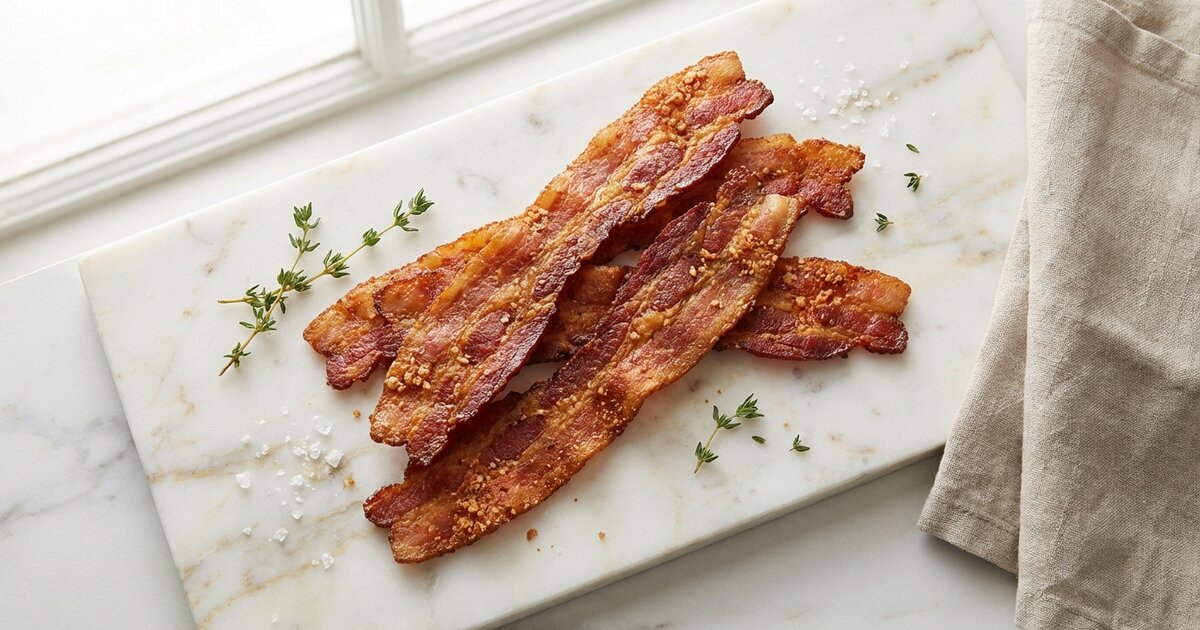
Bacon is one of the most debated foods in nutrition. It’s high in fat, often vilified for sodium content, yet beloved by keto dieters and breakfast enthusiasts alike. From a pure macro perspective, bacon delivers solid protein with zero carbs—but those calories add up fast.
Understanding bacon macros helps you enjoy it strategically. Whether you’re doing keto, counting calories, or just want to know what you’re eating, this guide breaks down everything about bacon nutrition.
Bacon Macros: Quick Reference
Here’s what you need to know about bacon nutrition at a glance. Values are for regular pan-fried bacon.
| Measurement | Calories | Protein | Carbs | Fat |
|---|---|---|---|---|
| 1 strip cooked (8g) | 43 | 3g | 0g | 3.5g |
| 2 strips cooked (16g) | 86 | 6g | 0g | 7g |
| 3 strips cooked (24g) | 129 | 9g | 0g | 10g |
| 4 strips cooked (32g) | 172 | 12g | 0g | 14g |
| 100g cooked | 541 | 37g | 0g | 42g |
| 1 oz cooked (28g) | 152 | 10g | 0g | 12g |
Important note: Bacon loses about 65-70% of its weight when cooked due to fat rendering out. Raw bacon weighs roughly 3x what the cooked strips weigh.
Raw vs. Cooked: The Weight Difference
Raw bacon and cooked bacon have dramatically different weights because so much fat renders during cooking.
| Raw Weight | Cooked Weight | Calories (Cooked) |
|---|---|---|
| 1 oz (28g) raw | ~0.35 oz (10g) cooked | 54 cal |
| 2 oz (57g) raw | ~0.7 oz (20g) cooked | 108 cal |
| 1 lb (454g) raw | ~5.5 oz (156g) cooked | 845 cal |
Best practice for tracking: Weigh bacon after cooking and use “cooked” entries in your tracking app. The rendered fat that drains away takes significant calories with it.
Bacon Macros by Type
Not all bacon is created equal. Thickness, cut, and type affect the macros.
Regular Bacon (Most Common)
| Serving | Calories | Protein | Carbs | Fat |
|---|---|---|---|---|
| 2 strips cooked | 86 | 6g | 0g | 7g |
| 4 strips cooked | 172 | 12g | 0g | 14g |
Standard supermarket bacon, cut from pork belly. This is the baseline most people eat.
Thick-Cut Bacon
| Serving | Calories | Protein | Carbs | Fat |
|---|---|---|---|---|
| 2 strips cooked | 120 | 8g | 0g | 10g |
| 4 strips cooked | 240 | 16g | 0g | 20g |
Thick-cut bacon weighs about 40% more per strip. More meat, more fat, more everything.
Center-Cut Bacon (Leaner)
| Serving | Calories | Protein | Carbs | Fat |
|---|---|---|---|---|
| 2 strips cooked | 60 | 6g | 0g | 4g |
| 4 strips cooked | 120 | 12g | 0g | 8g |
Cut from the leaner center of the pork belly. About 30% fewer calories than regular bacon with the same protein content.
Turkey Bacon
| Serving | Calories | Protein | Carbs | Fat |
|---|---|---|---|---|
| 2 strips cooked | 60 | 4g | 0g | 4g |
| 4 strips cooked | 120 | 8g | 0g | 8g |
Lower in fat and calories than pork bacon, but also lower in protein and—let’s be honest—flavor. A reasonable alternative if calories are your primary concern.
Canadian Bacon (Back Bacon)
| Serving | Calories | Protein | Carbs | Fat |
|---|---|---|---|---|
| 2 slices (57g) | 86 | 11g | 1g | 4g |
| 4 slices (114g) | 172 | 22g | 2g | 8g |
Canadian bacon is cut from the loin, not the belly, so it’s much leaner. Higher protein, lower fat—closer to ham than traditional bacon.
Understanding Your Macros
To see how bacon fits into your daily nutrition, it helps to understand what macronutrients are and how protein, carbs, and fat work together in your diet.
Cooking Method Matters
How you cook bacon affects the final macros—specifically how much fat remains.
Pan-Fried (Standard)
| 4 strips | Calories | Protein | Carbs | Fat |
|---|---|---|---|---|
| Regular | 172 | 12g | 0g | 14g |
Some fat stays in the pan, some stays on the bacon. This is the standard for nutrition labels.
Baked in Oven
| 4 strips | Calories | Protein | Carbs | Fat |
|---|---|---|---|---|
| On rack | 160 | 12g | 0g | 12g |
Baking on a rack allows more fat to drip away. You’ll save about 10-15% on calories compared to pan-frying.
Microwave
| 4 strips | Calories | Protein | Carbs | Fat |
|---|---|---|---|---|
| On paper towels | 155 | 12g | 0g | 11g |
Microwaving between paper towels absorbs the most fat. Crispiest result with lowest calorie count—though some would argue it’s not quite as flavorful.
Pro tip: If tracking strictly, bake or microwave bacon and you can shave 10-20 calories per serving versus pan-frying.
Bacon vs. Other Breakfast Proteins
How does bacon compare to other morning protein options?
| Protein Source | Calories | Protein | Carbs | Fat |
|---|---|---|---|---|
| Bacon (4 strips) | 172 | 12g | 0g | 14g |
| Eggs (2 large) | 156 | 12g | 1g | 11g |
| Sausage links (2) | 180 | 8g | 1g | 16g |
| Ham (3 oz) | 120 | 15g | 2g | 5g |
| Chicken breast (3 oz) | 140 | 26g | 0g | 3g |
The verdict: Bacon provides decent protein but at a higher calorie cost due to fat. For pure protein efficiency, ham or chicken breast wins. For keto and flavor, bacon holds its own.
How Bacon Fits Different Diets
Keto and Low-Carb
Bacon is a keto superstar. Zero carbs, high fat, and enough protein to help with satiety. The fat macro in bacon actually helps many people hit their keto fat targets without adding pure oils.
Keto breakfast: 4 strips bacon + 2 eggs + half an avocado = 520 cal, 28g protein, 4g carbs, 44g fat
Calorie Deficit / Weight Loss
Bacon can fit into a calorie deficit, but be strategic. At 43 calories per strip, it’s easy to eat 200+ calories before you realize it. Use bacon as a flavor enhancer rather than a protein base:
- Add 2 crumbled strips to a salad
- Use 1 strip chopped into eggs
- Top a burger with 1-2 strips instead of 4
High-Protein Diets
Bacon isn’t ideal as your primary protein source. To get 30g of protein from bacon, you’d need about 10 strips (430 calories). Compare that to chicken breast where 5 oz gives you 39g protein for just 230 calories.
Better approach: Pair 2-3 strips of bacon with a more efficient protein like eggs, Greek yogurt, or cottage cheese.
IIFYM / Flexible Dieting
Bacon fits perfectly into flexible dieting—just track it accurately. No food is off-limits; it’s about hitting your numbers. Budget 2-4 strips into your day and adjust other meals accordingly.
Meal Ideas with Bacon
Keto Breakfast Bowl (450 cal, 28g protein, 3g carbs, 36g fat)
- 3 strips bacon, crumbled
- 2 scrambled eggs
- 1/4 avocado
- 1 oz cheddar cheese
Protein-Packed BLT (420 cal, 32g protein, 30g carbs, 20g fat)
- 3 strips bacon
- 3 oz sliced deli turkey
- 2 slices whole grain bread
- Lettuce, tomato, light mayo
Bacon-Wrapped Chicken (380 cal, 45g protein, 0g carbs, 22g fat)
- 6 oz chicken breast
- 2 strips bacon wrapped around
- Grilled or baked
Loaded Cauliflower (280 cal, 18g protein, 8g carbs, 20g fat)
- 1.5 cups cauliflower, roasted
- 3 strips bacon, crumbled
- 2 tbsp sour cream
- Chives
Breakfast Burrito (480 cal, 30g protein, 35g carbs, 24g fat)
- 2 strips bacon
- 2 scrambled eggs
- 1/4 cup black beans
- 1 oz cheese
- Large flour tortilla
Calculating Your Macros
Wondering how bacon fits into your daily targets? Use our macro calculator to find your ideal protein, carb, and fat goals, then budget bacon accordingly.
The Sodium Question
Bacon is high in sodium—about 380mg per 2 strips (roughly 16% of the daily recommended limit). For most healthy people, this isn’t concerning if the rest of your diet isn’t sodium-heavy. However:
- If you have high blood pressure, limit bacon intake
- Balance bacon days with lower-sodium meals
- Uncured or reduced-sodium bacon has about 30% less sodium
Buying and Storing Tips
At the Store
- Regular bacon: Most cost-effective, standard macros
- Center-cut: Best for calorie-conscious; fewer calories, same protein
- Thick-cut: More substantial; good if you want fewer but more satisfying strips
- Uncured: No added nitrates; similar macros to regular
Storage
- Unopened: 2 weeks in refrigerator
- Opened: 1 week in refrigerator, in sealed container
- Freezer: 1-2 months (wrap well to prevent freezer burn)
- Cooked bacon: 4-5 days refrigerated; freezes well for 2-3 months
Common Bacon Myths
”Bacon fat is terrible for you”
Bacon fat is about 40% saturated, 45% monounsaturated (same type in olive oil), and 15% polyunsaturated. It’s not a health food, but it’s not poison either. Moderation matters more than elimination.
”Turkey bacon is much healthier”
Turkey bacon has fewer calories and less fat, but it’s also more processed and lower in protein. It’s “healthier” only if your sole concern is fat reduction. Many nutritionists consider quality pork bacon in moderation a reasonable choice.
”Bacon has zero nutritional value”
Bacon provides protein, B vitamins (especially B12), zinc, and selenium. It’s not nutrient-dense compared to vegetables, but it’s not empty calories either.
Final Thoughts
Bacon works in almost any diet when you track it accurately and use it strategically:
- Keto: Go wild—bacon is practically made for keto
- Weight loss: Limit to 2-3 strips as a flavor enhancer, not a protein base
- Muscle building: Pair with leaner proteins to balance fat intake
- Flexible dieting: Budget it in, track it accurately, enjoy it guilt-free
The key is knowing what you’re eating. Two strips of bacon add 86 calories and 6g protein—reasonable as part of a balanced breakfast. Eight strips add 344 calories before you’ve even added eggs or toast.
Weigh it, track it, and bacon can absolutely be part of your macro-friendly lifestyle.
Related Articles

Dragonfruit Macros: Complete Nutrition Guide for Pitaya
Complete macro breakdown of dragonfruit (pitaya). Learn the calories, protein, carbs, and...
Read guide →
Bulgur Macros: Complete Nutritional Guide & Health Benefits
Discover bulgur's complete macro breakdown, nutritional benefits, and how to incorporate...
Read guide →
Radish Macros: Nutrition Facts and Health Benefits
Complete guide to radish macros and nutrition. Learn calories, protein, carbs, and health...
Read guide →Note: Nutrition values are approximate and may vary based on preparation method and source.