Bell Peppers Macros: Complete Nutrition Facts & Calories
Reviewed by Dr. Michael Torres, PhD
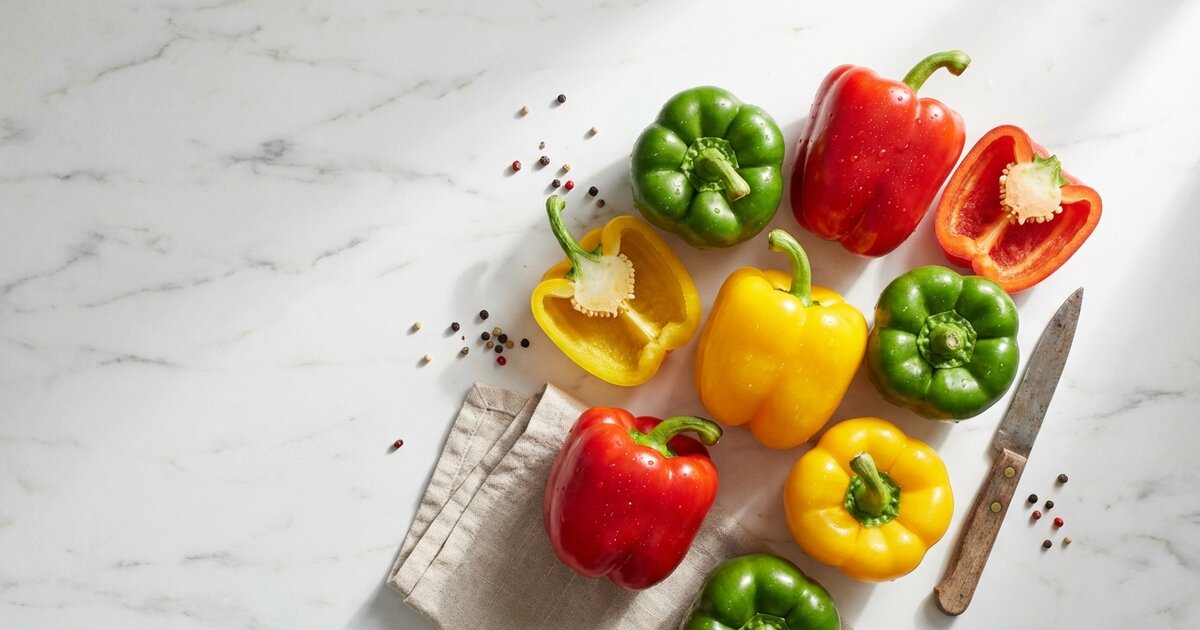
Bell peppers are a macro tracker’s dream vegetable—colorful, crunchy, and just 30 calories per cup with only 4 grams of net carbs. Whether you prefer the sweetness of red peppers or the slightly bitter crunch of green, all colors deliver excellent nutrition with minimal macro impact.
This guide covers bell pepper macros by color so you can enjoy them confidently on any diet.
Bell Pepper Macros: Quick Reference
Here’s the nutrition breakdown for different bell pepper colors (1 cup chopped):
| Color | Calories | Protein | Carbs | Fiber | Net Carbs | Sugar |
|---|---|---|---|---|---|---|
| Red | 39 | 1.2g | 9g | 3.1g | 6g | 6g |
| Yellow | 36 | 1.4g | 9g | 1.7g | 7g | 5g |
| Orange | 32 | 1.2g | 8g | 2g | 6g | 5g |
| Green | 24 | 1g | 6g | 2.1g | 4g | 2.9g |
Key insight: Green peppers are lowest in carbs and sugar. Red peppers are sweetest and highest in vitamin C.
Why Color Matters
Bell peppers change color as they ripen:
- Green: Unripe, slightly bitter, fewest carbs
- Yellow/Orange: Partially ripe, sweet, moderate carbs
- Red: Fully ripe, sweetest, most vitamin C, most carbs
All are the same vegetable at different maturity stages.
Understanding Macronutrients
Bell peppers are low-carb vegetables. To understand how they fit your nutrition plan, learn about what macronutrients are.
Bell Peppers vs. Other Vegetables
| Vegetable (1 cup) | Calories | Net Carbs |
|---|---|---|
| Green bell pepper | 24 | 4g |
| Red bell pepper | 39 | 6g |
| Carrots | 52 | 8.4g |
| Cauliflower | 27 | 3.2g |
| Broccoli | 31 | 3.6g |
| Cucumber | 16 | 2.6g |
Bell peppers are among the lowest-carb colorful vegetables.
How Bell Peppers Fit Different Diets
Keto and Low-Carb
Bell peppers are keto-approved:
- Green: 4g net carbs/cup (best for strict keto)
- All colors: Work in reasonable portions
- Great for stuffing with keto fillings
Calorie Deficit / Weight Loss
Bell peppers are perfect for volume eating:
- 24-39 calories per cup
- High water content (92%)
- Satisfying crunch
- Add color to meals
High-Protein Meals
Bell peppers complement proteins:
- Stuff with ground beef
- Slice for chicken stir-fry
- Add to egg dishes
- Fajita-style with any protein
Flexible Dieting
Bell peppers fit flexible dieting easily—low enough to barely impact your numbers while adding nutrition and color.
Meal Ideas with Bell Peppers
Stuffed Bell Peppers (350 cal, 28g protein, 18g carbs, 18g fat)
- 1 large bell pepper
- 4 oz ground beef
- 2 tbsp rice
- 1 oz cheese
- Tomato sauce
Fajita Bowl (400 cal, 38g protein, 20g carbs, 18g fat)
- 1 cup sliced peppers
- 5 oz chicken
- Onions, fajita seasoning
- 1 oz cheese
- Salsa, guacamole
Low-Cal Snack (50 cal, 2g protein, 10g carbs, 0g fat)
- 1 cup sliced bell peppers
- Salsa for dipping
Bell Pepper Nachos (300 cal, 25g protein, 12g carbs, 18g fat)
- Mini bell peppers halved
- Ground beef or chicken
- Cheese, jalapeños, salsa
- Use peppers instead of chips
Pepper and Egg Scramble (280 cal, 18g protein, 8g carbs, 18g fat)
- 1/2 cup diced peppers
- 3 eggs
- 1 oz cheese
Calculate Your Macros
Use our macro calculator to determine your daily targets, then add bell peppers freely.
Vitamin C Champion
Red bell peppers have exceptional vitamin C:
| Pepper Color | Vitamin C (per cup) | % Daily Value |
|---|---|---|
| Red | 190mg | 211% |
| Yellow | 152mg | 169% |
| Orange | 116mg | 129% |
| Green | 80mg | 89% |
Red bell peppers have 3x more vitamin C than oranges!
Raw vs. Cooked
| Preparation | Calories | Notes |
|---|---|---|
| Raw | 30 | Crunchiest, most vitamin C |
| Roasted | 30 | Sweeter, softer |
| Sautéed | 30 + oil | Track added fat |
| Grilled | 30 | Smoky flavor |
Cooking doesn’t significantly change macros but reduces vitamin C content slightly.
Storage Tips
Fresh Bell Peppers
- Refrigerator: 1-2 weeks
- Wrap loosely in plastic or store in crisper
- Cut peppers: 2-3 days refrigerated
Freezing Bell Peppers
- Slice or dice
- Spread on baking sheet, freeze
- Transfer to freezer bag
- Use within 8-10 months
- Best for cooking, not raw eating
Common Bell Pepper Questions
Are Bell Peppers Nightshades?
Yes, bell peppers are nightshades (along with tomatoes, eggplant, potatoes). Some people with autoimmune conditions avoid nightshades, but for most people they’re perfectly healthy.
Why Are Red Peppers More Expensive?
Red peppers take longer to grow (they ripen on the vine longer). More time = more resources = higher price. Green peppers are cheapest because they’re harvested earliest.
Can I Eat Bell Peppers Daily?
Absolutely. Bell peppers are safe for daily consumption and provide excellent vitamin C and antioxidants. There’s no downside to regular intake.
Are Mini Peppers Different?
Mini/snack peppers have similar macros per gram as regular peppers. They’re convenient for snacking and portion control.
Final Thoughts
Bell peppers are an excellent low-carb vegetable:
- 24-39 calories per cup—minimal impact
- 4-6g net carbs—fits keto and low-carb
- Loaded with vitamin C—especially red peppers
- Versatile—snacks, stir-fry, stuffed, roasted
Choose green for lowest carbs, red for most nutrition, or mix colors for variety. All bell peppers earn their spot in a macro-friendly diet.
Related Articles
Dragonfruit Macros: Complete Nutrition Guide for Pitaya
Complete macro breakdown of dragonfruit (pitaya). Learn the calories, protein, carbs, and...
Read guide →
Bulgur Macros: Complete Nutritional Guide & Health Benefits
Discover bulgur's complete macro breakdown, nutritional benefits, and how to incorporate...
Read guide →
Radish Macros: Nutrition Facts and Health Benefits
Complete guide to radish macros and nutrition. Learn calories, protein, carbs, and health...
Read guide →Note: Nutrition values are approximate and may vary based on preparation method and source.