Brown Rice Macros: Complete Nutrition Facts & Calories
Reviewed by Jessica Williams, CPT, CSCS
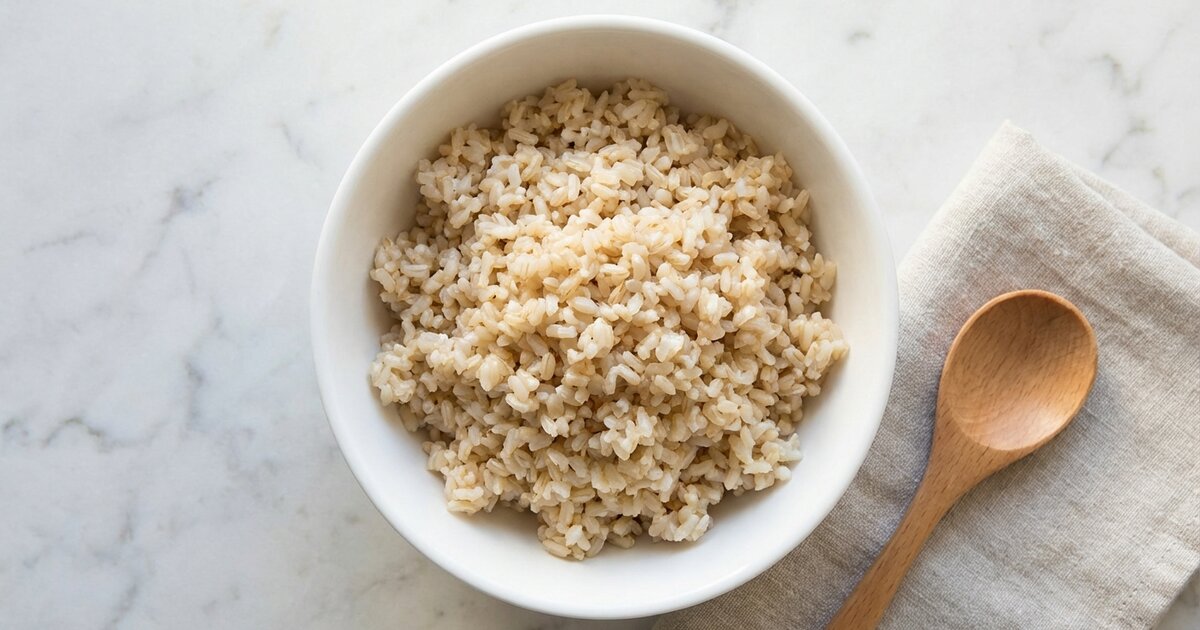
Brown rice is white rice’s nutritionally superior sibling. By keeping the bran and germ layers that white rice removes, brown rice retains more fiber, vitamins, and minerals. The trade-off? Longer cooking time and a nuttier, chewier texture.
For macro counters, brown rice offers a slight edge—more fiber, fewer calories, and better satiety. This guide breaks down brown rice macros completely and helps you decide if it’s worth the swap.
Related: Learn more about what macros are and how they impact your diet.
Brown Rice Macros: Quick Reference
Here’s what you need to know for long-grain brown rice.
Cooked Brown Rice
| Serving | Calories | Protein | Carbs | Fat | Fiber |
|---|---|---|---|---|---|
| 100g cooked | 112 | 2.6g | 24g | 0.9g | 1.8g |
| 1/2 cup (98g) | 110 | 2.5g | 23g | 0.9g | 1.8g |
| 1 cup (195g) | 218 | 5g | 46g | 1.8g | 3.5g |
| 3/4 cup (146g) | 163 | 3.8g | 34g | 1.3g | 2.6g |
Dry (Uncooked) Brown Rice
| Serving | Calories | Protein | Carbs | Fat | Fiber |
|---|---|---|---|---|---|
| 100g dry | 362 | 7.5g | 76g | 2.7g | 3.4g |
| 1/4 cup (48g) dry | 174 | 3.6g | 36g | 1.3g | 1.6g |
| 1/2 cup (95g) dry | 344 | 7g | 72g | 2.6g | 3.2g |
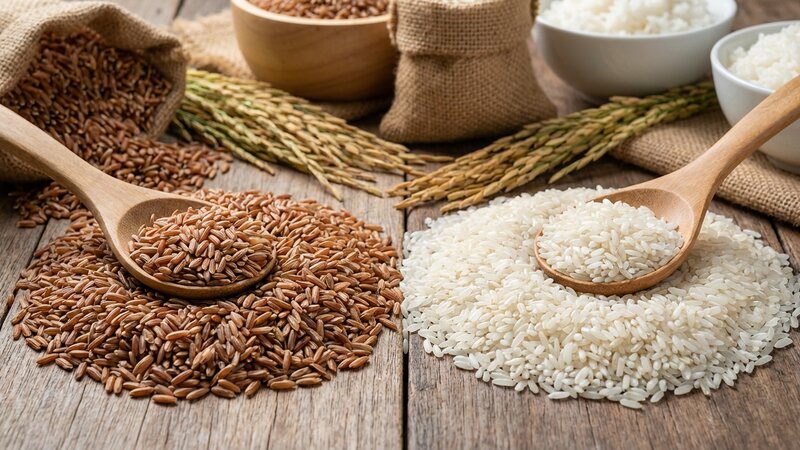
Critical note: Dry rice absorbs water and approximately triples in volume when cooked. 1/2 cup dry = ~1.5 cups cooked.
Brown Rice vs. White Rice
This is the comparison everyone wants:
Per 100g Cooked
| Factor | Brown Rice | White Rice | Difference |
|---|---|---|---|
| Calories | 112 | 130 | -14% |
| Carbs | 24g | 28g | -14% |
| Fiber | 1.8g | 0.4g | +350% |
| Protein | 2.6g | 2.7g | -4% |
| Fat | 0.9g | 0.3g | +200% |
| Glycemic Index | 50 (low) | 73 (high) | -32% |
Per 1 Cup Cooked
| Factor | Brown Rice | White Rice | Difference |
|---|---|---|---|
| Calories | 218 | 254 | -36 cal |
| Carbs | 46g | 55g | -9g |
| Fiber | 3.5g | 0.6g | +2.9g |
Why Brown Rice Wins
More fiber:
- 3.5g per cup vs 0.6g
- Keeps you fuller longer
- Better for digestion
Lower glycemic index:
- GI of 50 vs 73 for white rice
- Slower blood sugar rise
- More sustained energy
More micronutrients:
- Higher in manganese, selenium, magnesium
- Contains B vitamins
- More antioxidants
When White Rice Makes Sense
- Post-workout (faster digestion preferred)
- Sensitive digestive system
- Prefer the texture/taste
- Lower cost
- Faster cooking time
Honest assessment: The nutritional difference matters but isn’t dramatic. If you strongly prefer white rice, it’s fine. If you’re indifferent, choose brown.
Brown Rice Types Compared
Per 1 Cup Cooked
| Type | Calories | Carbs | Fiber | Notes |
|---|---|---|---|---|
| Long-grain brown | 218 | 46g | 3.5g | Fluffy, standard |
| Short-grain brown | 220 | 46g | 3g | Stickier, softer |
| Basmati brown | 210 | 44g | 3.5g | Aromatic, nuttier |
| Jasmine brown | 215 | 45g | 3g | Slightly sweet |
| Wild rice* | 166 | 35g | 3g | Actually a grass seed |
| Brown rice + wild blend | 190 | 40g | 3g | Mixed variety |
*Wild rice is technically not rice but often grouped with it.
Instant vs. Regular Brown Rice
| Per Cup Cooked | Regular | Instant |
|---|---|---|
| Calories | 218 | 170 |
| Carbs | 46g | 36g |
| Fiber | 3.5g | 2g |
| Cook time | 40-50 min | 10 min |
Why the difference? Instant rice is pre-cooked and dried, changing the structure. It absorbs less water when you cook it, resulting in lower density per cup. Per 100g, macros are more similar.
Raw vs. Cooked: Tracking Accuracy
Like white rice, brown rice tracking errors usually come from confusing raw and cooked measurements.
The Expansion Ratio
Brown rice approximately triples when cooked:
| Dry Amount | Cooked Amount | Calories |
|---|---|---|
| 1/4 cup (48g) dry | ~3/4 cup cooked | 174 |
| 1/3 cup (63g) dry | ~1 cup cooked | 228 |
| 1/2 cup (95g) dry | ~1.5 cups cooked | 344 |
| 1 cup (190g) dry | ~3 cups cooked | 688 |
How to Track Accurately
Best method: Weigh dry, then cook
- Measure 1/4 cup (48g) dry brown rice
- Cook the whole batch
- Log as “brown rice, dry, 48g” = 174 calories
- Total calories don’t change—just spread across more volume
Alternative: Weigh cooked
- Cook rice as normal
- Weigh your portion
- Log as “brown rice, cooked, 150g” = 168 calories
- Ensure entry specifies “cooked”
Making Brown Rice Work for Different Diets
Weight Loss/Cutting
Brown rice offers modest advantages for cutting:
Why it helps:
- 36 fewer calories per cup vs white rice
- More fiber = better satiety
- Lower glycemic index = steadier energy
Cutting portion strategy:
- Limit to 1/2-3/4 cup cooked (110-163 cal)
- Bulk with vegetables
- Pair with lean protein
Cutting rice bowl:
| Ingredient | Calories |
|---|---|
| 1/2 cup brown rice | 110 |
| 4 oz chicken breast | 187 |
| 1 cup vegetables | 50 |
| Low-cal sauce | 30 |
| Total | 377 |
Muscle Building/Bulking
Brown rice is excellent for bulking:
Why it works:
- Complex carbs fuel workouts
- Sustained energy release
- Pairs with any protein
- Easy to eat in large quantities
Bulking rice bowl:
| Ingredient | Calories | Protein |
|---|---|---|
| 1.5 cups brown rice | 327 | 7.5g |
| 6 oz salmon | 367 | 40g |
| 1/2 avocado | 160 | 2g |
| Total | 854 | 49.5g |
Low-Carb (Moderate)
Brown rice can fit moderate low-carb diets:
| Approach | Carbs |
|---|---|
| 1 cup brown rice | 46g |
| 1/2 cup brown rice | 23g |
| 1/4 cup brown rice | 11.5g |
On a 100g carb limit, half a cup uses about 23% of daily carbs—doable but significant.
Keto
Brown rice doesn’t fit keto. Alternatives:
| Substitute | Carbs per Cup | Texture |
|---|---|---|
| Cauliflower rice | 5g | Rice-like |
| Shirataki rice | 1g | Chewy |
| Hemp hearts | 2g | Nutty |
| Riced broccoli | 4g | Mild |
Cooking Brown Rice
Basic Stovetop Method
Ratio: 1 cup dry rice : 2.5 cups water
- Rinse rice (optional but recommended)
- Bring water to boil
- Add rice, reduce to simmer
- Cover and cook 40-45 minutes
- Let stand 5 minutes, fluff with fork
Rice Cooker Method
Ratio: 1 cup dry rice : 2 cups water
- Add rice and water to cooker
- Select “brown rice” setting if available
- Cook 40-50 minutes
- Let rest 10 minutes before opening
Batch Cooking Tips
Make a week’s worth:
- Cook 2 cups dry rice (makes ~6 cups cooked)
- Cool completely
- Portion into containers
- Refrigerate up to 5 days or freeze up to 3 months
Reheating:
- Microwave: Add 1-2 tbsp water, cover, 1-2 minutes
- Stovetop: Heat with splash of water in covered pan
- Fried rice: Use cold rice directly (actually works better)
Brown Rice Meal Ideas
Simple Rice Bowls
Mediterranean grain bowl:
| Ingredient | Calories | Protein |
|---|---|---|
| 3/4 cup brown rice | 163 | 3.8g |
| 4 oz grilled chicken | 187 | 35g |
| 1/4 cup hummus | 100 | 5g |
| Cucumber, tomato, feta | 80 | 3g |
| Total | 530 | 46.8g |
Asian-inspired bowl:
| Ingredient | Calories | Protein |
|---|---|---|
| 3/4 cup brown rice | 163 | 3.8g |
| 4 oz tofu | 80 | 9g |
| Stir-fry vegetables | 50 | 2g |
| 1 tbsp peanut sauce | 50 | 2g |
| Total | 343 | 16.8g |
Fried Rice
Healthier fried rice:
| Ingredient | Calories | Protein |
|---|---|---|
| 1 cup brown rice | 218 | 5g |
| 2 eggs | 140 | 12g |
| 1/2 cup mixed vegetables | 40 | 2g |
| 1 tsp sesame oil | 40 | 0g |
| Soy sauce, garlic, ginger | 15 | 1g |
| Total | 453 | 20g |
Use cold, day-old rice for best results.
Rice Sides
Cilantro lime rice:
- 1 cup cooked brown rice (218 cal)
- Lime juice + zest
- Fresh cilantro
- Pinch of salt
- Total: ~220 calories
Mushroom rice pilaf:
| Ingredient | Calories |
|---|---|
| 1 cup brown rice | 218 |
| 1/2 cup mushrooms | 10 |
| Onion, garlic | 15 |
| Chicken broth | 10 |
| Total | 253 |
Storage and Shelf Life
| Type | Storage Location | Duration |
|---|---|---|
| Dry brown rice | Pantry (cool, dry) | 6 months |
| Dry brown rice | Refrigerator | 12 months |
| Dry brown rice | Freezer | 12-18 months |
| Cooked brown rice | Refrigerator | 4-6 days |
| Cooked brown rice | Freezer | 2-3 months |
Note: Brown rice spoils faster than white rice because the oils in the bran can go rancid. Store in airtight containers.
Common Tracking Mistakes
Mistake #1: Confusing Raw and Cooked
Raw: 112 calories per 100g Cooked: 362 calories per 100g
A 3x difference!
Fix: Always specify “cooked” or “dry” when logging.
Mistake #2: Using Cup Measures for Cooked Rice
A loosely packed cup ≠ a tightly packed cup.
Fix: Weigh cooked rice for accuracy. 195g = 1 cup.
Mistake #3: Assuming Brown = Low-Calorie
Brown rice has 14% fewer calories than white rice, not 50%.
Fix: Track brown rice the same as any carb—it still counts.
Mistake #4: Not Accounting for Add-ins
Cooking rice in broth or coconut milk adds calories.
Fix: Log cooking liquids if they add significant calories (coconut milk does, broth barely does).
The Bottom Line
Brown rice is a nutritionally superior carb choice:
- 112 calories per 100g cooked — Fewer than white rice
- 1.8g fiber per 100g — 4x more than white rice
- Lower glycemic index — Better blood sugar control
- More nutrients — Manganese, selenium, B vitamins
Key tracking rules:
- Always specify raw vs. cooked
- Raw rice triples when cooked
- Weight-based tracking is most accurate
- The brown vs. white difference is real but modest
Brown rice earns its “healthier” reputation, but the gap isn’t enormous. Choose brown rice when you want extra fiber and nutrients; choose white rice when you prefer the taste or need faster digestion. Both can fit a well-tracked diet.
Related guides:
Related Articles
Dragonfruit Macros: Complete Nutrition Guide for Pitaya
Complete macro breakdown of dragonfruit (pitaya). Learn the calories, protein, carbs, and...
Read guide →
Bulgur Macros: Complete Nutritional Guide & Health Benefits
Discover bulgur's complete macro breakdown, nutritional benefits, and how to incorporate...
Read guide →
Radish Macros: Nutrition Facts and Health Benefits
Complete guide to radish macros and nutrition. Learn calories, protein, carbs, and health...
Read guide →Note: Nutrition values are approximate and may vary based on preparation method and source.