Butter Macros: Complete Nutrition Facts & Calories
Reviewed by Dr. Michael Torres, PhD
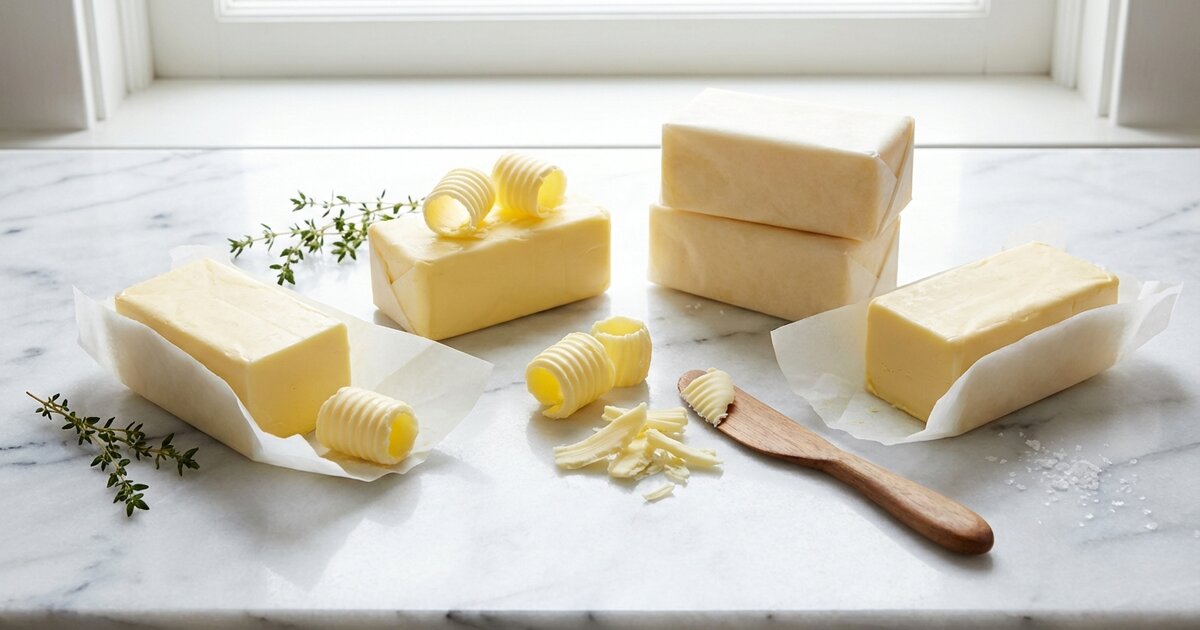
Butter is pure fat—and for macro trackers, that’s either a challenge or an opportunity depending on your goals. At 102 calories per tablespoon with zero carbs, butter is a keto dream but a calorie-deficit nightmare if you’re not careful.
Understanding butter macros is essential because it shows up everywhere: cooking, baking, spreading, and finishing dishes. This guide helps you track butter accurately and use it strategically.
Butter Macros: Quick Reference
Here’s the essential butter nutrition breakdown:
| Serving | Calories | Protein | Carbs | Fat |
|---|---|---|---|---|
| 1 tbsp (14g) | 102 | 0.1g | 0g | 12g |
| 1 pat (5g) | 36 | 0g | 0g | 4g |
| 1 tsp (4.7g) | 34 | 0g | 0g | 4g |
| 1 stick (113g) | 810 | 1g | 0g | 92g |
| 100g | 717 | 0.9g | 0.1g | 81g |
| 1 oz (28g) | 201 | 0.2g | 0g | 23g |
Key insight: Butter is almost 100% fat. There’s negligible protein and effectively zero carbs.
Butter Stick Measurements
One stick of butter = 8 tablespoons = 1/2 cup = 113g = 810 calories
| Butter Stick Portion | Tablespoons | Grams | Calories |
|---|---|---|---|
| Full stick | 8 | 113g | 810 |
| 3/4 stick | 6 | 85g | 608 |
| 1/2 stick | 4 | 57g | 405 |
| 1/4 stick | 2 | 28g | 202 |
| 1/8 stick | 1 | 14g | 102 |
Most butter wrappers have tablespoon markings—use them for easy tracking.
Butter Types Compared
| Butter Type | Calories/tbsp | Fat | Notes |
|---|---|---|---|
| Regular salted | 102 | 12g | Standard butter |
| Unsalted | 102 | 12g | Same macros, no sodium |
| Grass-fed | 102 | 12g | More omega-3s, same macros |
| European-style | 108 | 12g | Slightly higher fat (82-86%) |
| Clarified/Ghee | 112 | 13g | Pure fat, no milk solids |
| Whipped | 70 | 8g | Air whipped in, less per volume |
| Light/reduced | 50 | 6g | Mixed with water, half the fat |
Whipped butter note: Whipped butter has fewer calories per tablespoon because air is incorporated. However, it measures differently—1 cup whipped ≠ 1 cup regular.
Understanding Macronutrients
Butter is almost entirely one macronutrient: fat. To understand how dietary fat fits into your overall nutrition, learn about what macronutrients are.
Butter vs. Other Cooking Fats
| Fat (1 tbsp) | Calories | Total Fat | Sat Fat | Best For |
|---|---|---|---|---|
| Butter | 102 | 12g | 7g | Flavor, baking |
| Olive oil | 119 | 14g | 2g | Mediterranean, sautéing |
| Coconut oil | 117 | 14g | 12g | High-heat, keto |
| Vegetable oil | 120 | 14g | 1g | High-heat frying |
| Avocado oil | 124 | 14g | 2g | High-heat, neutral |
| Ghee | 112 | 13g | 8g | High-heat, Indian cooking |
Takeaway: Butter has slightly fewer calories than most oils due to its water content (about 15%). For cooking, the differences are small—choose based on flavor preference and smoke point.
How Butter Fits Different Diets
Keto and Low-Carb
Butter is a keto essential:
- Zero carbs
- High fat helps meet keto ratios
- Versatile for cooking and adding to foods
- Bulletproof coffee uses 1-2 tbsp butter
Keto butter uses:
- Cooking eggs and meat
- Finishing vegetables
- Coffee (blended with MCT oil)
- Fat bombs and keto desserts
Calorie Deficit / Weight Loss
Butter is challenging during fat loss:
- 102 calories per tablespoon adds up fast
- Easy to use more than you realize
- Hidden in restaurant cooking
Weight loss strategies:
- Use cooking spray instead of butter for pans
- Measure butter precisely (don’t eyeball)
- Use light butter (50 cal/tbsp) for spreading
- Ask for “dry” preparation at restaurants
Flexible Dieting
Butter fits flexible dieting—just track it accurately. A tablespoon here and there won’t break your diet if you account for it. The problem is untracked butter in cooking.
High-Protein Diets
Butter provides zero protein. If your priority is protein:
- Use butter sparingly for flavor
- Don’t let butter calories crowd out protein foods
- Consider protein-rich toppings instead (Greek yogurt on baked potatoes)
Tracking Butter Accurately
When Cooking
If you add butter to a pan:
- Measure the butter you add (1 tbsp = 102 cal)
- Log the full amount even if some stays in the pan
- Divide by servings if cooking multiple portions
Example: You cook 4 chicken breasts in 2 tbsp butter (204 cal). Each breast absorbs roughly 51 calories of butter.
When Spreading
- Use the wrapper markings to cut precise tablespoons
- Or weigh: 14g = 1 tbsp
- Log before spreading so you know what you’re using
Hidden Butter
Watch for butter you didn’t add:
- Restaurant cooking (often 2-4 tbsp per dish)
- Baked goods
- Movie popcorn “butter” topping
- Hotel breakfast toast (pre-buttered)
When in doubt, estimate conservatively.
Meal Ideas with Butter
Keto Bulletproof Coffee (230 cal, 0g protein, 0g carbs, 25g fat)
- 8 oz black coffee
- 1 tbsp butter
- 1 tbsp MCT oil
- Blend until frothy
Garlic Butter Shrimp (350 cal, 40g protein, 2g carbs, 18g fat)
- 6 oz shrimp
- 1 tbsp butter
- Garlic, lemon, parsley
Buttered Vegetables (150 cal, 4g protein, 15g carbs, 10g fat)
- 2 cups steamed broccoli
- 1 tbsp butter
- Salt and pepper
Butter-Basted Steak (400 cal, 45g protein, 0g carbs, 24g fat)
- 6 oz steak
- 1 tbsp butter for basting
- Fresh herbs
Toast with Butter (180 cal, 4g protein, 15g carbs, 12g fat)
- 1 slice whole wheat bread
- 1 tbsp butter
Calculate Your Macros
Use our macro calculator to determine your daily fat targets, then allocate butter accordingly.
Butter Quality: Does It Matter?
Grass-Fed Butter
Same macros as regular butter, but potentially:
- Higher omega-3 fatty acids
- More vitamin K2
- More conjugated linoleic acid (CLA)
- Better omega-6 to omega-3 ratio
From a calorie/macro perspective: identical. From a micronutrient perspective: slightly better.
European-Style Butter
Higher butterfat (82-86% vs American 80%):
- Slightly more calories
- Richer flavor (use less)
- Better for baking
Kerrygold, Vital Farms, etc.
Premium butters have identical macros to store brands. You’re paying for:
- Grass-fed sourcing
- Better taste
- Higher quality standards
For macro tracking purposes, all butter is essentially equal.
Common Butter Questions
Is Butter or Oil Healthier?
Both can be part of a healthy diet:
- Butter: Saturated fat, vitamins A/D/K2, better flavor
- Olive oil: Monounsaturated fat, polyphenols, Mediterranean diet staple
Recent research has rehabilitated butter’s reputation. Use both in moderation.
How Long Does Butter Last?
- Counter: 1-2 days (covered butter dish)
- Refrigerator: 1-2 months
- Freezer: 6-12 months (wrap well)
Salted butter lasts longer than unsalted.
Can I Use Butter on Keto Every Day?
Yes. Butter is a keto staple with zero carbs. Use it freely within your fat macro target. Many keto practitioners consume 2-4 tablespoons daily.
Is Ghee the Same as Butter?
Ghee is clarified butter—the milk solids are removed, leaving pure butterfat:
- Slightly higher calories (112 vs 102 per tbsp)
- Higher smoke point (better for high-heat cooking)
- Lactose-free (milk solids removed)
- Same fat profile as butter
For macro tracking, treat ghee as slightly more calorie-dense butter.
Butter Alternatives for Fewer Calories
If you love butter but need fewer calories:
| Alternative | Calories/tbsp | Notes |
|---|---|---|
| Light butter | 50 | Half the fat, half the calories |
| Butter spray | 0-5 | Minimal calories, less satisfying |
| Greek yogurt | 10 | On baked potatoes, mashed potatoes |
| Cooking spray | 0-7 | For pans instead of butter |
Reality check: Light butter and substitutes don’t taste as good. Sometimes it’s better to use less real butter than more fake butter.
Final Thoughts
Butter is a simple food to track: almost pure fat at 102 calories per tablespoon. The challenge isn’t understanding butter macros—it’s using it mindfully.
For keto and low-carb: Use butter freely to meet fat targets For weight loss: Measure precisely and use sparingly For maintenance: Enjoy in moderation, track honestly
The key is knowing exactly how much butter you’re using. Eyeballing leads to underestimating, and butter calories add up invisibly. Use wrapper markings or a food scale, log everything, and butter can absolutely fit your macro goals.
Related Articles
Dragonfruit Macros: Complete Nutrition Guide for Pitaya
Complete macro breakdown of dragonfruit (pitaya). Learn the calories, protein, carbs, and...
Read guide →
Bulgur Macros: Complete Nutritional Guide & Health Benefits
Discover bulgur's complete macro breakdown, nutritional benefits, and how to incorporate...
Read guide →
Radish Macros: Nutrition Facts and Health Benefits
Complete guide to radish macros and nutrition. Learn calories, protein, carbs, and health...
Read guide →Note: Nutrition values are approximate and may vary based on preparation method and source.