Cauliflower Macros: Complete Nutrition Facts & Calories
Reviewed by Dr. Michael Torres, PhD
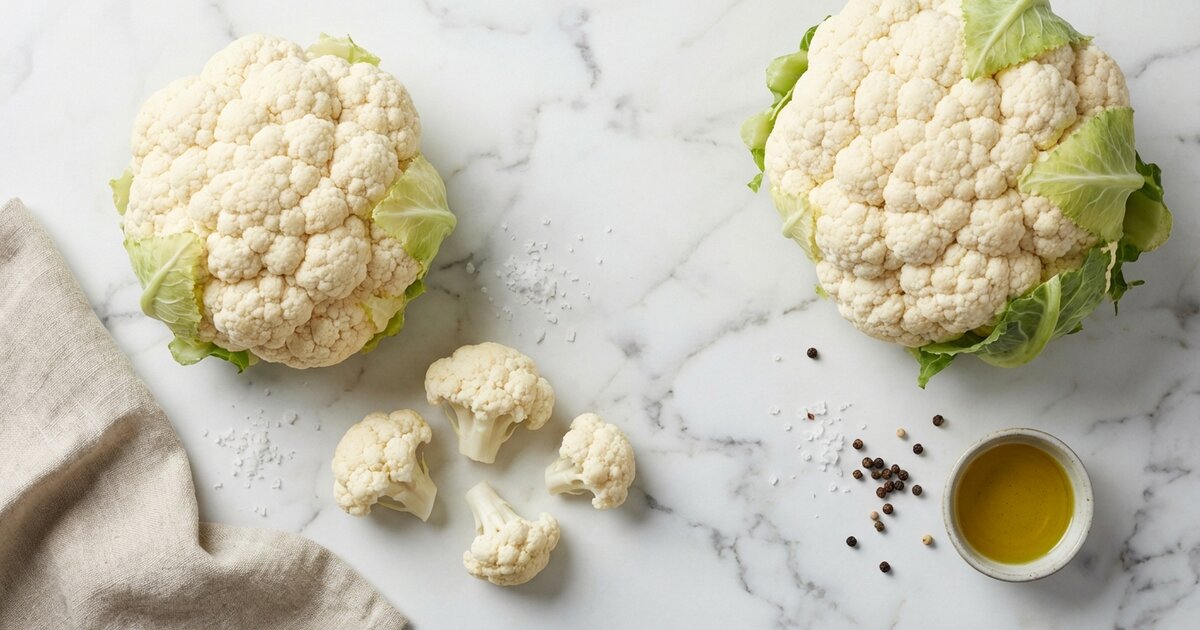
Cauliflower is the Swiss Army knife of low-carb eating. At just 27 calories and 3 grams of net carbs per cup, it transforms into rice, pizza crust, mashed potatoes, and more—letting you enjoy comfort foods while staying on track with your macros.
This guide covers cauliflower nutrition and shows you how to maximize this versatile vegetable.
Cauliflower Macros: Quick Reference
Here’s the complete cauliflower nutrition breakdown:
| Serving | Calories | Protein | Carbs | Fiber | Net Carbs |
|---|---|---|---|---|---|
| 1 cup raw (107g) | 27 | 2.1g | 5.3g | 2.1g | 3.2g |
| 1 cup cooked (124g) | 29 | 2.3g | 5.1g | 2.9g | 2.2g |
| 1 cup cauliflower rice | 25 | 2g | 5g | 2g | 3g |
| 100g raw | 25 | 1.9g | 5g | 2g | 3g |
| 1 medium head (588g) | 147 | 11.5g | 29g | 12g | 17g |
Key insight: Cooking actually reduces net carbs slightly due to increased fiber availability.
Cauliflower vs. Common Substitutes
| Food (1 cup) | Calories | Net Carbs | Use For |
|---|---|---|---|
| Cauliflower rice | 25 | 3g | Rice substitute |
| White rice | 206 | 44g | — |
| Cauliflower mash | 50 | 4g | Mashed potato sub |
| Mashed potatoes | 210 | 33g | — |
| Cauliflower pizza crust | 150 | 8g | Pizza base |
| Regular pizza crust | 260 | 43g | — |
Cauliflower saves massive carbs when substituting for starches.
Understanding Macronutrients
Cauliflower is an extremely low-carb vegetable. To understand how it fits your nutrition plan, learn about what macronutrients are.
Cauliflower vs. Other Vegetables
| Vegetable (1 cup) | Calories | Net Carbs | Protein |
|---|---|---|---|
| Cauliflower | 27 | 3.2g | 2.1g |
| Broccoli | 31 | 3.6g | 2.6g |
| Asparagus | 27 | 2.4g | 2.9g |
| Brussels sprouts | 38 | 4.6g | 3g |
| Zucchini | 21 | 2.4g | 1.5g |
Cauliflower is among the lowest-carb options with good versatility.
How Cauliflower Fits Different Diets
Keto and Low-Carb
Cauliflower is the keto MVP:
- 3g net carbs per cup
- Replaces high-carb foods
- Satisfies comfort food cravings
- Absorbs flavors well
Keto uses:
- Cauliflower rice (stir fries, burrito bowls)
- Mashed cauliflower (butter, cream cheese, cheese)
- Cauliflower pizza crust
- Cauliflower mac and cheese
Calorie Deficit / Weight Loss
Cauliflower enables volume eating:
- 27 calories per cup
- Bulks up meals visually
- Fiber promotes fullness
- Replaces calorie-dense starches
Flexible Dieting
Cauliflower fits flexible dieting as an almost-free vegetable. Use it to stretch meals without affecting your numbers.
Cauliflower Rice Macros
| Cauliflower Rice vs. White Rice | Cauliflower | White Rice |
|---|---|---|
| Calories (1 cup) | 25 | 206 |
| Net Carbs | 3g | 44g |
| Protein | 2g | 4g |
| Fiber | 2g | 0.6g |
180 calorie and 41g carb savings per cup!
How to Make Cauliflower Rice
- Cut cauliflower into florets
- Pulse in food processor until rice-sized
- Sauté in pan 5-7 minutes
- Season as desired
Or buy pre-riced (fresh or frozen).
Meal Ideas with Cauliflower
Keto Mashed Cauliflower (180 cal, 6g protein, 8g carbs, 14g fat)
- 2 cups cauliflower, steamed
- 2 tbsp butter
- 1 oz cream cheese
- Salt, pepper, chives
Cauliflower Fried Rice (250 cal, 18g protein, 12g carbs, 14g fat)
Buffalo Cauliflower (120 cal, 4g protein, 12g carbs, 6g fat)
- 2 cups cauliflower florets
- Hot sauce
- 1 tbsp butter
- Baked until crispy
Cauliflower Mac & Cheese (280 cal, 12g protein, 10g carbs, 22g fat)
- 2 cups cauliflower
- 1.5 oz cheddar cheese
- 2 tbsp heavy cream
- Mustard, paprika
Cauliflower Pizza Crust (whole crust: 200 cal, 14g protein, 12g carbs, 12g fat)
- 2 cups riced cauliflower
- 1 egg
- 1/2 cup mozzarella
- Italian seasonings
Calculate Your Macros
Use our macro calculator to set your daily targets, then use cauliflower to stay within carb limits while feeling full.
Fresh vs. Frozen vs. Pre-Riced
| Form | Calories (1 cup) | Notes |
|---|---|---|
| Fresh florets | 27 | Best texture, most versatile |
| Frozen florets | 27 | Convenient, pre-washed |
| Fresh cauliflower rice | 25 | Saves prep time |
| Frozen cauliflower rice | 25 | Most convenient, cooks in 5 min |
Frozen is excellent: Frozen cauliflower rice is a meal prep game-changer. Same nutrition, fraction of the work.
Cauliflower Cooking Tips
For Cauliflower Rice
- Don’t overcook (gets mushy)
- Cook in batches if needed (overcrowding steams it)
- Season well (cauliflower is mild)
- Works in microwave in a pinch
For Mashed Cauliflower
- Steam or boil until very soft
- Drain thoroughly (excess water = watery mash)
- Add fat (butter, cream) for richness
- Use immersion blender for smoothest texture
For Roasted Cauliflower
- High heat (425°F) for browning
- Don’t crowd the pan
- Toss with oil and seasoning
- Roast 25-30 minutes, flip halfway
Common Cauliflower Questions
Does Cauliflower Rice Taste Like Rice?
Not exactly—it has a milder, slightly vegetable flavor. But with sauces and seasonings, most people find it a satisfying substitute. It won’t fool anyone served plain, but in stir fries and burrito bowls, it works great.
Why Does Cauliflower Smell When Cooking?
Cauliflower contains sulfur compounds that release when heated. Don’t overcook to minimize smell. Adding acid (lemon juice) can help. The smell doesn’t indicate anything wrong.
Can Cauliflower Replace Potatoes?
For mashed preparations, cauliflower works well. For other potato uses (baked, fries), results vary. Mashed cauliflower is the most successful substitute.
Is Cauliflower Better Raw or Cooked?
Both are nutritious. Raw retains more vitamin C. Cooking makes some nutrients more bioavailable. Eat both ways for variety.
How Much Cauliflower Equals One Head?
- 1 medium head ≈ 6 cups florets
- ≈ 4-5 cups riced
- About 1.5 lbs (680g)
Final Thoughts
Cauliflower is the low-carb dieter’s best friend:
- 27 calories per cup—nearly free
- 3g net carbs—keto-perfect
- Incredibly versatile—rice, mash, pizza, more
- Satisfies cravings—comfort food without the carbs
Master a few cauliflower preparations and you’ll never miss high-carb sides. It’s not identical to what it replaces, but it’s close enough to satisfy while keeping your macros on point.
Related Articles

Dragonfruit Macros: Complete Nutrition Guide for Pitaya
Complete macro breakdown of dragonfruit (pitaya). Learn the calories, protein, carbs, and...
Read guide →
Bulgur Macros: Complete Nutritional Guide & Health Benefits
Discover bulgur's complete macro breakdown, nutritional benefits, and how to incorporate...
Read guide →
Radish Macros: Nutrition Facts and Health Benefits
Complete guide to radish macros and nutrition. Learn calories, protein, carbs, and health...
Read guide →Note: Nutrition values are approximate and may vary based on preparation method and source.