Chickpeas Macros
Reviewed by Dr. Michael Torres, PhD
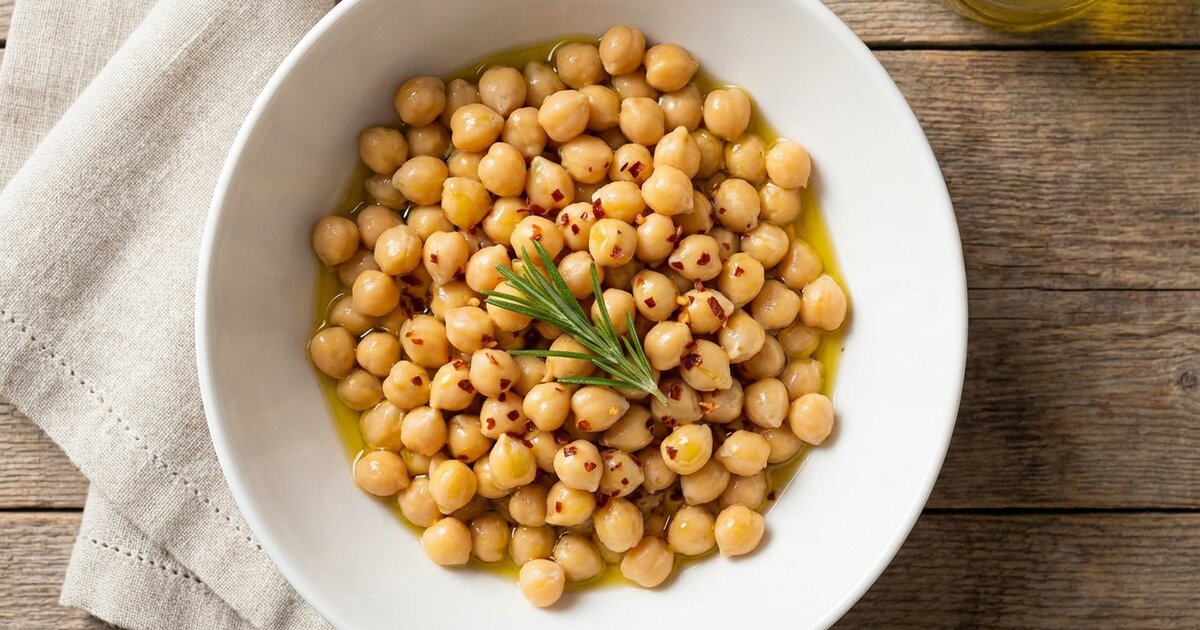
Chickpeas—also known as garbanzo beans—are one of the most versatile legumes in the world. From hummus to curries to roasted snacks, they appear in cuisines across the globe. And for good reason: they’re delicious, nutritious, and incredibly useful for macro tracking.
What sets chickpeas apart from other beans is their slightly higher fat content and versatility. You can eat them whole, mash them into hummus, roast them for crunch, or blend them into flour. Each form has different applications for your diet.
This guide breaks down chickpea macros in all their forms, so you can use them strategically.
Chickpeas Macros: Quick Reference
Here’s the complete nutritional picture for cooked chickpeas.
Per Cup (Cooked, 164g)
| Nutrient | Amount | % Daily Value |
|---|---|---|
| Calories | 269 | 13% |
| Protein | 15g | 30% |
| Total Carbs | 45g | 16% |
| Fiber | 12g | 43% |
| Net Carbs | 33g | - |
| Fat | 4.2g | 5% |
| Iron | 4.7mg | 26% |
| Folate | 282mcg | 71% |
| Phosphorus | 276mg | 22% |
| Manganese | 1.7mg | 74% |
Per 100g (Cooked)
| Nutrient | Amount |
|---|---|
| Calories | 164 |
| Protein | 9g |
| Total Carbs | 27g |
| Fiber | 7g |
| Net Carbs | 20g |
| Fat | 2.6g |
Dry vs Cooked Comparison
| Measure | Dry Chickpeas | Cooked Chickpeas |
|---|---|---|
| 1 cup volume | 200g | 164g |
| Calories | 756 | 269 |
| Protein | 41g | 15g |
Note: 1 cup dry chickpeas yields approximately 2.5-3 cups cooked.
Chickpea Forms Compared: The Complete Macro Map
Chickpeas show up in your kitchen in at least eight distinct forms, and the macros shift dramatically between them. If you’re tracking, the form matters more than most people realize — a cup of hummus and a cup of cooked chickpeas are not the same food.
| Form (per serving) | Serving | Calories | Protein | Carbs | Fiber | Fat | Sodium |
|---|---|---|---|---|---|---|---|
| Dried, cooked from scratch | 1 cup (164g) | 269 | 15g | 45g | 12g | 4.2g | 11mg |
| Canned, rinsed | 1 cup (164g) | 210 | 11g | 35g | 10g | 2g | 360mg |
| Canned, unrinsed | 1 cup (164g) | 286 | 12g | 54g | 11g | 2.8g | 622mg |
| Roasted, crispy | 1/2 cup (40g) | 180 | 10g | 24g | 6g | 5g | 200mg |
| Hummus (classic) | 1/4 cup (60g) | 100 | 4.8g | 8g | 2g | 6g | 230mg |
| Chickpea pasta (Banza, dry) | 2 oz (56g) | 190 | 14g | 32g | 8g | 3.5g | 60mg |
| Chickpea flour (besan) | 1/4 cup (23g) | 89 | 5g | 13g | 3g | 1.5g | 14mg |
| Falafel (baked) | 3 balls (51g) | 165 | 7g | 17g | 4g | 8g | 290mg |
| Sprouted chickpeas | 1 cup (140g) | 480 | 22g | 78g | 14g | 8g | 30mg |
A few patterns jump out. Rinsing canned chickpeas drops sodium by roughly 40% — non-negotiable if you’re watching salt. Roasting concentrates calories because the water cooks off, so half a cup roasted equals a full cup cooked. And hummus is the trap most macro trackers fall into: the tahini and olive oil push it close to a 60% fat ratio, even though it started life as a high-fiber legume.
For comparable plant-based protein options, see our almonds macros and peanuts macros breakdowns.
How Preparation Method Changes Everything
The way you cook chickpeas alters not just sodium but bioavailability, glycemic response, and total digestible energy. Here’s what changes with each method:
Dried, soaked, and cooked from scratch. The cleanest profile. Roughly 269 calories per cooked cup, only 11mg sodium, and the firmest texture. Soaking for 12+ hours reduces phytates (which can block mineral absorption) by around 50% and significantly cuts gas-causing oligosaccharides. This is the form to use when you want chickpeas to be a clear, trackable protein source.
Canned, rinsed. Convenience-tax acceptable for most people. Rinsing under cold water for 30 seconds cuts sodium from ~622mg to ~360mg per cup and also washes away some of the starchy liquid that drives bloating. Macros stay close to cooked-from-scratch, with slightly more moisture (which is why you get a touch fewer calories per cup).
Canned, unrinsed (used with aquafaba). Highest sodium load. Use this when you actively want the aquafaba (vegan meringues, mayo, cocktails) — otherwise rinse.
Roasted/crispy. Water evaporates, so you’re eating concentrated chickpea. Half a cup roasted ≈ one full cup cooked in calorie terms. The fat creeps up (added oil for roasting) and texture becomes snack-like. Great chip replacement, but don’t fool yourself into thinking “just a handful” — 1 oz of crispy chickpeas is ~120 calories.
Blended into hummus. The macro identity changes entirely. Adding tahini (sesame paste) and olive oil shifts the profile from carb-and-protein-dominant to fat-dominant. A 1/4 cup serving of hummus has more fat (6g) than carbs (8g). Track it as a fat source with bonus fiber, not as a chickpea serving.
Made into pasta (Banza, Chickapea, Banza Plus). This is the highest-protein form per dry ounce — 14g protein in 2 oz dry. The cooking process gelatinizes the starch differently than wheat pasta, so the glycemic impact stays moderate.
If you’re prepping in bulk, dried-and-cooked is the macro-optimal choice. If you’re prepping in 12 minutes, rinsed canned is the right tradeoff.
Chickpeas for Specific Goals
Chickpeas for Weight Loss
Chickpeas are arguably the most underrated weight-loss food on the planet. A cooked cup delivers 12g of fiber and 15g of protein for 269 calories — a satiety profile most processed foods can’t match. Research published in the Journal of Nutrition found that adding 1 cup of pulses (chickpeas, lentils, beans) per day increased fullness ratings by 31% and was associated with measurable fat loss over 6 weeks without intentional calorie restriction.
The math that works for weight loss: replace one rice or pasta-based meal per day with a chickpea-based bowl. Swap 1 cup of white rice (205 cal, 4g protein, 1g fiber) for 1 cup of chickpeas (269 cal, 15g protein, 12g fiber). You add 64 calories but gain 11g of protein and 11g of fiber — net result is dramatically improved satiety and a much better hormonal response. Run your personal numbers through our macros for weight loss calculator.
Chickpeas for Muscle Gain
Plant-based lifters get nervous about chickpeas because they’re not a complete protein. They’re right to track it but wrong to dismiss it. The leucine content per cup is around 1.1g — below the ~2.5g threshold that maximally triggers muscle protein synthesis, but combinable with grains, nuts, or a small whey scoop to hit that mark.
For muscle gain, the practical play is volume + pairing. A 2-cup chickpea bowl delivers 30g protein, with quinoa or brown rice rounding out the amino acid profile. Add a tablespoon of tahini and you’re at 33g protein, complete amino acids, and roughly 700 calories — a legitimate growth-phase meal. For lifters needing to hit 1g protein per pound of bodyweight, chickpeas work best as a supporting protein, with whey, eggs, or chicken doing the heavy lifting. Use our protein calculator to back-solve your daily targets, then check macros for muscle gain for the calorie ceiling.
Chickpeas for Maintenance
This is where chickpeas shine brightest. At maintenance, your job is to eat in a way that’s sustainable, satisfying, and easy to repeat. A 3/4 cup serving of chickpeas (200 cal, 11g protein, 9g fiber) fits cleanly into a maintenance day without dominating it. Rotate them through salads, grain bowls, curries, and roasted snacks across the week.
The maintenance sweet spot: 1/2 to 1 cup of chickpeas per day, prepared in a different form each time. Hummus on crudités Monday, roasted as a snack Tuesday, in a curry Wednesday, blended into a soup Thursday. You hit the fiber target (25-38g/day) almost incidentally, and the legume rotation supports cardiovascular and gut health long-term.
Common Chickpea Mistakes
-
Eating canned chickpeas without rinsing. You’re consuming ~622mg of sodium per cup — about 27% of your daily limit — for no good reason. A 30-second rinse cuts that nearly in half.
-
Treating hummus as “just chickpeas.” Hummus is roughly 60% fat by calories thanks to tahini and oil. Track it as a fat-forward dip, not a protein source.
-
Buying “roasted chickpea snacks” expecting low calories. They’re shelf-stable, dehydrated, and often re-fried in oil. A 1.5 oz bag can hit 180-220 calories — same as a granola bar.
-
Ignoring portion creep with hummus and pita. A “snack” of 1/2 cup hummus + 1 pita can cross 400 calories before you’ve finished mid-afternoon coffee.
-
Skipping the soak with dried chickpeas. Beyond the cooking time, soaking reduces phytates and the oligosaccharides that cause bloating. Twelve hours of cold water makes chickpeas dramatically more digestible.
-
Assuming chickpea pasta is “free.” It’s higher protein than wheat pasta but still 190 cal per 2 oz dry — and most people pour 3-4 oz. Weigh it.
Expert Take
Chickpeas are one of the few foods I tell every client to eat more of, regardless of their macro split. The fiber-to-protein ratio is exceptional, the glycemic impact is moderate, and the cost per gram of protein beats almost any animal source. The catch: most people undercount the calories in their hummus and overcount the protein in their chickpea pasta. Weigh, track, and rotate the form.
— Sarah Chen, MS, RD
What to Pair Chickpeas With
The amino acid profile of chickpeas is incomplete on its own — low in methionine, high in lysine. Pairing chickpeas with grains, nuts, or small amounts of dairy/animal protein creates a complete protein and dramatically improves the macro balance.
Chickpeas + brown rice (the classic completion):
- 1 cup chickpeas + 1/2 cup brown rice
- 378 cal, 19g protein, 67g carbs, 5g fat
- Complete amino acid profile, ~14g fiber
Chickpeas + quinoa (gluten-free completion):
- 3/4 cup chickpeas + 1/2 cup quinoa
- 312 cal, 15g protein, 51g carbs, 4g fat
- Complete protein, 10g fiber. See quinoa vs rice macros for the swap math.
Chickpeas + Greek yogurt dressing (high-protein bowl):
- 1 cup chickpeas + 1/2 cup non-fat Greek yogurt + lemon/garlic
- 339 cal, 27g protein, 49g carbs, 4g fat
- The yogurt drives the meal to a true high-protein status
Roasted chickpeas + almonds (savory snack stack):
- 1/2 cup roasted chickpeas + 1 oz almonds
- 344 cal, 16g protein, 30g carbs, 19g fat
- Travel-friendly, no refrigeration, ~10g fiber
Plug any of these into the macro calculator to see how they fit your daily targets.
Chickpeas vs Other Legumes
How do chickpeas compare to other beans and legumes?
| Legume (1 cup cooked) | Calories | Protein | Carbs | Fiber | Fat |
|---|---|---|---|---|---|
| Chickpeas | 269 | 15g | 45g | 12g | 4.2g |
| Lentils | 230 | 18g | 40g | 16g | 0.8g |
| Black beans | 227 | 15g | 41g | 15g | 0.9g |
| Kidney beans | 225 | 15g | 40g | 11g | 0.9g |
| Pinto beans | 245 | 15g | 45g | 15g | 1.1g |
| Navy beans | 255 | 15g | 47g | 19g | 1.1g |
| Edamame | 188 | 18g | 14g | 8g | 8g |
Chickpeas stand out for:
- Higher fat content (4.2g vs ~1g for most beans)
- Slightly higher calories
- Unique flavor and texture
- Extreme versatility (hummus, roasted, etc.)
See also: Lentils Macros | Black Beans Macros
Chickpeas in Different Forms
Hummus Macros
Hummus transforms chickpeas by adding tahini, olive oil, and other ingredients.
| Serving | Calories | Protein | Carbs | Fat |
|---|---|---|---|---|
| 1 tbsp (15g) | 25 | 1.2g | 2g | 1.5g |
| 2 tbsp (30g) | 50 | 2.4g | 4g | 3g |
| 1/4 cup (60g) | 100 | 4.8g | 8g | 6g |
| 1/2 cup (120g) | 200 | 10g | 16g | 12g |
Key insight: Hummus is more calorie-dense than plain chickpeas due to tahini and olive oil. It’s easy to eat 200+ calories of hummus with pita or vegetables.
Roasted Chickpeas Macros
Roasting removes water and concentrates nutrients.
| Serving | Calories | Protein | Carbs | Fat |
|---|---|---|---|---|
| 1/4 cup roasted | 90 | 5g | 12g | 2.5g |
| 1/2 cup roasted | 180 | 10g | 24g | 5g |
| 1 oz (28g) | 120 | 6g | 15g | 3g |
Roasted chickpea math: They shrink by about 50% when roasted, so 1 cup cooked becomes 1/2 cup roasted—with the same calories concentrated.
Chickpea Flour (Besan) Macros
| Serving | Calories | Protein | Carbs | Fat |
|---|---|---|---|---|
| 1/4 cup (23g) | 89 | 5g | 13g | 1.5g |
| 1/2 cup (46g) | 178 | 10g | 26g | 3g |
Uses: Gluten-free baking, coating for frying, making flatbreads (socca/farinata).
Canned vs Dried Chickpeas
| Type (1 cup) | Calories | Protein | Carbs | Sodium |
|---|---|---|---|---|
| Dried (cooked) | 269 | 15g | 45g | 11mg |
| Canned (drained) | 286 | 12g | 54g | 622mg |
Canned chickpeas have more sodium and slightly different macros due to processing. Rinse thoroughly to reduce sodium by ~40%.
Chickpeas vs Other Protein Sources
How do chickpeas stack up as a protein source?
Protein Comparison (Per ~15g Protein)
| Food | Amount | Calories | Carbs | Fat |
|---|---|---|---|---|
| Chickpeas | 1 cup | 269 | 45g | 4.2g |
| Chicken breast | 2 oz | 94 | 0g | 2g |
| Greek yogurt | 3/4 cup | 100 | 5g | 0.5g |
| Eggs | 2.5 large | 195 | 1g | 13g |
| Tofu | 6 oz | 125 | 3g | 6g |
| Beef (90% lean) | 2 oz | 123 | 0g | 7g |
Reality check: Chickpeas require more calories and carbs than animal proteins for equivalent protein. But they’re affordable, sustainable, and provide significant fiber.
Compare with Chicken Breast Macros and Greek Yogurt Macros.
Chickpeas for Different Diet Goals
Chickpeas for Weight Loss
Verdict: Excellent choice for sustainable weight loss.
Why chickpeas work:
- High fiber (12g/cup) dramatically increases satiety
- Protein (15g) preserves muscle during deficit
- Low glycemic index prevents cravings
- Research links legume consumption to lower body weight
Weight-loss chickpea meal:
- 1/2 cup chickpeas: 135 cal
- Large salad with vegetables: 75 cal
- Lemon-tahini dressing (1 tbsp): 50 cal
- Total: 260 calories, extremely filling
Use our Macro Calculator to see how chickpeas fit your goals.
Chickpeas for Muscle Building
Verdict: Good plant-based option as part of varied protein intake.
Considerations:
- Not a complete protein alone (low in methionine)
- Need more volume for high protein goals
- Works well combined with grains
High-protein chickpea bowl:
- 1 cup chickpeas: 269 cal, 15g protein
- 1 cup quinoa: 222 cal, 8g protein
- Roasted vegetables: 80 cal, 2g protein
- Tahini drizzle: 90 cal, 3g protein
- Total: 661 cal, 28g protein (complete amino acids)
Chickpeas on Keto
Verdict: Not compatible with strict keto.
The math:
- 1 cup chickpeas = 33g net carbs
- Strict keto limit = 20-25g/day
- One serving exceeds daily allowance
If you want chickpeas on low-carb:
- 1/4 cup = 8g net carbs
- Use as small addition, not main component
- Better for moderate low-carb (50-100g/day)
Keto alternatives:
- Black soybeans (1g net carb per cup)
- Lupini beans (very low carb)
- Edamame (lower carb than chickpeas)
Chickpeas for Vegetarian/Vegan Diets
Verdict: Essential protein source for plant-based eating.
Chickpeas provide:
- Substantial protein (15g/cup)
- Iron (26% DV) - important for plant-based diets
- Versatility (curries, salads, hummus, roasted snacks)
- Complete protein when combined with grains
Daily plant-based protein plan:
- Breakfast: Chickpea flour pancakes (12g protein)
- Lunch: Falafel wrap (15g protein)
- Snack: Hummus with vegetables (5g protein)
- Dinner: Chana masala with rice (18g protein)
- Total: 50g protein from chickpeas alone
Chickpeas for IIFYM/Flexible Dieting
Chickpeas fit perfectly into flexible dieting—just track accurately.
IIFYM tips:
- Weigh portions for accuracy
- Account for preparation method (hummus vs whole)
- Great for fiber goals
- Good plant-based protein contribution
Learn more in our Flexible Dieting Guide.
Chickpea Meal Ideas
Quick Chickpea Meals
Simple chickpea salad:
- 1 cup chickpeas: 269 cal
- Cucumber, tomato, red onion: 30 cal
- Feta cheese (1 oz): 75 cal
- Olive oil dressing (1 tbsp): 120 cal
- Total: 494 cal, 20g protein
Roasted chickpea snack:
- 1/2 cup chickpeas
- Toss with olive oil and spices
- Roast at 400°F for 25-30 minutes
- Per serving: ~160 cal, 7g protein, crunchy and satisfying
Quick chana masala:
- 1 can chickpeas: ~540 cal
- 1 can diced tomatoes: 50 cal
- Onion, garlic, garam masala, ginger
- Per serving (serves 4): ~170 cal, 8g protein
Chickpea pasta (high protein):
- Banza chickpea pasta (2 oz dry): 190 cal, 14g protein, 32g carbs
- Compare to regular pasta: 200 cal, 7g protein, 42g carbs
Mediterranean Mezze Plate
- Hummus (1/4 cup): 100 cal
- Pita bread (1 small): 80 cal
- Cucumber and tomatoes: 30 cal
- Olives (5): 25 cal
- Feta (1 oz): 75 cal
- Total: 310 cal, 10g protein, 35g carbs
Meal Prep Chickpea Recipes
Falafel (makes 12):
- 2 cups chickpeas (dried, soaked)
- Herbs, garlic, spices
- Bake or air fry at 375°F
- Per falafel: ~55 cal, 3g protein
Chickpea curry (4 servings):
- 2 cans chickpeas
- Coconut milk, tomatoes, curry spices
- Per serving: ~320 cal, 12g protein
Check out more in our Macro-Friendly Meals guide.
How to Cook Chickpeas
Stovetop Method
Soaking (required for dried chickpeas):
- Overnight soak: Cover with water, soak 8-12 hours
- Quick soak: Boil 2 minutes, cover, let sit 1 hour
Cooking:
- Drain and rinse soaked chickpeas
- Cover with fresh water (3 inches above)
- Bring to boil, reduce to simmer
- Cook 1.5-2 hours until tender
- Add salt in last 15 minutes
Instant Pot Method
- 1 cup dried chickpeas + 4 cups water
- Pressure cook: 35-40 minutes (unsoaked) or 12-15 minutes (soaked)
- Natural release 15 minutes
Aquafaba: The Chickpea Water Hack
The liquid from canned chickpeas (aquafaba) can be whipped like egg whites:
- 3 tbsp aquafaba = 1 egg white
- Use in vegan meringues, mayo, cocktails
- Approximately 5 calories per tablespoon
Common Chickpea Questions
Are Chickpeas a Complete Protein?
No. Chickpeas are low in methionine (an essential amino acid).
Solution: Combine with grains (rice, bread, couscous) at any point during the day to get all essential amino acids.
Why Do Chickpeas Cause Gas?
Chickpeas contain oligosaccharides that ferment in your gut, producing gas.
To reduce discomfort:
- Start with small portions
- Increase intake gradually over weeks
- Rinse canned chickpeas thoroughly
- Discard soaking water from dried chickpeas
- Add digestive spices (cumin, coriander, ginger)
Dried vs Canned: Which Is Better?
Dried chickpeas:
- Cheaper
- Lower sodium
- Better texture
- Requires soaking and 1.5-2 hours cooking
Canned chickpeas:
- Convenient (ready to eat)
- Higher sodium (rinse to reduce)
- Softer texture
- More expensive per serving
For hummus: Canned works fine For roasting: Dried are firmer and better For time constraints: Canned wins
Can I Eat Chickpeas Every Day?
Yes, for most healthy adults. Regular legume consumption is associated with:
- Lower cardiovascular risk
- Better blood sugar control
- Improved gut health
- Weight management benefits
The Bottom Line on Chickpeas Macros
The facts:
- 1 cup cooked: 269 calories, 15g protein, 12g fiber
- Higher in fat than most beans (4.2g)
- Net carbs: 33g per cup
- Extremely versatile (whole, hummus, roasted, flour)
- Good source of iron, folate, and manganese
Best uses:
- Plant-based protein in varied diets
- Weight loss (high satiety)
- Budget-friendly meal planning
- Mediterranean and Middle Eastern cuisine
- Snacking (roasted chickpeas vs chips)
Limitations:
- Not suitable for strict keto
- Not a complete protein alone
- Higher carbs than some alternatives
- Requires some preparation time
Bottom line: Chickpeas are one of the most versatile and nutritious legumes. Whether you’re making hummus, tossing them in salads, or roasting them for snacks, they provide solid protein, excellent fiber, and sustained energy. For plant-based eaters especially, they’re essential.
For understanding how chickpeas fit your overall nutrition picture, read What Are Macronutrients.
Related tools: Compare any 2 foods side-by-side · Recipe Macro Calculator · Find your daily macros
Related Articles
2% Milk Macros
2% Milk per 1 cup (240ml): 122.0 cal, 8.0g protein, 12.0g carbs, 5.0g fat. Full macro...
Read guide →
Apple Juice (clean data) Macros
Apple Juice (clean data) per 1 cup (248ml): 114.0 cal, 0.2g protein, 28.0g carbs, 0.3g...
Read guide →
Avocado Oil Macros
Avocado Oil per 1 tbsp (14g): 124.0 cal, 0.0g protein, 0.0g carbs, 14.0g fat. Full macro...
Read guide →Note: Nutrition values are approximate and may vary based on preparation method and source.