Dark Chocolate Macros: Complete Nutrition Facts & Calories
Reviewed by Dr. Michael Torres, PhD
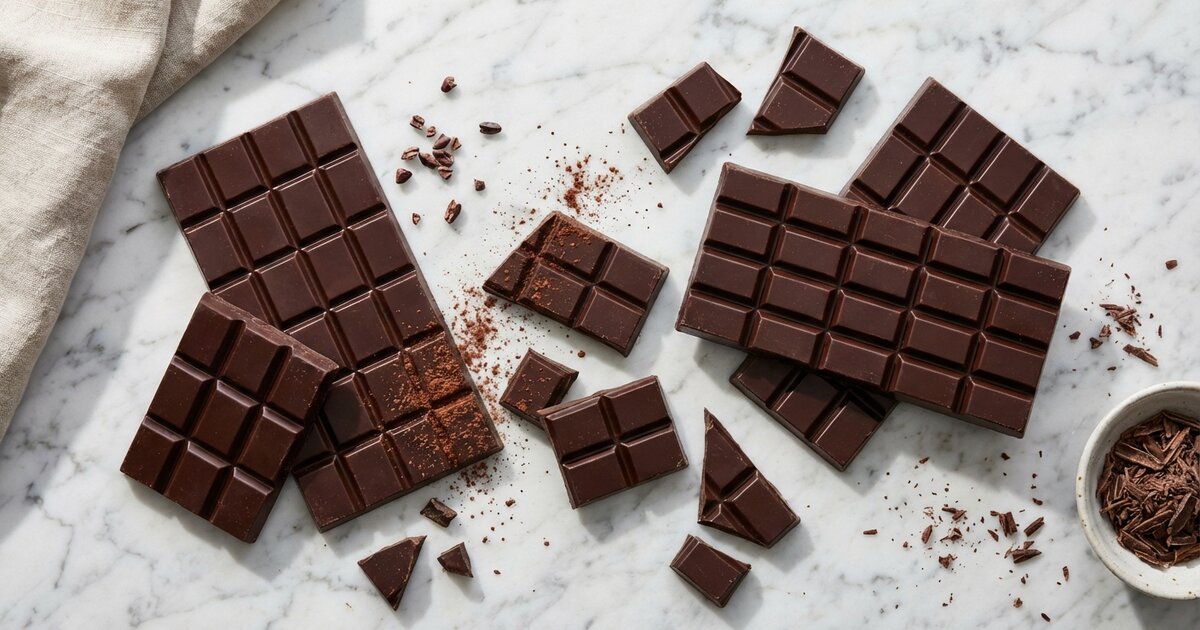
Dark chocolate is the treat that fits your macros—if you choose wisely and portion carefully. At 170 calories per ounce with genuine health benefits, dark chocolate lets you satisfy sweet cravings while actually adding nutrients to your diet.
This guide covers dark chocolate macros by cacao percentage so you can enjoy chocolate strategically.
Dark Chocolate Macros: Quick Reference
Here’s the nutrition breakdown by cacao percentage (per 1 oz/28g):
| Cacao % | Calories | Protein | Carbs | Fiber | Net Carbs | Sugar | Fat |
|---|---|---|---|---|---|---|---|
| 70-75% | 170 | 2g | 15g | 2.5g | 12.5g | 9g | 12g |
| 80-85% | 170 | 2.5g | 13g | 3g | 10g | 6g | 13g |
| 90%+ | 170 | 3g | 10g | 3.5g | 6.5g | 3g | 14g |
| 100% (unsweetened) | 145 | 4g | 7g | 4g | 3g | 0g | 15g |
Key insight: Higher cacao percentage = fewer carbs and sugar, more fat, more bitter taste.
Dark Chocolate vs. Other Chocolate
| Chocolate Type (1 oz) | Calories | Net Carbs | Sugar |
|---|---|---|---|
| Dark (85%) | 170 | 10g | 6g |
| Dark (70%) | 170 | 12.5g | 9g |
| Milk chocolate | 153 | 16g | 14g |
| White chocolate | 153 | 17g | 17g |
| Semi-sweet chips | 140 | 18g | 14g |
Dark chocolate has the lowest sugar and most health benefits of chocolate types.
Understanding Macronutrients
Dark chocolate provides fat and carbs with moderate fiber. To understand how these fit your nutrition, learn about what macronutrients are.
How Dark Chocolate Fits Different Diets
Keto and Low-Carb
Dark chocolate can work for keto:
- 90%+ cacao: 6.5g net carbs/oz (best choice)
- 85% cacao: 10g net carbs/oz (moderate)
- 70% cacao: 12.5g net carbs/oz (occasional)
Keto strategy: 2-3 small squares of 85%+ dark chocolate = ~5g net carbs. Satisfies cravings without breaking ketosis.
Calorie Deficit / Weight Loss
Dark chocolate fits weight loss with discipline:
- Pre-portion into small amounts
- 1 oz maximum as a daily treat
- Choose higher cacao (more satisfying, less sugar)
- Let it melt slowly (extends enjoyment)
Flexible Dieting
Dark chocolate is perfect for flexible dieting—track it, enjoy it, no guilt. The key is logging every piece.
Popular Dark Chocolate Brands
| Brand | Type | Calories/oz | Net Carbs |
|---|---|---|---|
| Ghirardelli 86% | Bar | 180 | 8g |
| Lindt 85% | Bar | 175 | 9g |
| Lily’s (stevia) | Bar | 110 | 3g |
| ChocZero | Bar | 100 | 1g |
| Endangered Species 88% | Bar | 190 | 8g |
| Green & Black’s 85% | Bar | 180 | 9g |
Sugar-free options: Lily’s and ChocZero use stevia/erythritol for dramatically lower net carbs.
Dark Chocolate Health Benefits
Beyond macros, dark chocolate offers:
| Benefit | Evidence |
|---|---|
| Antioxidants (flavanols) | Higher than blueberries per gram |
| Heart health | May improve blood flow |
| Mood boost | Contains serotonin precursors |
| Brain function | Flavanols support cognition |
| Lower blood pressure | In moderate doses |
These benefits apply to 70%+ dark chocolate, not milk chocolate.
Portion Control Strategies
The Challenge
Dark chocolate is calorie-dense (170 cal/oz) and easy to overeat. A full bar can be 500-600 calories.
Solutions
- Buy individually wrapped squares
- Portion a bar into servings immediately
- Choose 85%+ (too bitter to binge)
- Set a daily limit (1 oz or less)
- Eat slowly, savor each piece
Meal Ideas with Dark Chocolate
Healthy Dessert (200 cal, 5g protein, 22g carbs, 10g fat)
- 0.5 oz dark chocolate (85%)
- 1/2 cup strawberries
- 2 tbsp whipped cream
Chocolate Protein Shake (350 cal, 35g protein, 25g carbs, 12g fat)
Trail Mix (280 cal, 8g protein, 20g carbs, 20g fat)
- 0.5 oz dark chocolate chips
- 1 oz almonds
- 1 tbsp dried cranberries
Dark Chocolate Bark (per piece ~100 cal, 2g protein, 8g carbs, 7g fat)
- Melted dark chocolate
- Topped with nuts, sea salt
- Break into portions
Calculate Your Macros
Use our macro calculator to determine your daily targets, then fit dark chocolate into your treat budget.
Buying Guide: Best Dark Chocolate
For Lowest Carbs
- 85%+ cacao bars
- Sugar-free options (Lily’s, ChocZero)
- 100% cacao baking chocolate (bitter but zero sugar)
For Best Taste
- 70-75% for balanced flavor
- 80-85% for serious chocolate lovers
- Avoid 90%+ unless you love bitter
For Best Value
- Store brand 70%+ (Trader Joe’s, Aldi)
- Costco Kirkland bars
- Bulk cocoa nibs
Common Dark Chocolate Questions
How Dark Is “Dark Chocolate”?
True dark chocolate is 70% cacao or higher. Below 70%, it’s often just “semisweet” or “bittersweet.” The higher the percentage, the darker and more bitter.
Can I Eat Dark Chocolate Every Day?
Yes, in moderation. Research supports 1-2 oz daily. For macro tracking, 0.5-1 oz daily fits most plans without issue.
Does Dark Chocolate Have Caffeine?
Yes, about 12mg per ounce (vs. 95mg in coffee). Unlikely to affect most people, but sensitive individuals should eat earlier in the day.
Why Does Higher Cacao Cost More?
Higher cacao percentage means more cocoa solids, which are expensive. Sugar is cheap. Premium chocolate also uses better beans and processing.
Is Cocoa Powder Better Than Chocolate?
For macros, unsweetened cocoa powder is lower calorie (12 cal/tbsp vs 170 cal/oz chocolate). Use in baking, smoothies, and hot cocoa for chocolate flavor with fewer calories.
Final Thoughts
Dark chocolate is the macro-friendly indulgence:
- 170 calories per ounce—meaningful but manageable
- 10g net carbs (85%)—fits low-carb in small portions
- Genuine health benefits—antioxidants, mood, heart health
- Satisfies cravings—prevents feeling deprived
Choose 70%+ cacao, portion carefully (0.5-1 oz), and dark chocolate becomes a sustainable daily treat. It’s proof that hitting your macros doesn’t mean giving up the foods you love.
Related Articles

Dragonfruit Macros: Complete Nutrition Guide for Pitaya
Complete macro breakdown of dragonfruit (pitaya). Learn the calories, protein, carbs, and...
Read guide →
Bulgur Macros: Complete Nutritional Guide & Health Benefits
Discover bulgur's complete macro breakdown, nutritional benefits, and how to incorporate...
Read guide →
Radish Macros: Nutrition Facts and Health Benefits
Complete guide to radish macros and nutrition. Learn calories, protein, carbs, and health...
Read guide →Note: Nutrition values are approximate and may vary based on preparation method and source.