Hummus Macros: Complete Nutrition Facts & Calories
Reviewed by Dr. Michael Torres, PhD
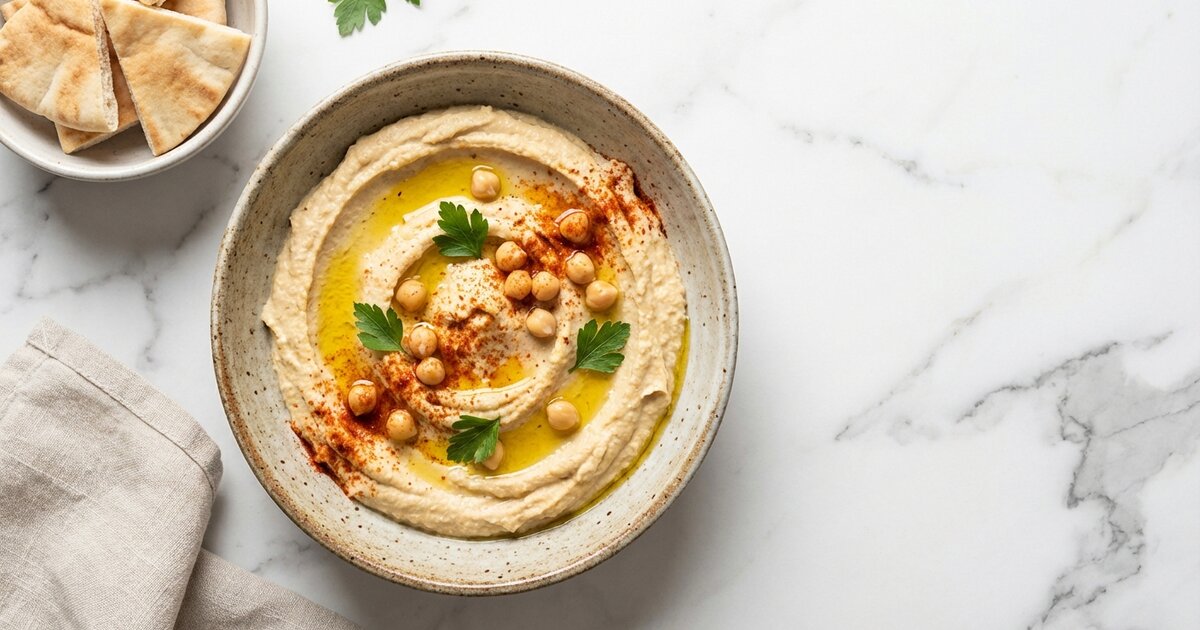
Hummus is the healthy dip that actually delivers—plant protein, healthy fats, and satisfying flavor in a versatile package. At 70 calories per 2 tablespoons, hummus adds nutrition to snacks without the guilt of ranch or cheese dips.
This guide covers hummus macros so you can enjoy this Mediterranean staple while tracking accurately.
Hummus Macros: Quick Reference
Here’s the nutrition breakdown for hummus:
| Serving | Calories | Protein | Carbs | Fiber | Net Carbs | Fat |
|---|---|---|---|---|---|---|
| 2 tbsp (30g) | 70 | 2g | 4g | 1g | 3g | 5g |
| 1/4 cup (60g) | 140 | 4g | 8g | 2g | 6g | 10g |
| 1/2 cup (120g) | 280 | 8g | 16g | 4g | 12g | 20g |
| 100g | 233 | 7g | 13g | 3g | 10g | 17g |
Key insight: Hummus serving sizes (2 tbsp) are smaller than most people realize. Track carefully.
Hummus Varieties Compared
| Variety (2 tbsp) | Calories | Net Carbs | Fat |
|---|---|---|---|
| Classic/Original | 70 | 3g | 5g |
| Roasted garlic | 70 | 3g | 5g |
| Red pepper | 70 | 4g | 5g |
| Pine nut | 80 | 3g | 6g |
| Olive | 75 | 3g | 6g |
| Chocolate | 80 | 7g | 5g |
| Low-fat | 50 | 4g | 2g |
Most varieties have similar macros. Flavored hummus may have slightly more calories from added ingredients.
Understanding Macronutrients
Hummus provides a balance of all three macros. To understand how they work together, learn about what macronutrients are.
Hummus vs. Other Dips
| Dip (2 tbsp) | Calories | Net Carbs | Protein |
|---|---|---|---|
| Hummus | 70 | 3g | 2g |
| Ranch | 140 | 2g | 0g |
| Guacamole | 50 | 2g | 1g |
| Cheese dip | 80 | 2g | 2g |
| Greek yogurt dip | 25 | 2g | 3g |
| Baba ganoush | 50 | 3g | 1g |
Hummus is middle-of-the-road for calories but offers better nutrition than most dips.
How Hummus Fits Different Diets
Keto and Low-Carb
Hummus is borderline for keto:
- 2 tbsp = 3g net carbs (fits)
- 1/4 cup = 6g net carbs (significant)
- Easy to overeat at 3g carbs per scoop
Keto tip: Measure hummus carefully or choose guacamole (lower carb) as your dip.
Calorie Deficit / Weight Loss
Hummus supports weight loss:
- 70 cal/2 tbsp is moderate
- Protein and fiber increase satiety
- Healthier than most dip alternatives
- Pairs well with vegetables
Watch for: Eating hummus with pita chips or crackers adds significant calories.
Plant-Based/Vegan
Hummus is a plant-based protein staple:
- Chickpeas provide complete protein when combined with tahini
- Good source of iron and fiber
- Versatile in many dishes
Flexible Dieting
Hummus fits flexible dieting well—track it accurately and enjoy. Measure your portions until you can eyeball 2 tablespoons.
Best Dippers for Hummus
| Dipper + 2 tbsp Hummus | Total Calories | Total Carbs |
|---|---|---|
| 1 cup carrots | 122 | 11g |
| 1 cup bell peppers | 100 | 7g |
| 1 cup celery | 84 | 4g |
| 1 cup cucumber | 86 | 6g |
| 10 pretzels | 134 | 17g |
| 1 oz pita chips | 200 | 25g |
Lowest calorie: Celery and cucumbers. Watch out for: Pita chips and crackers.
Meal Ideas with Hummus
Veggie Snack Plate (200 cal, 6g protein, 18g carbs, 12g fat)
- 3 tbsp hummus
- 1 cup mixed vegetables (carrots, bell peppers, celery)
Mediterranean Bowl (450 cal, 28g protein, 40g carbs, 20g fat)
Hummus Wrap (380 cal, 15g protein, 45g carbs, 16g fat)
- 2 tbsp hummus (spread)
- 1 large tortilla
- Vegetables
- Feta or chicken optional
High-Protein Lunch (350 cal, 35g protein, 20g carbs, 14g fat)
- 3 tbsp hummus
- 4 oz grilled salmon
- Large salad
- Lemon dressing
Calculate Your Macros
Use our macro calculator to determine your daily targets, then fit hummus into your snack or meal plan.
Homemade vs. Store-Bought
| Factor | Homemade | Store-Bought |
|---|---|---|
| Macros | You control | Standard |
| Ingredients | Full control | Check label |
| Cost | Cheaper | Convenient |
| Freshness | Best | Good |
| Time | 10 minutes | None |
Basic Hummus Recipe
- 1 can chickpeas (drained)
- 2 tbsp tahini
- 2 tbsp lemon juice
- 1 clove garlic
- 2 tbsp olive oil
- Salt to taste
- Blend until smooth
Homemade lets you reduce oil for fewer calories.
Common Hummus Questions
Is Hummus Actually Healthy?
Yes. Hummus provides:
- Plant protein (chickpeas)
- Healthy fats (olive oil, tahini)
- Fiber
- Iron, folate, B vitamins
It’s one of the healthier dips available.
Why Is My Portion Always More Than 2 Tbsp?
Standard servings are small—2 tablespoons is less than you think. Most people eat 4-6 tablespoons when dipping (140-210 calories). Measure to calibrate.
Can I Eat Hummus Every Day?
Yes. Hummus is nutritious and safe for daily consumption. Watch portions if tracking calories—it’s easy to eat significant amounts.
Does Hummus Go Bad?
- Unopened: 1-2 weeks past “best by”
- Opened: 5-7 days refrigerated
- Homemade: 3-5 days refrigerated
- Signs of spoilage: Sour smell, mold, off taste
Is Hummus High in Sodium?
Store-bought hummus has 100-150mg sodium per 2 tbsp (5-7% daily value). Moderate, not high. Homemade can be lower.
Final Thoughts
Hummus is a nutritious, versatile dip that fits most diets:
- 70 calories per 2 tbsp—moderate, manageable
- 3g net carbs—works for low-carb in small portions
- Balanced macros—protein, carbs, and healthy fats
- Healthier than alternatives—beats ranch, cheese dips
The key is accurate portioning. Two tablespoons disappears fast when dipping. Measure until you can eyeball correctly, pair with vegetables over chips, and hummus becomes a reliable macro-friendly staple.
Related Articles
Dragonfruit Macros: Complete Nutrition Guide for Pitaya
Complete macro breakdown of dragonfruit (pitaya). Learn the calories, protein, carbs, and...
Read guide →
Bulgur Macros: Complete Nutritional Guide & Health Benefits
Discover bulgur's complete macro breakdown, nutritional benefits, and how to incorporate...
Read guide →
Radish Macros: Nutrition Facts and Health Benefits
Complete guide to radish macros and nutrition. Learn calories, protein, carbs, and health...
Read guide →Note: Nutrition values are approximate and may vary based on preparation method and source.