Alcohol and Macros: Drinking While Tracking Guide
Reviewed by Dr. Michael Torres, PhD
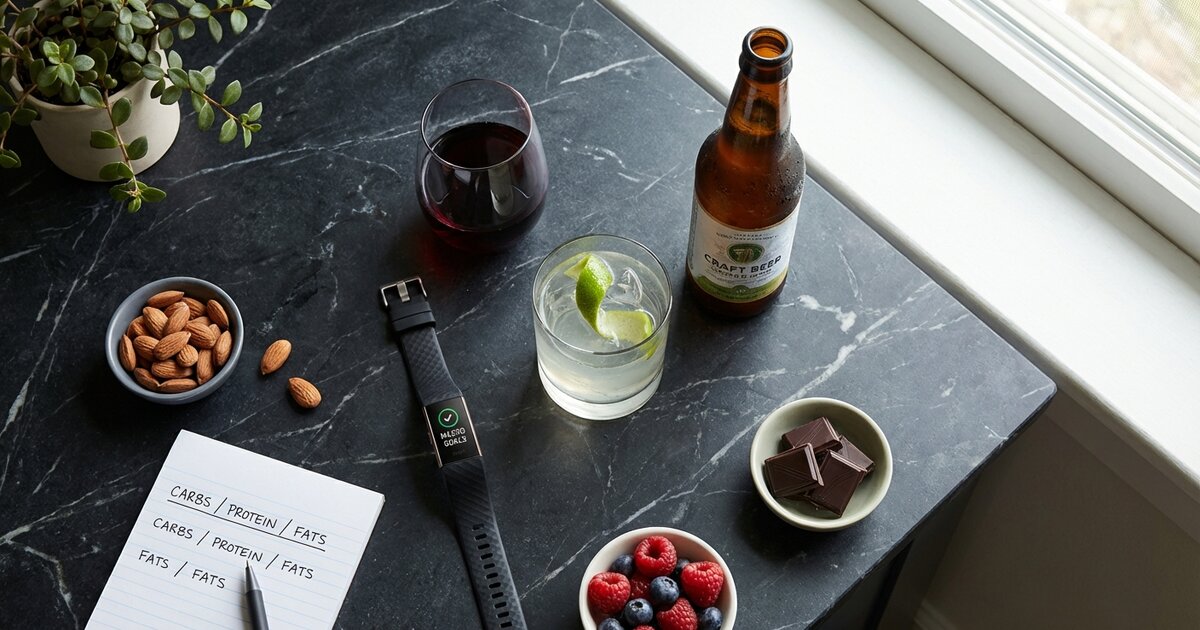
You’re tracking your macros, seeing progress, and then the weekend arrives. There’s a happy hour, a dinner party, a celebration. And you’re wondering: can I drink without blowing up my macros?
The honest answer: yes, you can fit alcohol into your macros. But there’s nuance. Alcohol isn’t just empty calories—it affects your metabolism, recovery, and decision-making in ways that can either be managed or can completely derail your progress.
This guide covers everything: how alcohol affects your macros, the calorie content of every major drink type, strategies for fitting alcohol into your tracking, and the real impact on your fitness goals.
If you’re serious about your macros but want to enjoy a social drink occasionally, this is for you.
Ready to calculate your numbers? Use the Macro Calculator to set your baseline, then you’ll know exactly how much room you have for the occasional drink.
How Alcohol Fits Into Macros
First, let’s understand what we’re actually dealing with when we drink.
The Fourth Macronutrient
You’ve learned about the three macronutrients: protein (4 cal/g), carbohydrates (4 cal/g), and fats (9 cal/g). But there’s technically a fourth: alcohol (ethanol).
Alcohol provides 7 calories per gram.
This puts it between carbs and fats in caloric density. However, unlike the other macros, alcohol provides zero essential nutrients. Your body doesn’t need it for any biological function. It’s purely “empty” calories in the truest sense.
Here’s the metabolic reality: when you drink, your body prioritizes processing alcohol over everything else. It can’t store alcohol, so it treats it as a toxin to be eliminated. This means fat burning essentially pauses until the alcohol is processed.
Why Alcohol Calories Are Different
Alcohol calories don’t behave like food calories. Here’s what happens:
1. Metabolism prioritization: Your liver drops everything to process alcohol. Fat oxidation (burning) is suppressed until alcohol is cleared.
2. Thermic effect: About 20% of alcohol calories are burned during processing (higher than carbs or fat, similar to protein). So 100 alcohol calories may have a net impact closer to 80 calories.
3. No storage: Your body can’t store alcohol as fat directly. But while processing alcohol, your body stores more of the other calories you’re consuming as fat.
4. Appetite effects: Alcohol stimulates appetite and lowers inhibitions, often leading to overeating—the real diet killer.
The practical implication: tracking alcohol calories matters, but the secondary effects (increased appetite, lowered willpower, disrupted sleep) often matter more.
What Are Macronutrients covers the three essential macros your body actually needs.
How to Track Alcohol in Your Macros
Most tracking apps don’t have an “alcohol” macro. So how do you account for it?
The Three Tracking Methods
Method 1: Count Alcohol as Carbs
Divide alcohol calories by 4 (carb calories per gram) and log as carbohydrates.
Example: A glass of wine with 120 calories = 30g “carbs” for tracking purposes.
Pros: Simple, easy to track, most apps handle this Cons: Inflates your carb count (cosmetically, not metabolically)
Method 2: Count Alcohol as Fat
Divide alcohol calories by 9 (fat calories per gram) and log as fat.
Example: A glass of wine with 120 calories = 13g “fat” for tracking purposes.
Pros: Some argue this better reflects alcohol’s metabolic impact Cons: Less common, requires manual math
Method 3: Hybrid (Carbs + Fat)
Split alcohol calories between carbs and fats, roughly 50/50.
Example: A glass of wine with 120 calories = 15g carbs + 7g fat for tracking.
Pros: Balances the macro impact Cons: Most complicated to track
Which method is best?
For most people, counting alcohol as carbs is simplest and works fine. The precision difference between methods is minimal compared to other tracking variables.
What matters most is that you account for the calories somewhere. Ignoring alcohol calories is where people go wrong.
Tracking Tips
Log before you drink: Enter your planned drinks into your tracker before going out. This shows you exactly how much room you have left for food.
Use accurate measurements: A “glass of wine” at home is often 7-8 oz, not the 5 oz standard serving. Cocktails at bars are inconsistent. When in doubt, estimate higher.
Don’t forget mixers: Juice, tonic water, soda, and syrups add significant calories on top of the alcohol.
Track the aftermath: If you eat pizza at 2 AM, that counts too. Alcohol-induced eating is often the bigger calorie hit than the drinks themselves.
Complete Alcohol Macro Guide: Beer, Wine, Spirits, and Cocktails
Let’s break down the macro content of every major alcohol category so you can make informed choices.
Spirits (Hard Liquor)
Spirits are your lowest-calorie option because they’re just alcohol and water—no carbs, no sugar.
| Spirit (1.5 oz / 44ml) | Calories | Carbs | Alcohol |
|---|---|---|---|
| Vodka (80 proof) | 97 | 0g | 14g |
| Gin (80 proof) | 97 | 0g | 14g |
| Rum (80 proof) | 97 | 0g | 14g |
| Tequila (80 proof) | 97 | 0g | 14g |
| Whiskey/Bourbon | 97 | 0g | 14g |
| Scotch | 97 | 0g | 14g |
Key insight: All 80-proof spirits have essentially identical macros—about 97 calories per shot with zero carbs. Higher proof spirits have more calories (more alcohol per volume).
Best mixers for spirits:
- Soda water (0 calories)
- Diet tonic (0-5 calories)
- Diet soda (0 calories)
- Fresh lime/lemon squeeze (2-5 calories)
Mixers to avoid:
- Regular tonic water (124 calories per 8 oz)
- Juice (100+ calories per 8 oz)
- Regular soda (100+ calories per 8 oz)
- Sugary syrups
A vodka soda is 97 calories. A vodka cranberry is 190+ calories. Choose wisely.
Wine
Wine sits in the middle range for calories and contains some carbs from residual sugars.
| Wine (5 oz / 148ml) | Calories | Carbs | Alcohol |
|---|---|---|---|
| Dry red wine | 125 | 3-4g | 14g |
| Dry white wine | 121 | 3-4g | 14g |
| Rosé (dry) | 125 | 3-4g | 14g |
| Champagne/Brut | 90-100 | 1-2g | 12g |
| Prosecco | 90-100 | 1-2g | 12g |
| Sweet white (Moscato, Riesling) | 160-180 | 10-15g | 12g |
| Dessert wine (port, sherry) | 150-200 | 12-20g | 15-20g |
Key insights:
- Dry wines have similar calories regardless of color
- Sparkling wines are often lower calorie (less alcohol, less residual sugar)
- Sweet wines have significantly more carbs and calories
- A restaurant pour is often 6-8 oz, not 5 oz—adjust accordingly
Pro tip: “Brut” means dry. Look for brut champagne or sparkling wine for the lowest-calorie bubbly option.
Beer
Beer varies wildly depending on style, from light lagers under 100 calories to craft IPAs pushing 300+.
| Beer (12 oz / 355ml) | Calories | Carbs | Alcohol |
|---|---|---|---|
| Light beer (Bud Light, Miller Lite) | 95-110 | 3-5g | 4-5% ABV |
| Ultra-light (Michelob Ultra) | 95 | 2.6g | 4.2% ABV |
| Regular lager (Budweiser, Coors) | 145-155 | 10-12g | 5% ABV |
| Pilsner | 140-160 | 10-13g | 4-5% ABV |
| Wheat beer | 165-180 | 13-17g | 5-6% ABV |
| Pale ale | 150-180 | 12-15g | 5-6% ABV |
| IPA | 180-250 | 15-20g | 6-7% ABV |
| Double IPA | 250-350 | 20-30g | 8-10% ABV |
| Stout/Porter | 170-220 | 14-20g | 5-8% ABV |
| Craft/Imperial | 200-400+ | 20-40g | 7-12% ABV |
Key insights:
- Light beers save significant calories but sacrifice flavor
- Craft beers can have 2-4x the calories of light beers
- Higher ABV = more calories (more alcohol per volume)
- IPAs and stouts are among the highest-calorie styles
If you love beer: Accept the calorie cost and plan for it, or switch to light beer for volume. One craft IPA might equal 2-3 light beers calorically.
Cocktails
Cocktails are where macro tracking gets dangerous. Mixed drinks combine spirits, sugary mixers, syrups, and juices into calorie bombs.
| Cocktail | Calories (approx) | Carbs |
|---|---|---|
| Vodka soda | 97 | 0g |
| Gin & (diet) tonic | 97-100 | 0-1g |
| Rum & Diet Coke | 97 | 0g |
| Whiskey on the rocks | 97 | 0g |
| Martini (classic) | 125-150 | 0-1g |
| Manhattan | 160-185 | 3-5g |
| Old Fashioned | 150-180 | 4-8g |
| Margarita | 200-300 | 10-30g |
| Piña Colada | 400-650 | 40-70g |
| Long Island Iced Tea | 290-400 | 20-35g |
| Mojito | 200-250 | 20-30g |
| Cosmopolitan | 150-200 | 10-15g |
| Moscow Mule | 180-220 | 15-25g |
| Daiquiri | 200-280 | 15-30g |
| Mai Tai | 300-400 | 25-40g |
The pattern: Spirit + zero-calorie mixer = lowest calories. Spirit + juice/sugar/cream = calorie bomb.
Skinny cocktail strategies:
- Ask for “skinny” versions (less or no simple syrup)
- Request diet mixers
- Get spirit + soda water + fresh citrus
- Order spirits neat or on the rocks
Beware of: Frozen drinks, tiki drinks, cream-based cocktails, and anything described as “tropical” or “frozen.” These routinely exceed 400 calories.
Counting Macros for Beginners teaches the tracking fundamentals that make alcohol management easier.
Strategies for Drinking While Tracking
Now that you know the numbers, here’s how to practically fit alcohol into your macros without derailing progress.
Strategy 1: The “Drinking Budget” Method
Plan ahead and allocate calories specifically for alcohol.
How it works:
- Decide how many drinks you’ll have
- Calculate the calories (use the charts above)
- Reduce your carbs and/or fats that day to make room
- Keep protein constant (never sacrifice protein)
Example:
Normal day: 1800 calories | 140P / 180C / 50F
Planning for 3 glasses of wine (375 calories):
- Adjusted day: 1800 calories | 140P / 85C / 45F
- Wine “budget”: ~95g carbs equivalent
You’ve made room for the wine by reducing carbs from other foods while keeping protein intact.
Strategy 2: Eat Protein First
When drinking, prioritize protein at every eating opportunity.
Why this works:
- Protein keeps you fuller, reducing drunk-eating
- Protein supports muscle preservation (alcohol impairs muscle protein synthesis)
- You’re less likely to overeat carbs/fats if you’ve had adequate protein
Practical tips:
- Have a high-protein meal before going out
- Choose protein-based appetizers (shrimp, chicken, etc.)
- If eating late-night, go for protein (deli meat, eggs, Greek yogurt)
Strategy 3: The Pre-Planned Drinking Day
On days you know you’ll drink, adjust your entire day’s eating:
Morning/Afternoon:
- Focus on protein and vegetables
- Minimize carbs and fats
- Stay well-hydrated
- Don’t skip meals (you’ll make worse decisions later)
Before drinking:
- Eat a balanced meal with protein, fiber, and fat
- Avoid going out hungry
- Drink water
While drinking:
- Stick to lower-calorie options
- Alternate alcohol with water
- Set a drink limit and stick to it
After drinking:
- Have a protein-focused snack if hungry
- Hydrate before bed
- Don’t “save” more calories by skipping breakfast—eat normally the next day
Strategy 4: The Limit-Setting Approach
Sometimes the best strategy is simply setting clear limits:
- “I’ll have 2 drinks maximum”
- “I only drink on Saturdays”
- “I only drink at special occasions”
Clear rules prevent the slippery slope of “just one more.” This isn’t about restriction—it’s about intentionality.
Strategy 5: Choose Your Battles
Not every occasion requires drinking. Social pressure is real, but you can:
- Order a soda water with lime (looks like a cocktail)
- Be the designated driver
- Say “I’m not drinking tonight” without explanation
- Nurse one drink all evening
You don’t have to drink to be social. And when you do choose to drink, you can make it count at events that matter most to you.
Flexible Dieting covers how to build a sustainable approach that includes occasional indulgences.
How Alcohol Affects Your Fitness Goals
Beyond the macro math, alcohol has real effects on fat loss, muscle building, and performance.
Impact on Fat Loss
The direct impact: Alcohol calories count. Regularly exceeding your calorie target—from alcohol or anything else—prevents fat loss.
The indirect impacts:
- Fat oxidation pauses: Your body stops burning fat while processing alcohol, shifting to alcohol metabolism
- Appetite increase: Alcohol stimulates hunger hormones and reduces satiety signals
- Decision impairment: Lowered inhibitions lead to food choices you wouldn’t make sober
- Sleep disruption: Poor sleep increases cortisol and hunger, making the next day harder
The research: Studies show moderate alcohol consumption (1 drink/day) has minimal impact on fat loss when calories are controlled. The problem is that most people don’t stop at one, and they underestimate alcohol calories.
Practical takeaway: Occasional moderate drinking won’t prevent fat loss. Regular drinking, especially without tracking, absolutely will.
Impact on Muscle Building
Alcohol and muscle growth don’t mix well:
Protein synthesis impairment: Alcohol reduces muscle protein synthesis by 15-40% depending on the amount consumed. This directly limits your ability to build and repair muscle.
Hormonal disruption: Alcohol decreases testosterone and increases cortisol—the exact opposite of what you want for muscle building.
Sleep quality: Alcohol disrupts REM sleep, which is when growth hormone release peaks. Poor sleep means poor recovery.
Dehydration: Muscle performance and recovery both require adequate hydration. Alcohol is a diuretic.
Practical takeaway: If muscle building is your priority, minimize alcohol. Occasional social drinking (1-2 drinks, once or twice a week) has minimal impact. Regular or heavy drinking significantly impairs results.
Macros for Muscle Gain covers the nutrition strategy that alcohol directly undermines.
Impact on Training Performance
Immediate effects (day of/day after):
- Reduced coordination and reaction time
- Decreased strength and power output
- Impaired endurance
- Increased injury risk
- Dehydration affecting performance
Recovery effects:
- Delayed recovery between sessions
- Increased muscle soreness
- Reduced glycogen replenishment
- Compromised immune function
Practical guidelines:
- Don’t train within 24 hours of heavy drinking
- Light drinking (1-2 drinks) has minimal next-day impact for most people
- Prioritize hydration and nutrition before training post-alcohol
- Consider scheduling rest days after nights you know you’ll drink
Lower-Calorie Drink Options
If you want to drink but minimize the macro impact, here are your best options:
Lowest Calorie Choices by Category
Spirits (best option):
- Any spirit + soda water + fresh lime: ~100 calories
- Spirit on the rocks: ~97 calories
- Spirit + diet mixer: ~97 calories
Wine:
- Brut champagne or sparkling: 90-100 calories per glass
- Dry white (Sauvignon Blanc, Pinot Grigio): ~120 calories
- Dry red (Pinot Noir): ~120 calories
Beer:
- Michelob Ultra: 95 calories
- Miller Lite: 96 calories
- Bud Light: 110 calories
- Corona Premier: 90 calories
Cocktails:
- Vodka soda with lime: ~100 calories
- Skinny margarita (tequila, lime, no syrup): ~110 calories
- Gin martini (dirty): ~125 calories
”Skinny” Substitution Guide
| Instead of… | Try… | Save |
|---|---|---|
| Margarita (280 cal) | Tequila + soda + lime (100 cal) | 180 cal |
| Piña Colada (500 cal) | Rum + diet ginger beer (100 cal) | 400 cal |
| Moscow Mule (200 cal) | Vodka + diet ginger beer (100 cal) | 100 cal |
| Gin & tonic (170 cal) | Gin + diet tonic (100 cal) | 70 cal |
| Craft IPA (250 cal) | Light beer (100 cal) | 150 cal |
| Sweet wine (170 cal) | Dry wine (120 cal) | 50 cal |
The Best “Bang for Your Buck” Drinks
If you want the most alcohol for the fewest calories:
- Spirits neat/on the rocks: Best ratio of alcohol to calories
- Spirit + zero-calorie mixer: Same effect, more volume
- Dry champagne/sparkling wine: Festive, lower calorie than still wine
- Light beer: If you want volume and refreshment
The Aftermath: Recovery and Next Day Strategies
What you do after drinking matters as much as what you drink.
Immediate Post-Drinking
Hydrate: Drink water before bed. Alcohol is a diuretic, and dehydration worsens hangovers and next-day performance.
Eat protein: If you’re hungry late-night, choose protein-based foods. They’ll satisfy hunger without the carb crash and support recovery.
Set yourself up for success: Prep breakfast the night before. You’re more likely to make a good choice if it’s easy.
The Next Day
Don’t skip meals: “Making up” for last night by starving yourself backfires. You’ll end up overeating later. Eat normally.
Prioritize protein and vegetables: These help you feel good and get back on track without restriction.
Hydrate aggressively: Water, electrolytes, coffee (for energy)—prioritize fluids.
Move your body: Light activity (walking, stretching) can help you feel better. Skip intense training if you’re truly hungover.
Don’t let one night snowball: The biggest mistake is turning one night of drinking into a weekend of poor choices. Get back to your normal macros immediately.
When to Train After Drinking
| Situation | Wait Time | Notes |
|---|---|---|
| 1-2 drinks | Train normally next day | May have slight performance decrease |
| 3-5 drinks | Wait 12-24 hours | Prioritize hydration, lighter session OK |
| Heavy drinking (5+) | Wait 24-48 hours | Focus on recovery, don’t push intensity |
How to Hit Your Macros helps you get back on track after any deviation.
Making It Work Long-Term
The goal isn’t to never drink. It’s to find a sustainable approach that includes alcohol without derailing your progress.
The 80/20 Principle
If you’re hitting your macros 80%+ of the time, occasional drinking won’t significantly impact your results. Progress isn’t made or lost in single nights—it’s the cumulative pattern that matters.
Building Alcohol Into Your Lifestyle
Consider these frameworks:
The special occasion approach: Only drink at genuinely special events—weddings, celebrations, important dinners. Not random Tuesday happy hours.
The weekend approach: Limit drinking to weekends only. This creates clear boundaries and ensures most days support your goals.
The moderation approach: Include 1-2 drinks, 2-3 times per week, planned and tracked. This works if you have good control and can stick to limits.
The abstinence periods: Try 30, 60, or 90 days without alcohol occasionally. You’ll see how it affects your progress and relationship with alcohol.
Honest Self-Assessment
Ask yourself:
- Does alcohol help or hinder my goals?
- Can I stick to planned limits, or do 2 drinks become 6?
- Am I using alcohol to cope with stress or emotions?
- Would taking a break feel difficult or easy?
Your answers determine whether alcohol can fit sustainably into your macros or whether it’s a pattern worth changing.
The Bottom Line
Alcohol can fit into a macro-tracking lifestyle. The key is going in informed and intentional.
Remember:
- Alcohol is 7 calories per gram—track it
- Spirits + zero-calorie mixers are your lowest-calorie option
- Never sacrifice protein to make room for alcohol
- The secondary effects (appetite, decisions, sleep) often matter more than the calories
- One night won’t ruin your progress; patterns will
You don’t have to choose between social enjoyment and your fitness goals. But you do have to be honest about the trade-offs and make conscious choices.
Enjoy responsibly, track accurately, and keep the big picture in focus.
Related Articles
Related Articles
Travel Macros: How to Track Nutrition While Traveling
Complete guide to managing macros while traveling. Learn meal planning strategies,...
Read guide →
Macros for Shift Workers: Complete Guide to Nutrition on Rotating Schedules
Master macro tracking on night shifts and rotating schedules. Learn meal timing, sleep...
Read guide →
Macros During Ramadan: Complete Nutrition Guide for Fasting
Learn how to track macros during Ramadan fasting. Expert guide covering meal timing,...
Read guide →Disclaimer: This content is for informational purposes only. Consult a healthcare provider before making changes to your diet.