Body Recomposition Macros: How to Lose Fat and Build Muscle
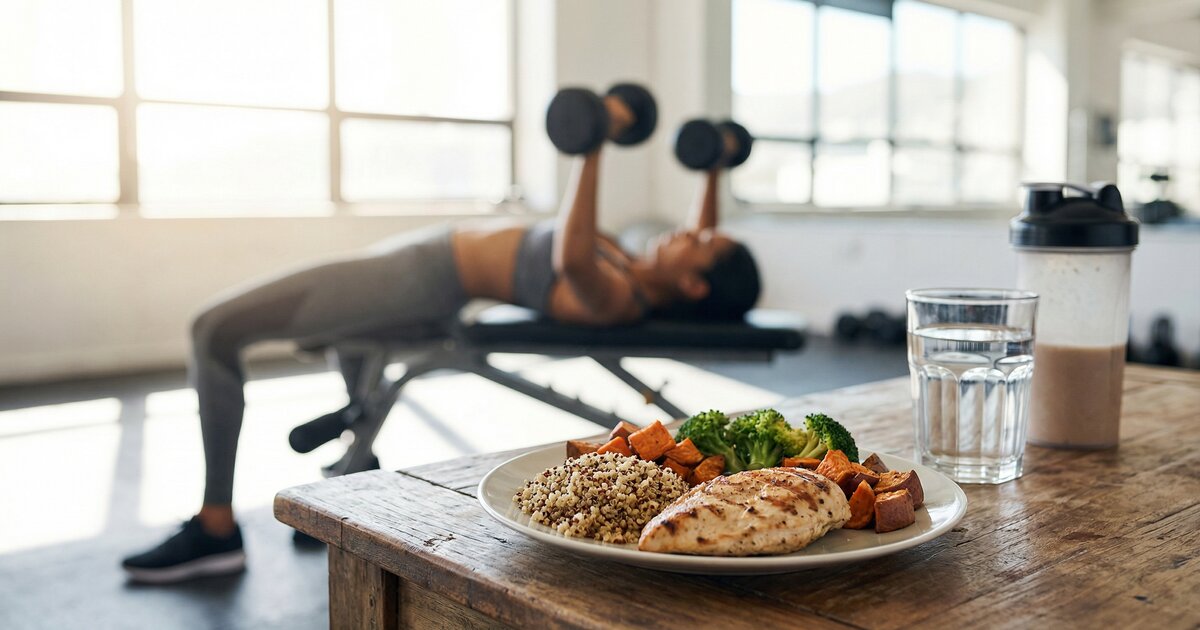
Body recomposition—simultaneously losing fat while building muscle—is the holy grail of fitness. Unlike traditional bulking or cutting phases that focus on one goal at a time, body recomposition requires surgical precision with your nutrition to achieve both simultaneously. For those focused purely on muscle gain, see our complete guide to macros for muscle gain.
This guide will show you exactly how to set your macros for body recomposition, who it works best for, and how to maximize your results.
What Is Body Recomposition?
Body recomposition (often called “recomp”) is the process of simultaneously reducing body fat percentage while increasing lean muscle mass. The scale might not move dramatically, but your body composition transforms—you look leaner, more muscular, and more defined.
Traditional approaches suggest you need a calorie surplus to build muscle and a calorie deficit to lose fat. Body recomposition challenges this by maintaining calories near maintenance levels while manipulating macronutrient ratios and training stimulus to achieve both goals.
Who Can Successfully Recomp?
Body recomposition works best for:
- Beginners to intermediate lifters with less than 2-3 years of consistent training
- Detrained individuals returning after a long break (muscle memory advantage)
- Overweight individuals with higher body fat percentages (20%+ for men, 30%+ for women)
- Enhanced athletes using performance-enhancing drugs (not covered in this guide)
Advanced lifters with years of training and already low body fat will find recomposition extremely difficult. At that point, dedicated bulking and cutting cycles become more effective.
Why Body Recomposition Is Challenging
Body recomposition is notoriously difficult because you’re asking your body to do two opposing things:
- Building muscle requires energy - Your body needs surplus calories and building blocks (protein) to synthesize new muscle tissue
- Losing fat requires a deficit - You need to burn more energy than you consume to oxidize stored body fat
The key to successful recomposition is creating the right conditions where:
- Your training provides a strong stimulus for muscle growth
- Your protein intake is high enough to support muscle protein synthesis
- Your overall calories create a small deficit or maintenance to mobilize fat stores
- Your nutrient timing and food quality support recovery and performance
Research from McMaster University showed that combining resistance training with high protein intake and a moderate calorie deficit allowed participants to gain muscle while losing fat—but the process was slower than dedicated bulking or cutting phases.
Optimal Macro Ratios for Body Recomposition
Protein: The Non-Negotiable Priority
Target: 1.0-1.2g per pound of body weight
Protein is absolutely critical for body recomposition. Studies consistently show that higher protein intakes preserve and build muscle mass during calorie restriction while increasing satiety.
Research published in the American Journal of Clinical Nutrition demonstrated that athletes consuming 1.2g/lb of body weight during a calorie deficit maintained significantly more lean mass than those consuming lower amounts.
For body recomposition:
- Minimum: 1.0g per pound of body weight
- Optimal: 1.1-1.2g per pound for maximum muscle protein synthesis
- Maximum useful: 1.3g per pound (higher amounts show diminishing returns)
High protein also increases the thermic effect of food (TEF)—you burn more calories digesting protein than carbs or fats, creating a metabolic advantage.
Carbohydrates: Fuel for Performance
Target: 1.0-1.5g per pound of body weight
Carbohydrates fuel your training intensity. During body recomposition, you need enough carbs to maintain strength and progressive overload in the gym without excessive energy that could prevent fat loss.
Carb targets depend on:
- Training volume: More training days = higher carb needs
- Activity level: Active jobs need more carbs than desk jobs
- Personal response: Some people perform better on higher carbs, others on lower
For most people doing 4-6 resistance training sessions per week:
- Lower end (1.0g/lb): Less active, prefer moderate carb approach
- Middle range (1.2g/lb): Most people doing consistent training
- Higher end (1.5g/lb): Very active, high training volume, good carb tolerance
Timing matters: Prioritize carbs around your training for performance and recovery.
Fats: Hormonal Support
Target: 0.3-0.5g per pound of body weight
Dietary fat supports hormone production (including testosterone), nutrient absorption, and satiety. Going too low on fats can impair recovery and hormone function.
For body recomposition:
- Minimum: 0.3g per pound (to support hormone production)
- Optimal range: 0.35-0.45g per pound
- Maximum: 0.5g per pound (higher amounts can make achieving protein/carb targets difficult)
Prioritize healthy fats from sources like olive oil, avocados, nuts, fatty fish, and whole eggs.
Calorie Targets for Body Recomposition
Unlike maintenance calories where you eat to maintain weight, body recomposition typically operates in one of two calorie ranges:
Option 1: Small Calorie Deficit (Most Common)
Target: 10-15% below maintenance
Most people achieve better results with a small deficit (200-300 calories below maintenance). This provides enough energy restriction to mobilize fat stores while maintaining sufficient calories to support muscle growth with proper protein intake.
Calculate your maintenance calories using:
- Sedentary: Body weight × 14-15
- Moderately active: Body weight × 15-16
- Very active: Body weight × 16-18
Then subtract 10-15% for your recomp target.
Example for 180lb moderately active person:
- Maintenance: 180 × 16 = 2,880 calories
- Small deficit (15%): 2,880 × 0.85 = 2,448 calories
Option 2: True Maintenance (Alternative Approach)
Some coaches recommend eating at true maintenance calories and letting the increased muscle mass and training volume gradually create a deficit over time. This works but typically produces slower fat loss results.
This approach works better for:
- People closer to their genetic muscular potential
- Those who struggle with adherence on deficits
- Individuals with very high training volumes
Goal-Specific Macro Examples
150lb Individual (Moderate Activity)
Maintenance: ~2,400 calories
Recomp Target: 2,040 calories (15% deficit)
Macros:
- Protein: 165g (1.1g/lb) = 660 calories
- Carbohydrates: 180g (1.2g/lb) = 720 calories
- Fats: 60g (0.4g/lb) = 540 calories
- Total: 1,920 calories
Daily meal structure:
- Pre-workout: 40g protein, 50g carbs
- Post-workout: 45g protein, 60g carbs
- Dinner: 50g protein, 40g carbs, 30g fat
- Snacks: 30g protein, 30g carbs, 30g fat
180lb Individual (Moderate Activity)
Maintenance: ~2,880 calories
Recomp Target: 2,448 calories (15% deficit)
Macros:
- Protein: 200g (1.1g/lb) = 800 calories
- Carbohydrates: 216g (1.2g/lb) = 864 calories
- Fats: 72g (0.4g/lb) = 648 calories
- Total: 2,312 calories
Daily meal structure:
- Breakfast: 40g protein, 50g carbs, 15g fat
- Pre-workout: 35g protein, 45g carbs
- Post-workout: 50g protein, 70g carbs, 10g fat
- Dinner: 50g protein, 40g carbs, 30g fat
- Evening snack: 25g protein, 11g carbs, 17g fat
200lb Individual (High Activity)
Maintenance: ~3,400 calories
Recomp Target: 2,890 calories (15% deficit)
Macros:
- Protein: 220g (1.1g/lb) = 880 calories
- Carbohydrates: 260g (1.3g/lb) = 1,040 calories
- Fats: 85g (0.425g/lb) = 765 calories
- Total: 2,685 calories
Daily meal structure:
- Breakfast: 45g protein, 60g carbs, 20g fat
- Mid-morning: 30g protein, 30g carbs, 15g fat
- Pre-workout: 40g protein, 60g carbs
- Post-workout: 50g protein, 70g carbs, 10g fat
- Dinner: 55g protein, 40g carbs, 35g fat
- Evening: Protein shake with fruit
Training Considerations for Body Recomposition
Nutrition alone won’t create body recomposition—your training must provide the stimulus for muscle growth.
Progressive Overload Is Essential
Your muscles need a reason to grow. Progressive overload means consistently increasing the demands on your musculoskeletal system:
- Increase weight: Add 5-10lbs when you can complete all sets/reps
- Increase reps: Go from 3×8 to 3×10 at the same weight
- Increase sets: Add volume with additional working sets
- Improve form: Better range of motion and technique
Track your workouts religiously. If your lifts aren’t progressing, your body has little reason to build muscle.
Resistance Training Protocol
For optimal body recomposition:
- Frequency: 4-6 sessions per week
- Volume: 12-20 sets per muscle group per week
- Intensity: 6-12 rep range for most exercises (70-85% 1RM)
- Compound movements: Prioritize squats, deadlifts, bench press, rows, overhead press
- Time under tension: Control the eccentric (lowering) portion of each rep
Research shows that training volume (total sets × reps × weight) is a primary driver of hypertrophy. Your program should include sufficient volume for each muscle group.
Cardiovascular Training
Cardio supports fat loss but shouldn’t interfere with recovery:
- Low-intensity steady state (LISS): 2-3 sessions of 30-45 minutes (walking, cycling)
- High-intensity interval training (HIIT): 1-2 sessions of 15-20 minutes
- Daily steps: Target 8,000-12,000 steps for additional calorie burn
Avoid excessive cardio that impairs recovery from resistance training. Your priority is maintaining and building strength.
Timeline Expectations: Patience Required
Body recomposition is significantly slower than dedicated bulking or cutting phases. Here’s what realistic progress looks like:
Month 1-2: Newbie Gains Phase
- Fat loss: 0.5-1.0% body fat per month
- Muscle gain: 0.5-1.0lb of lean mass per month
- Scale weight: Minimal change or slight decrease
Month 3-6: Steady Progress Phase
- Fat loss: 0.5-0.75% body fat per month
- Muscle gain: 0.25-0.75lb of lean mass per month
- Scale weight: Slow decrease or maintenance
Month 6-12: Diminishing Returns Phase
- Fat loss: 0.25-0.5% body fat per month
- Muscle gain: 0.25-0.5lb of lean mass per month
- Progress becomes increasingly difficult
Reality check: In 6 months of perfect execution, you might lose 3-5% body fat while gaining 3-5lbs of muscle. The scale might show minimal change, but your body composition dramatically improves.
Use progress photos, body measurements, and strength metrics—not just the scale—to track success.
Common Body Recomposition Mistakes
1. Insufficient Protein Intake
The biggest mistake people make is not eating enough protein. At minimum, hit 1.0g per pound of body weight every single day. Track your intake diligently for the first few weeks until it becomes automatic.
2. Too Aggressive Calorie Deficit
A 30-40% calorie deficit might work for pure fat loss, but it sabotages muscle growth. Keep your deficit small (10-15%) to preserve training performance and recovery capacity.
3. Inconsistent Training Stimulus
Missing workouts, not tracking progressive overload, or constantly changing programs prevents muscle adaptation. Stick to a proven program for at least 12 weeks and focus on getting stronger.
4. Neglecting Sleep and Recovery
Muscle growth happens during recovery, not in the gym. Aim for 7-9 hours of quality sleep per night. Chronic sleep deprivation elevates cortisol and impairs both muscle growth and fat loss.
5. Unrealistic Expectations
Body recomposition takes months, not weeks. People often give up after 4-6 weeks because the scale hasn’t moved, not realizing their body composition has improved significantly. Commit to at least 3-6 months before evaluating results.
6. Poor Macro Distribution
Eating 200g of protein in one meal doesn’t work as well as distributing it across 4-5 meals. Aim for 30-50g of protein every 3-4 hours to maximize muscle protein synthesis throughout the day.
7. Not Tracking Accurately
“Eyeballing” portions leads to 20-30% calorie tracking errors. Weigh your food for at least 4-6 weeks to learn proper portions. Use apps like MyFitnessPal or MacroFactor to track everything.
Should You Choose Recomp or Bulk/Cut Cycles?
Body recomposition isn’t always the best approach:
Choose body recomposition if:
- You’re a beginner or intermediate lifter
- You’re 20%+ body fat (men) or 30%+ (women)
- You prefer slower, steadier progress without dramatic weight changes
- You’re returning to training after a long layoff
- You want to maintain current weight while improving body composition
Choose bulk/cut cycles if:
- You’re an advanced lifter close to your genetic potential
- You’re already lean (12-15% body fat for men, 20-24% for women)
- You want to maximize muscle growth or fat loss separately
- You respond well to more aggressive approaches
- You have specific physique competition deadlines
Many people successfully use body recomposition for 6-12 months, then switch to bulking or cutting phases once they reach intermediate body fat levels.
Measuring Body Recomposition Progress
Since the scale may not move much, use multiple tracking methods:
1. Progress Photos
Take weekly photos in consistent lighting, same time of day, same poses. Compare month-to-month, not week-to-week.
2. Body Measurements
Measure weekly:
- Neck, chest, waist (at navel), hips
- Arms (flexed), thighs, calves
- Compare waist decreasing while arms/chest increase
3. Performance Metrics
Track your lifts. Are you getting stronger? Adding reps? That indicates muscle growth.
4. Body Fat Testing
Methods include:
- DEXA scan: Most accurate, expensive
- Bod Pod: Very accurate, moderate cost
- Bioelectrical impedance: Convenient but less accurate
- Caliper measurements: Decent accuracy with practice
Test every 4-6 weeks, same conditions each time.
5. Clothing Fit
Your pants fitting looser while shirts feel tighter in the arms/shoulders is excellent feedback.
Frequently Asked Questions
Can beginners do body recomposition?
Yes! Beginners are actually the best candidates for body recomposition. The “newbie gains” phenomenon allows beginners to build muscle even in a calorie deficit because their bodies are highly responsive to the training stimulus. Combined with high protein intake, beginners can achieve dramatic body recomposition results in their first 6-12 months.
How much protein do I really need for body recomposition?
Research consistently supports 1.0-1.2g per pound of body weight for optimal body recomposition. Lower intakes (0.7-0.8g/lb) may maintain muscle but won’t maximize growth. Higher intakes (1.3-1.5g/lb) show diminishing returns. The sweet spot for most people is 1.1g per pound—high enough to support muscle growth without being unnecessarily difficult to achieve.
Should I eat more calories on training days?
Calorie cycling (higher calories on training days, lower on rest days) can work well for body recomposition. Aim for +200-300 calories on training days (mostly from carbs) and -200-300 on rest days. This maintains your weekly average while providing more fuel when you need it most. However, consistent daily intake is simpler and works just as well for most people.
How long does body recomposition take?
Expect meaningful results in 3-6 months, with continued progress for 12-18 months. In the first 6 months, you might lose 3-5% body fat while gaining 3-5lbs of muscle. Progress slows significantly after the first year, especially for intermediate/advanced lifters. Body recomposition is a marathon, not a sprint—commit to the process.
Can I do body recomposition while losing weight?
Yes, especially if you’re overweight. Someone at 30% body fat can simultaneously lose significant fat and build muscle. The higher your starting body fat, the more effectively you can recomp while losing scale weight. As you get leaner (under 15% for men, 25% for women), maintaining weight while recomping becomes more realistic than continued weight loss.
What’s better: body recomposition or bulking then cutting?
It depends on your starting point and goals. Body recomposition works better for beginners, overweight individuals, and those who prefer steady progress. Bulking and cutting cycles work better for advanced lifters, those already lean, and people wanting maximum muscle growth or maximum fat loss separately. Neither approach is inherently superior—choose based on your situation and preferences.
Do I need supplements for body recomposition?
No supplements are required, but some help:
- Protein powder: Convenient way to hit protein targets
- Creatine monohydrate: 5g daily improves strength and muscle growth
- Caffeine: Pre-workout for training performance
- Vitamin D: If deficient, supports recovery and hormones
No supplement replaces proper nutrition, training, and recovery. Focus on mastering the fundamentals first.
Can women do body recomposition?
Absolutely. The same principles apply, though women typically build muscle at about 50% the rate of men due to lower testosterone. Women should target:
- Protein: 1.0-1.2g per pound of body weight
- Calories: 10-15% below maintenance
- Training: Same progressive overload principles
- Timeline: Expect 0.25-0.5lb muscle gain per month
Women may find body recomposition more sustainable than aggressive cutting, which can disrupt hormones and menstrual cycles.
How do I know if body recomposition is working?
Look for these signs:
- Strength increasing on major lifts
- Clothes fitting differently (pants looser, shirts tighter)
- Visual changes in progress photos
- Measurements improving (waist down, arms/chest up)
- Energy levels maintained throughout training
If the scale isn’t moving but you’re seeing these changes, your recomp is working perfectly. Don’t let scale fixation derail your progress.
Conclusion: The Long Game
Body recomposition requires patience, precision, and consistency. Unlike dramatic transformations from aggressive bulking or cutting phases, recomp delivers steady, sustainable improvements in body composition without dramatic scale changes.
The key principles:
- High protein (1.0-1.2g per pound)
- Small calorie deficit (10-15% below maintenance)
- Progressive overload in your training
- Patience for 6-12 months of consistent execution
- Multiple tracking methods beyond the scale
Body recomposition isn’t the fastest path to your goals, but for many people—especially beginners and those with higher body fat—it’s the most sustainable and realistic approach to building the lean, muscular physique they want.
Start with the macro targets outlined for your body weight, commit to progressive overload in your training, and give your body the time it needs to transform. The results will come.
For more guidance on macro targets, check out our guides on maintenance calories, bulking macros, and cutting macros.
Related Articles
Travel Macros: How to Track Nutrition While Traveling
Complete guide to managing macros while traveling. Learn meal planning strategies,...
Read guide →
Macros for Shift Workers: Complete Guide to Nutrition on Rotating Schedules
Master macro tracking on night shifts and rotating schedules. Learn meal timing, sleep...
Read guide →
Macros During Ramadan: Complete Nutrition Guide for Fasting
Learn how to track macros during Ramadan fasting. Expert guide covering meal timing,...
Read guide →Disclaimer: This content is for informational purposes only. Consult a healthcare provider before making changes to your diet.