Brown Rice vs White Rice: Complete Macro Comparison
Reviewed by Jessica Williams, CPT, CSCS
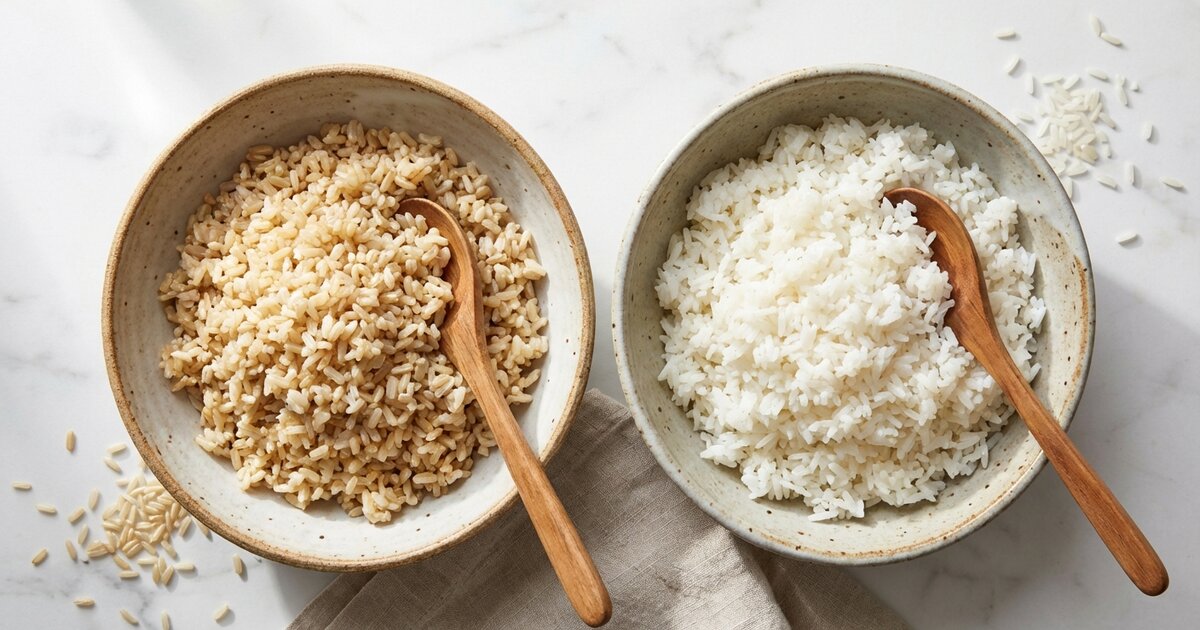
Brown rice vs white rice is one of the most debated food comparisons in the nutrition world. Brown rice is often labeled the “healthier” option, while white rice gets dismissed as empty carbs. But is the difference really that significant?
Here’s the truth: both types of rice have their place in a macro-focused diet. Brown rice offers more fiber and nutrients. White rice provides cleaner energy and easier digestion. The “better” choice depends entirely on your goals.
This guide breaks down the complete macro comparison—no nutritional myths, just facts you can use to make the right choice for your diet.
Quick Comparison Table
Here’s the head-to-head breakdown per 100g cooked:
| Nutrient | Brown Rice | White Rice | Difference |
|---|---|---|---|
| Calories | 112 | 130 | -14% |
| Carbs | 24g | 28g | -14% |
| Fiber | 1.8g | 0.4g | +350% |
| Protein | 2.6g | 2.7g | -4% |
| Fat | 0.9g | 0.3g | +200% |
| Net Carbs | 22.2g | 27.6g | -20% |
Winner for weight loss: Brown rice (marginally) Winner for quick energy: White rice
Detailed Macro Breakdown
Brown Rice (100g cooked, long-grain)
| Macro | Amount |
|---|---|
| Calories | 112 kcal |
| Carbohydrates | 24g |
| Fiber | 1.8g |
| Net Carbs | 22.2g |
| Protein | 2.6g |
| Fat | 0.9g |
Brown rice keeps the bran and germ layers that white rice removes. This gives it more fiber, slightly fewer calories, and a nuttier, chewier texture.
For complete nutrition information, see our full guide to brown rice macros.
White Rice (100g cooked, long-grain)
| Macro | Amount |
|---|---|
| Calories | 130 kcal |
| Carbohydrates | 28g |
| Fiber | 0.4g |
| Net Carbs | 27.6g |
| Protein | 2.7g |
| Fat | 0.3g |
White rice is brown rice with the bran and germ removed. This processing reduces fiber and some nutrients but creates a lighter texture and faster-cooking grain.
For detailed information, check out our complete guide to white rice macros.
Per Cup Cooked (More Practical Serving)
| Nutrient | Brown Rice (195g) | White Rice (195g) |
|---|---|---|
| Calories | 218 | 254 |
| Carbs | 46g | 55g |
| Fiber | 3.5g | 0.8g |
| Protein | 5g | 5.3g |
| Fat | 1.8g | 0.6g |
Per cup, you save about 36 calories with brown rice—roughly one bite of food. The real difference is fiber: brown rice provides 4x more, which affects satiety and blood sugar response.
Which Is Better for Weight Loss?
Winner: Brown rice (by a small margin)
Brown rice has three advantages for weight loss:
- Fewer calories (112 vs 130 per 100g)
- More fiber (keeps you full longer)
- Lower glycemic index (steadier blood sugar = fewer cravings)
The practical reality: The calorie difference saves you about 36 calories per cup. That’s helpful but not transformative. Portion control matters far more than rice color.
Better weight loss strategy: Measure your rice portions regardless of type. Most people dramatically underestimate how much rice they serve themselves. One measured cup of either rice fits most weight loss diets.
If satiety is your problem (you feel hungry after meals), brown rice’s extra fiber can help. If you simply need to track accurately, either rice works.
Use our macro calculator to set your carb targets, then fit whichever rice you prefer.
Which Is Better for Muscle Gain?
Winner: White rice (for most people)
For building muscle, you need consistent carbohydrate intake to fuel workouts and recovery. White rice often works better because:
-
Easier to eat in volume – When bulking, you may need 400-600g of carbs daily. White rice’s lighter texture makes large portions easier to consume.
-
Better for pre/post workout – White rice digests faster (higher glycemic index), providing quick energy before training and rapid glycogen replenishment after.
-
Easier on the stomach – Brown rice’s fiber can cause bloating and digestive discomfort when eating large quantities.
Why bodybuilders prefer white rice: It’s not about health—it’s about practicality. Eating 3+ cups of brown rice daily can cause digestive issues. White rice lets them hit carb targets without stomach problems.
When brown rice works for muscle gain:
- If you only eat 1-2 cups daily
- If you have no digestive issues with it
- If you prefer the taste and texture
For complete muscle-building strategies, see our guide on macros for muscle gain.
Which Is Better for Keto/Low-Carb?
Winner: Neither (both are too high in carbs)
Neither rice is keto-compatible:
| Rice Type | Carbs per Cup | Typical Keto Limit |
|---|---|---|
| Brown Rice | 46g | 20-50g/day |
| White Rice | 55g | 20-50g/day |
One cup of either rice would consume your entire daily carb allowance—or exceed it.
Keto alternatives to rice:
- Cauliflower rice: 5g carbs per cup
- Shirataki rice: 1g carbs per serving
- Broccoli rice: 4g carbs per cup
If you’re doing cyclical keto or carb-cycling, white rice works better for your high-carb days due to faster glycogen replenishment.
For a deeper understanding of how carbs fit into different diets, read our guide on what macronutrients are.
Taste and Cooking Considerations
Brown Rice
Pros:
- Nuttier, more complex flavor
- Chewier texture (some prefer this)
- More satisfying for some people
- Slightly more filling
Cons:
- Takes 40-50 minutes to cook (vs 15-20)
- Shorter shelf life (oils can go rancid)
- Some find the texture too dense
- Can cause bloating in larger portions
Best cooking tip: Use a 1:2.5 rice-to-water ratio and let it steam for 10 minutes after cooking.
White Rice
Pros:
- Cooks in 15-20 minutes
- Fluffy, light texture
- Mild flavor works with any cuisine
- Easier to digest in large quantities
- Longer shelf life
Cons:
- Less nutritionally complete
- Less fiber for satiety
- Higher glycemic index
- Some find it too bland alone
Best cooking tip: Rinse until water runs clear for fluffier results.
Cost Comparison
| Rice Type | Average Price/lb | Price per Cup Cooked |
|---|---|---|
| White rice (long-grain) | $1.00-1.50 | $0.15-0.20 |
| Brown rice (long-grain) | $1.50-2.00 | $0.20-0.30 |
| Jasmine white | $1.50-2.50 | $0.20-0.35 |
| Jasmine brown | $2.00-3.00 | $0.30-0.45 |
| Basmati white | $2.00-3.00 | $0.30-0.40 |
| Basmati brown | $2.50-4.00 | $0.35-0.55 |
Winner: White rice
White rice is typically 30-50% cheaper than brown rice. The price difference is small in absolute terms (cents per serving), but adds up if rice is a dietary staple.
Budget tip: Buy rice in bulk. A 25lb bag of either variety drops the per-serving cost significantly.
Micronutrient Comparison
Beyond macros, brown rice has a meaningful nutritional edge:
| Nutrient | Brown Rice | White Rice | Notes |
|---|---|---|---|
| Manganese | 88% DV | 37% DV | Brown rice wins |
| Magnesium | 11% DV | 3% DV | Brown rice wins |
| Phosphorus | 8% DV | 4% DV | Brown rice wins |
| Thiamin (B1) | 12% DV | 17% DV | White rice wins (fortified) |
| Folate | 2% DV | 23% DV | White rice wins (fortified) |
| Iron | 5% DV | 10% DV | White rice wins (fortified) |
Key insight: White rice in the US is fortified with B vitamins and iron, so it’s not nutritionally empty. Brown rice naturally contains more minerals and fiber, but fortified white rice holds its own on vitamins.
Winner by Goal
| Goal | Best Choice | Why |
|---|---|---|
| Weight Loss | Brown rice | More fiber, fewer calories, better satiety |
| Muscle Gain | White rice | Easier to eat, faster digestion, no bloating |
| Keto | Neither | Both too high in carbs; use cauliflower rice |
| Blood Sugar Control | Brown rice | Lower glycemic index (50 vs 72) |
| Budget | White rice | 30-50% cheaper |
| Convenience | White rice | Cooks in half the time |
| Micronutrients | Brown rice | More minerals and fiber |
| Digestive Ease | White rice | Less fiber = less bloating |
The Bottom Line
The brown rice vs white rice debate is overblown. The nutritional difference exists but isn’t dramatic enough to make or break your diet.
Choose brown rice if:
- Satiety and fiber matter to you
- You eat moderate portions (1-2 cups/day)
- Blood sugar control is important
- You prefer the nuttier taste and texture
Choose white rice if:
- You eat rice in large quantities
- You need quick-cooking convenience
- Digestive comfort is important
- You’re using rice for pre/post workout fuel
Best approach: Don’t stress about it. Pick the one you enjoy and will eat consistently. Accurate portion tracking matters more than rice color. Both can be part of a healthy, macro-focused diet.
The real issue with rice isn’t brown vs white—it’s that most people underestimate their portions. Measure your rice, track it accurately, and either type works fine.
Frequently Asked Questions
Which has fewer carbs, brown rice or white rice? Brown rice has slightly fewer carbs—24g per 100g cooked vs 28g for white rice. The difference comes from brown rice’s higher fiber content, which replaces some digestible carbohydrates.
Is brown rice better than white rice for weight loss? Slightly. Brown rice has 14% fewer calories (112 vs 130 per 100g) and 4x more fiber for better satiety. However, portion control matters more than rice type—both can fit a weight loss diet.
Why do bodybuilders eat white rice instead of brown? White rice digests faster, providing quick energy before/after workouts. It’s also easier on the stomach when eating large quantities. Brown rice’s fiber can cause bloating when eating the volumes bodybuilders require.
Does brown rice have more protein than white rice? Nearly identical. Brown rice has 2.6g protein per 100g cooked vs 2.7g for white rice. Choose rice for carbs, not protein—the protein difference is negligible.
Is brown rice healthier than white rice? Nutritionally yes—brown rice has more fiber, vitamins, and minerals because it retains the bran and germ. However, white rice is easier to digest and works fine as part of a balanced diet.
Can I eat brown rice on keto? Neither rice fits keto. Brown rice has 45g carbs per cup, white rice has 55g. Both exceed typical keto limits (20-50g/day). Use cauliflower rice instead (5g carbs/cup).
Which rice is better for diabetics? Brown rice has a lower glycemic index (50 vs 72 for white rice), causing a slower blood sugar rise. This makes brown rice the better choice for blood sugar management.
Does brown rice take longer to cook? Yes, significantly. Brown rice needs 40-50 minutes vs 15-20 for white rice. The bran layer takes longer to soften. Instant brown rice reduces this to 10-15 minutes.
Related Articles

Travel Macros: How to Track Nutrition While Traveling
Complete guide to managing macros while traveling. Learn meal planning strategies,...
Read guide →
Macros for Shift Workers: Complete Guide to Nutrition on Rotating Schedules
Master macro tracking on night shifts and rotating schedules. Learn meal timing, sleep...
Read guide →
Macros During Ramadan: Complete Nutrition Guide for Fasting
Learn how to track macros during Ramadan fasting. Expert guide covering meal timing,...
Read guide →Disclaimer: This content is for informational purposes only. Consult a healthcare provider before making changes to your diet.