Counting Macros for Beginners: The Complete Starter Guide
Reviewed by Sarah Chen, MS, RD
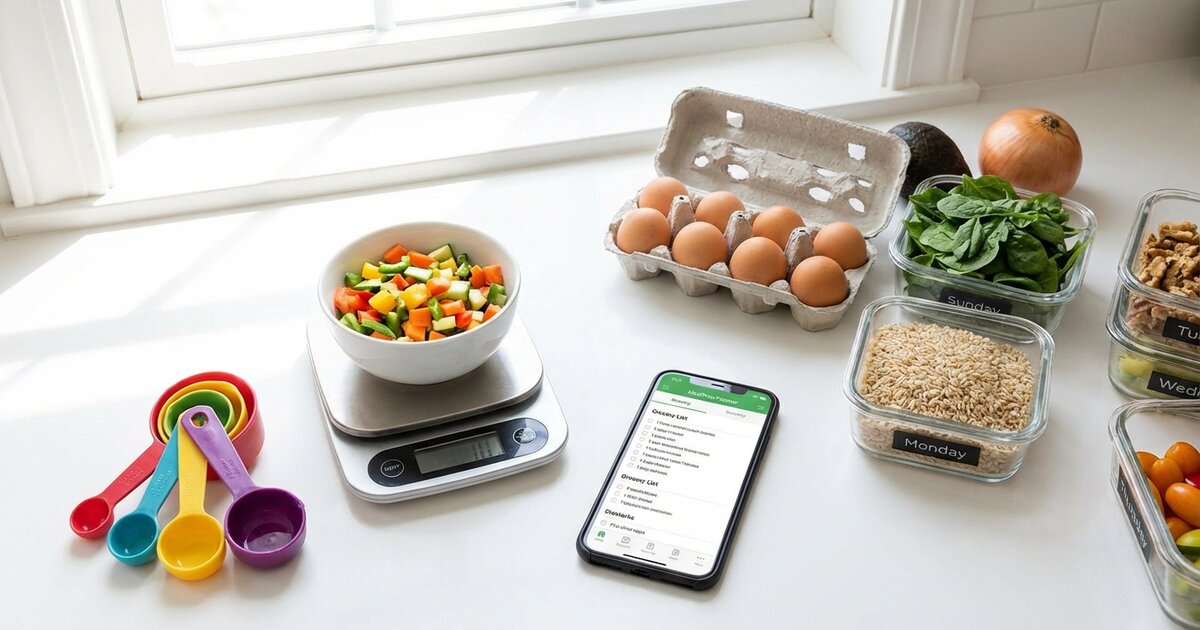
You’ve heard it everywhere. “Count your macros.” “Track your macros.” “Hit your macros.”
But when you actually try to figure out what that means? Suddenly there are numbers, percentages, apps, food scales, and conflicting advice that makes you want to give up before you start. If you’re not sure where to start, our comprehensive guide on how to count macros breaks down the entire system.
Here’s the good news: counting macros is way simpler than the internet makes it seem. Once you understand the basics—which you will after reading this guide—it becomes second nature.
This guide is for complete beginners. No prior knowledge required. No judgment if you don’t know a macronutrient from a microwave. By the time you’re done reading, you’ll understand exactly what macros are, how to calculate yours, and how to survive (and thrive) through your first week of tracking.
One more thing: the first week is the hardest. It gets dramatically easier after that. Stick with it.
Ready to skip ahead and get your numbers? Macro Calculator gives you personalized macros in 60 seconds.

What Are Macros? (The Simple Explanation)
Let’s start with the basics.
The 3 Macronutrients Your Body Needs
“Macros” is short for macronutrients—the three nutrients your body needs in large amounts:
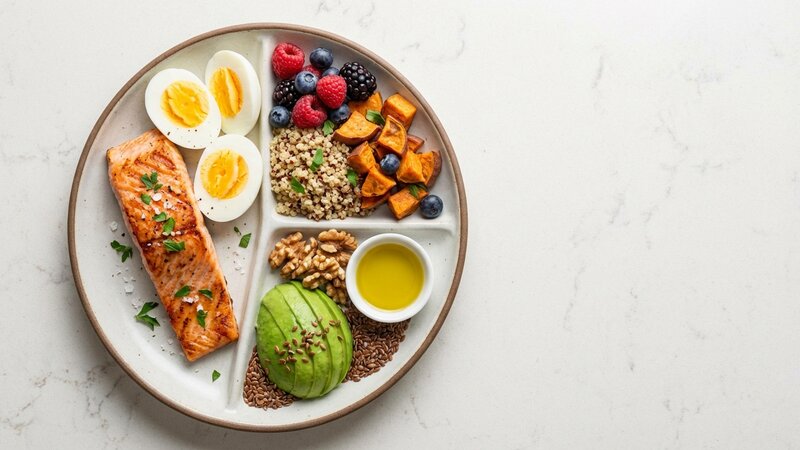
Protein — Builds and repairs muscle, keeps you full, supports recovery
- 4 calories per gram
- Found in: meat, fish, eggs, dairy, legumes, tofu
Carbohydrates — Your body’s primary energy source, fuels your brain and workouts
- 4 calories per gram
- Found in: grains, bread, pasta, fruit, vegetables, sugar
Fats — Supports hormones, absorbs vitamins, provides sustained energy
- 9 calories per gram
- Found in: oils, nuts, avocados, butter, cheese, fatty fish
That’s it. Every food is made up of some combination of these three building blocks. A chicken breast is mostly protein. Rice is mostly carbs. Olive oil is pure fat. Most foods contain a mix.
When people say “count your macros,” they simply mean tracking how many grams of protein, carbs, and fat you eat each day. No magic, no mystery—just paying attention.
Why Macros Matter More Than Just Calories
Here’s why counting macros beats just counting calories:
1,500 calories of donuts and 1,500 calories of balanced meals are not the same thing.
Same calories—wildly different results. The donut diet leaves you hungry, crashes your energy, and causes muscle loss. The balanced diet keeps you full, energized, and preserves muscle while you lose fat.
Macros determine:
- Whether you lose fat or muscle
- How hungry you feel
- Your energy levels
- Your workout performance
- Your body composition (how you look, not just what you weigh)
Calories tell you how much you’re eating. Macros tell you what you’re eating. Both matter, but macros give you control.
The Quick Mental Model
Think of it like a budget.
Calories = your total dollars to spend Macros = how you spend those dollars
You want to spend wisely—enough on protein (the important stuff), reasonable amounts on fats (necessary for function), and the rest on carbs (energy and enjoyment).
What Are Macronutrients for a complete deep-dive on the science.
Step 1: Find Your Calorie Target
Before setting macros, you need to know your total calorie target. This is your foundation.
Calculate Your TDEE (Total Daily Energy Expenditure)
TDEE is how many calories you burn in a day—including your baseline metabolism plus all your activity.
The easiest way? Use our Macro Calculator. Plug in your details, get your number.
If you want a rough estimate now:
Quick calculation:
- Sedentary (desk job, little exercise): Bodyweight × 12-13
- Lightly active (1-3 workouts/week): Bodyweight × 13-14
- Moderately active (3-5 workouts/week): Bodyweight × 14-15
- Very active (6-7 workouts/week): Bodyweight × 15-17
Example: A 160-pound moderately active person burns roughly 2,240-2,400 calories daily.
This is your maintenance—the calories where you neither gain nor lose weight.
Set Your Goal-Based Calories
For fat loss: Eat 300-500 calories below TDEE
- Example: TDEE of 2,200 → Target of 1,700-1,900 calories
For maintenance: Eat at TDEE
- Example: TDEE of 2,200 → Target of 2,200 calories
For muscle gain: Eat 200-300 calories above TDEE
- Example: TDEE of 2,200 → Target of 2,400-2,500 calories
Start conservative. You can always adjust. It’s easier to drop calories later than to recover from starting too aggressive.
Step 2: Set Your Macro Targets
Now let’s divide those calories into protein, carbs, and fat.
Protein (Start Here — It’s Most Important)
Target: 0.7-1g per pound of bodyweight
If you’re significantly overweight, use your goal weight or lean body mass instead.
Example: A 150-pound person needs 105-150g of protein daily.
Why protein first?
- It’s the hardest macro to hit for most beginners
- It has the biggest impact on your results
- Getting protein right makes everything else easier
Round to a clean number. If your math says 143g, just aim for 140g or 150g. Easier to track.
Fat (Set Your Minimum)
Target: 0.3-0.4g per pound of bodyweight
Fat is essential for hormones, vitamin absorption, and feeling satisfied.
Example: A 150-pound person needs 45-60g of fat daily.
Don’t go too low. Sub-30g fat is a recipe for hormonal issues, especially for women. Fat isn’t the enemy.
Carbs (Fill in the Rest)
After protein and fat, fill your remaining calories with carbohydrates.
Formula:
- Protein calories = Protein grams × 4
- Fat calories = Fat grams × 9
- Remaining calories = Total calories - Protein calories - Fat calories
- Carb grams = Remaining calories ÷ 4
Example Calculation (Walk-Through)
Let’s work through a real example:
Scenario: 150-pound person wanting to lose fat
Step 1: Set calories
- TDEE: ~2,000 calories
- Target: 1,500 calories (500 calorie deficit)
Step 2: Set protein
- Target: 1g per pound = 150g
- Calories from protein: 150 × 4 = 600 calories
Step 3: Set fat
- Target: 0.33g per pound = 50g
- Calories from fat: 50 × 9 = 450 calories
Step 4: Calculate carbs
- Remaining calories: 1,500 - 600 - 450 = 450 calories
- Carb grams: 450 ÷ 4 = ~115g
Final macros: 150P / 115C / 50F
That’s your daily target. Now you just need to hit it.
Don’t want to do the math? The Macro Calculator does all of this automatically.
Step 3: Start Tracking (The Practical Part)
You have your numbers. Now let’s actually track them.
Choose a Tracking App
Don’t try to do this with pen and paper. Apps make tracking 10x easier:
MyFitnessPal — Most popular, huge food database, free Cronometer — More accurate, cleaner interface, free MacroFactor — Premium but smart, adapts to your results LoseIt — Simple, beginner-friendly, free
Pick one. Download it. They all work—just commit to one instead of bouncing between apps. For a complete breakdown of features, pros/cons, and which app works best for your goals, check our Best Macro Tracking Apps comparison guide.
How to Log Your Food
Basic workflow:
- Open your app before or after eating
- Search for the food you ate
- Enter the serving size
- The app calculates macros automatically
Pro tips:
- Use the barcode scanner — Point your phone at packaged foods for instant logging
- Weigh your food — A $15 food scale makes tracking way more accurate
- Create custom meals — If you eat the same breakfast daily, save it for one-tap logging
- Log as you eat — It’s easier than trying to remember everything at night
The Beginner Tracking Workflow
Here’s how to make tracking smooth:
Night before: Roughly plan what you’ll eat tomorrow. Pre-log if possible.
Morning: Log your breakfast. Check your remaining macros for the day.
Lunch: Log your meal. Adjust dinner plans based on what’s left.
Dinner: Build your meal around what you need. Short on protein? Make it protein-focused.
End of day: Review. Did you hit your targets? Close enough?
After a week or two, this becomes automatic. You’ll know what to eat without even thinking. For more advanced tracking strategies, habits, and common pitfalls to avoid, read our complete How to Track Your Macros guide.
Your First Week: The Survival Guide
The first week of tracking is the hardest. Here’s how to get through it.
Day 1-2: Just Observe
Don’t try to change anything yet. Just track what you normally eat.
Goal: Understand your baseline.
You’ll probably be shocked:
- Protein is likely way lower than you thought
- Fat might be higher (especially from oils and sauces)
- Carbs are easy to hit
This awareness is valuable. No judgment—just data.
Day 3-4: Make Small Adjustments
Identify your biggest gap. For most people, it’s protein.
Make ONE change:
- Add Greek yogurt to breakfast
- Have a larger portion of meat at lunch
- Include a protein shake as a snack
Don’t try to fix everything at once. One change at a time.
Day 5-7: Refine and Learn
By now you’re getting the rhythm:
- You know roughly what foods have what macros
- You’re learning to plan meals that fit
- Tracking takes less time
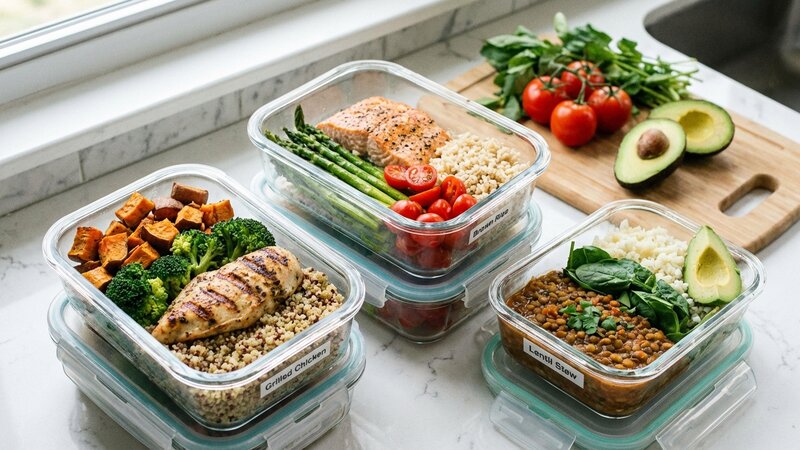
Start thinking about meal prep or go-to meals that make hitting macros easy.
The First Week Is the Hardest
This bears repeating: the first week is clunky. You’re learning a new skill. You’ll forget to log things. You’ll be confused about portion sizes. You’ll probably miss your targets.
All of that is normal.
By week 2-3, you’ll estimate most common foods by memory. By month 2, this is second nature. The initial friction is temporary—the results are lasting.
Common Beginner Mistakes (And How to Avoid Them)
Learn from others’ mistakes so you don’t have to make them yourself. For a deeper dive into pitfalls that trip up even experienced trackers, check out our complete guide on common macro tracking mistakes.
Mistake #1: Trying to Be Perfect
You don’t need to hit your macros exactly. Within 5-10 grams is plenty close.
Reality: ±10g on any macro doesn’t meaningfully affect your results.
Perfection leads to stress and burnout. Aim for consistency, not precision. Being 85% accurate every day beats being perfect for a week then quitting.
Mistake #2: Not Prioritizing Protein
Most beginners way undereat protein. Then they wonder why they’re hungry, losing muscle, and not seeing results.
Fix: Make protein your #1 focus. If you’re going to be imperfect, be imperfect on carbs or fats—not protein.
Mistake #3: Forgetting to Track “Little Things”
- The oil you cooked with (1 tbsp = 14g fat, 120 calories)
- The cream in your coffee
- The handful of chips
- Sauces and dressings
- “Just a bite” of your partner’s food
These add up. During your learning phase, track everything. You can relax later once you have awareness.
Mistake #4: Eating the Same Thing Every Day
Some people try to make tracking “easy” by eating identical meals daily. This leads to boredom, cravings, and eventually quitting.
Better approach: Have 5-7 go-to meals you rotate. Variety within structure.
Mistake #5: Adjusting Too Quickly
The scale doesn’t move for 3 days, so you slash calories. Or you feel hungry one day, so you add 500 calories.
The rule: Give your macros 2-3 weeks before changing anything. Weight fluctuates daily—track weekly averages. Patience is part of the process.
Simple Strategies to Hit Your Macros
Here’s how to actually hit your numbers without it feeling impossible.
Protein Tips (The Hardest Macro for Most People)
- Protein at every meal: Don’t try to cram it all at dinner
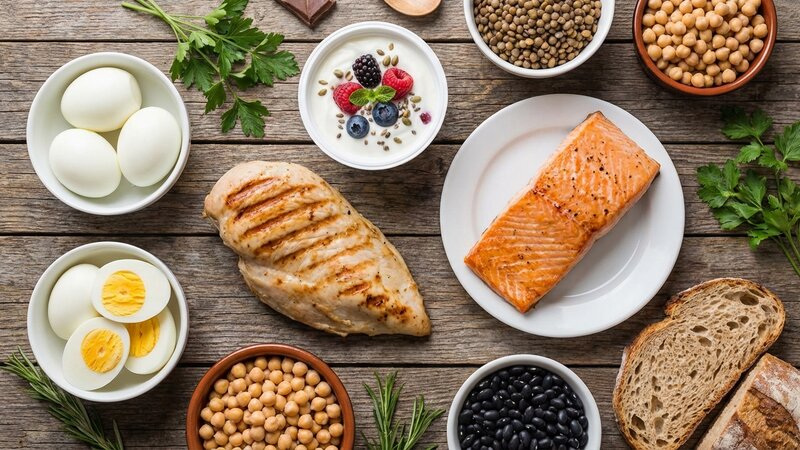
- Keep easy options ready: Greek yogurt, hard-boiled eggs, rotisserie chicken, deli turkey
- Front-load your day: Bigger protein breakfast = easier to hit target
- End-of-day insurance: If you’re short at night, have a protein shake before bed
- Upgrade snacks: Swap chips for Greek yogurt or string cheese
High-protein foods to know:
| Food | Protein |
|---|
See the full How to Count Macros guide for advanced strategies.
---| | Chicken breast (4oz) | 26g | | Greek yogurt (1 cup) | 17-20g | | Eggs (2 large) | 12g | | Salmon (4oz) | 25g | | Ground turkey (4oz) | 22g | | Cottage cheese (1/2 cup) | 14g | | Protein powder (1 scoop) | 20-25g |
Carb Tips
Carbs are usually the easiest macro—most people overshoot rather than undereat them.
- Prioritize whole grains, fruits, and vegetables when possible
- Save room for carbs around workouts if you train
- If you’re consistently over on carbs, look at portions of rice, bread, and pasta
Fat Tips
Fats sneak in fast. They’re calorie-dense (9 cal/g vs 4 cal/g for carbs/protein).
- Measure cooking oils: 1 tablespoon of olive oil = 14g fat
- Watch nuts: Easy to eat 500+ calories of almonds without realizing
- Sauces and dressings: Often loaded with fat. Measure or choose lighter options.
What Success Looks Like (Realistic Expectations)
Let’s set expectations for your macro counting journey.
Week 1-2
- Learning the system, feeling clunky
- Might not hit macros every day—that’s okay
- Lots of searching foods in your app
- Some frustration is normal
- Goal: Build the habit of tracking
Week 3-4
- Getting faster at logging
- Starting to naturally pick macro-friendly foods
- Hitting targets 80%+ of days
- Learning to estimate portions
- Goal: Consistency and learning
Month 2+
- Tracking becomes second nature
- Can estimate most portions by eye (but still track)
- Results becoming visible
- You understand how food affects you
- Goal: Refinement and results
The payoff: After 2-3 months of tracking, you’ll have an intuitive understanding of nutrition that lasts forever. Even if you stop tracking, you’ll naturally make better choices because you know what you’re eating.
FAQ: Quick Answers to Common Questions
Do I need to track forever? No. Most people track actively for 3-6 months, build intuition, then maintain results with occasional check-ins. Tracking is a learning tool, not a life sentence.
What if I go over my macros? It’s one day. Not a crisis. Don’t try to “make up for it” tomorrow by eating 800 calories. Just return to your normal macros at your next meal. Consistency over time matters infinitely more than any single day.
Should I track on weekends? Yes—especially while learning. Weekends often derail progress because people “take a break” and accidentally undo their weekday deficit. Track weekends at least until you have solid awareness.
Can I drink alcohol? Yes, but alcohol has 7 calories per gram (between carbs and fat) with zero nutritional value. It counts toward your calories. Track it. If you drink regularly, you’ll need to budget for it.
What if I’m vegetarian/vegan? Same principles, different protein sources. Focus on legumes, tofu, tempeh, seitan, edamame, and protein powder. It requires more planning but absolutely works.
Do I need to hit macros exactly? Within 5-10g is perfect. The goal is close enough, not exact. Stop chasing perfection—chase consistency.
What if I don’t have a food scale? You can start without one using measuring cups and app estimates. But a $15 food scale dramatically improves accuracy and is worth getting once you’re committed.
Conclusion: You’ve Got This
Counting macros isn’t complicated. It just takes practice.
Here’s what you now know:
- Macros are just protein, carbs, and fat — the building blocks of all food
- Your targets are based on your body and goals — use the calculator to get personalized numbers
- Tracking is a skill — awkward at first, automatic with practice
- Imperfect consistency beats perfect inconsistency — close enough works
The first week is the hardest. The second week is easier. By month two, this is just how you eat.
Millions of people have learned to count macros. They’re not smarter than you. They just started—and stuck with it long enough for it to click.
Your next step is simple:
- Macro Calculator — Get your personalized numbers (takes 60 seconds)
- Download a tracking app (MyFitnessPal or Cronometer)
- Track your first meal today
That’s it. Don’t overthink it. Don’t wait until Monday. Start with your next meal.
In a month, you’ll be glad you did.
Want more guidance?
- What Are Macronutrients — Understand the foundations
- How to Track Your Macros — Detailed tracking methods and tools
- Macros for Weight Loss — Optimize for fat loss
- Macro Calculator — Detailed calculation walkthrough
For women seeking support and community: If you want personalized coaching and a group of women on the same journey, WarriorBabe offers the Macro Method program with expert guidance every step of the way.
You’ve got this. Now go calculate your macros and eat your first tracked meal.
Related Articles
Travel Macros: How to Track Nutrition While Traveling
Complete guide to managing macros while traveling. Learn meal planning strategies,...
Read guide →
Macros for Shift Workers: Complete Guide to Nutrition on Rotating Schedules
Master macro tracking on night shifts and rotating schedules. Learn meal timing, sleep...
Read guide →
Macros During Ramadan: Complete Nutrition Guide for Fasting
Learn how to track macros during Ramadan fasting. Expert guide covering meal timing,...
Read guide →Disclaimer: This content is for informational purposes only. Consult a healthcare provider before making changes to your diet.