Egg Whites vs Whole Eggs: Complete Macro Comparison
Reviewed by Dr. Michael Torres, PhD
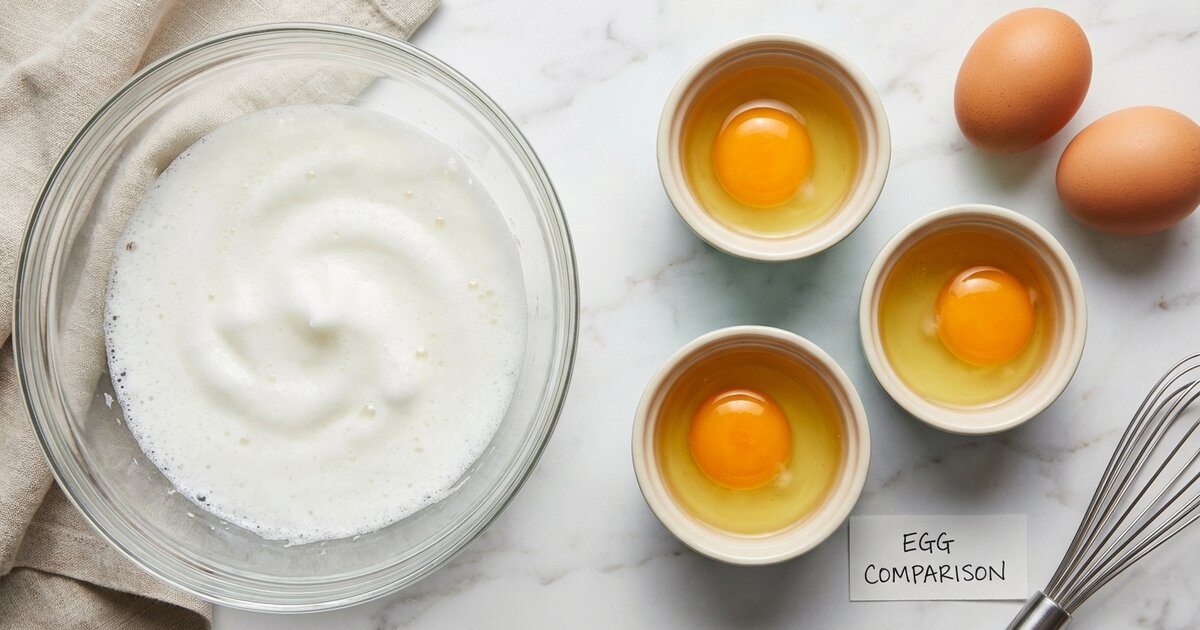
The egg white vs whole egg debate has divided fitness enthusiasts for decades. Bodybuilders swear by egg whites for lean protein. Nutrition experts argue the yolk is the most nutritious part. Who’s right?
Both are—depending on your goals. Egg whites are pure protein with minimal calories. Whole eggs are a complete food with better nutrition. This guide breaks down exactly when to use each.
Quick Comparison Table
Here’s the head-to-head breakdown per large egg:
| Nutrient | Egg White (33g) | Whole Egg (50g) | Yolk Only (17g) |
|---|---|---|---|
| Calories | 17 | 72 | 55 |
| Protein | 3.6g | 6.3g | 2.7g |
| Fat | 0g | 5g | 4.5g |
| Carbs | 0.2g | 0.4g | 0.6g |
| Cholesterol | 0mg | 186mg | 184mg |
| Choline | 0mg | 147mg | 139mg |
Winner for lean protein: Egg whites Winner for complete nutrition: Whole eggs
Detailed Macro Breakdown
Egg Whites (1 large, 33g)
| Macro | Amount |
|---|---|
| Calories | 17 kcal |
| Protein | 3.6g |
| Carbohydrates | 0.2g |
| Fat | 0g |
| Cholesterol | 0mg |
Egg whites are essentially pure protein and water. They’re virtually fat-free, which makes them ideal for adding protein without calories—but you lose the nutritional benefits found in the yolk.
Whole Eggs (1 large, 50g)
| Macro | Amount |
|---|---|
| Calories | 72 kcal |
| Protein | 6.3g |
| Carbohydrates | 0.4g |
| Fat | 5g |
| Saturated Fat | 1.6g |
| Cholesterol | 186mg |
| Choline | 147mg |
Whole eggs are one of nature’s most complete foods. The yolk contains healthy fats, all the fat-soluble vitamins (A, D, E, K), and choline—a nutrient most people don’t get enough of.
For complete nutrition information, see our guide to eggs macros.
Egg Yolks (1 large, 17g)
| Macro | Amount |
|---|---|
| Calories | 55 kcal |
| Protein | 2.7g |
| Carbohydrates | 0.6g |
| Fat | 4.5g |
| Cholesterol | 184mg |
The yolk contains nearly half the egg’s protein plus all the fat and most micronutrients. Discarding yolks means discarding the most nutritious part of the egg.
Scaling Up: Multiple Eggs
Here’s where the math gets interesting for meal planning:
| Quantity | Egg Whites Only | Whole Eggs |
|---|---|---|
| 3 eggs | 51 cal, 11g protein | 216 cal, 19g protein |
| 4 eggs | 68 cal, 14g protein | 288 cal, 25g protein |
| 6 eggs | 102 cal, 22g protein | 432 cal, 38g protein |
Key insight: At scale, the calorie difference becomes massive. Six whole eggs have 330 more calories than six egg whites—but provide nearly twice the protein.
Which Is Better for Weight Loss?
Answer: It depends on your approach
For Maximum Calorie Savings: Egg Whites
The math is compelling:
- 4 egg whites = 68 calories, 14g protein
- 4 whole eggs = 288 calories, 25g protein
If you’re in a strict deficit and every calorie counts, egg whites let you eat more volume for fewer calories.
Best egg white strategy for weight loss:
- Use whites for high-volume meals (big omelets, scrambles)
- Get fats and nutrients from other sources
- Add vegetables for volume and satiety
For Sustainable Weight Loss: Whole Eggs
Research suggests whole eggs may actually be better for long-term weight loss:
- More satiating – The fat and complete nutrition keep you fuller longer
- Better nutrient profile – Deficiencies can increase cravings
- Easier adherence – More satisfying meals = easier to stick to your diet
- Hormonal support – Healthy fats support hormone function during calorie restriction
Best whole egg strategy for weight loss:
- Eat 2-3 whole eggs per meal
- The satiety often prevents overeating later
- Don’t fear the calories if they fit your budget
The satiety factor: Studies show people who eat whole eggs for breakfast feel fuller and eat fewer calories at lunch compared to equal-calorie breakfasts of other foods.
Use our macro calculator to determine how eggs fit your weight loss calories.
Which Is Better for Muscle Gain?
Winner: Whole eggs (research supports this)
Surprising research finding: Whole eggs stimulate muscle protein synthesis more effectively than egg whites alone—even when protein content is matched.
Why whole eggs build more muscle:
- Complete nutrition – The yolk provides nutrients that support anabolic processes
- Healthy fats – Support hormone production (including testosterone)
- Better protein utilization – The combination of whites + yolks may enhance protein absorption
- More total protein – 6.3g per egg vs 3.6g
A 2017 study found that eating whole eggs after resistance training produced 40% more muscle protein synthesis than eating egg whites with the same amount of protein.
Muscle-building strategy:
- Eat 3-4 whole eggs post-workout
- The extra calories from yolks help with surplus
- The complete nutrition supports recovery
For complete muscle-building nutrition, read our guide on macros for muscle gain.
Which Is Better for Keto/Low-Carb?
Winner: Whole eggs (perfect keto food)
Both are excellent for keto, but whole eggs are a keto staple:
| Egg Type | Net Carbs | Fat | Keto Fit |
|---|---|---|---|
| Whole egg | 0.4g | 5g | Perfect |
| Egg white | 0.2g | 0g | Good for protein |
Why whole eggs dominate keto:
- Near-zero carbs
- High fat content supports ketosis
- Complete protein source
- Extremely versatile
Keto tip: On keto, you WANT the fat from yolks. It helps hit fat targets and keeps you satisfied. Egg whites alone may leave you under-fatted and hungry.
For understanding how eggs fit into keto, read our guide on what macronutrients are.
The Cholesterol Question
For decades, egg yolks were demonized for cholesterol. Here’s what current research says:
Old thinking: Dietary cholesterol raises blood cholesterol, increasing heart disease risk.
Current understanding: For most people, dietary cholesterol has minimal impact on blood cholesterol. The liver adjusts its own cholesterol production based on intake.
What the research shows:
- Most healthy adults can eat 1-3 whole eggs daily without negative effects
- Some people are “hyper-responders” who should limit intake
- The nutrients in yolks (choline, healthy fats) have health benefits
Who should limit yolks:
- People with existing heart disease (consult doctor)
- Those with familial hypercholesterolemia
- Anyone whose doctor advises against them
For most people: 2-3 whole eggs daily is perfectly healthy and may even be beneficial.
Micronutrient Comparison
The yolk is where the nutrition lives:
| Nutrient | Egg White | Whole Egg | % in Yolk |
|---|---|---|---|
| Vitamin A | 0 | 270 IU | 100% |
| Vitamin D | 0 | 41 IU | 100% |
| Vitamin E | 0 | 0.5mg | 100% |
| Vitamin B12 | 0.03mcg | 0.6mcg | 95% |
| Choline | 0mg | 147mg | 95% |
| Selenium | 6mcg | 15.4mcg | 61% |
| Omega-3s | 0mg | 37mg | 100% |
What you lose with whites only:
- ALL fat-soluble vitamins (A, D, E, K)
- Most B vitamins
- All healthy fats
- 95% of the choline (most people are already deficient)
The choline factor: Choline is essential for brain function, liver health, and muscle movement. One whole egg provides 27% of daily needs. Most Americans don’t get enough.
Cost Comparison
| Egg Product | Average Cost | Cost per 20g Protein |
|---|---|---|
| Whole eggs (dozen) | $3.50 | $0.46 |
| Liquid egg whites (32oz) | $6.00 | $0.50 |
| Carton egg whites | $4.50 | $0.56 |
Winner: Whole eggs (slightly)
Whole eggs provide better value—more nutrition for similar or lower cost per protein gram.
Budget tip: Buying whole eggs and separating yourself is cheaper than liquid egg whites, but more work.
Practical Combinations
You don’t have to choose exclusively. Smart combinations give you the best of both:
The 1+3 Combo
- 1 whole egg + 3 egg whites
- Macros: 125 calories, 17g protein, 5g fat
- Best for: Balanced nutrition with high protein
The 2+4 Combo
- 2 whole eggs + 4 egg whites
- Macros: 212 calories, 27g protein, 10g fat
- Best for: Muscle building breakfast
The Whites-Only Approach
- 5 egg whites
- Macros: 85 calories, 18g protein, 0g fat
- Best for: Maximum protein, minimum calories
The Whole Eggs Approach
- 3 whole eggs
- Macros: 216 calories, 19g protein, 15g fat
- Best for: Complete nutrition, keto, satiety
Winner by Goal
| Goal | Best Choice | Why |
|---|---|---|
| Weight Loss (strict) | Egg whites | Maximum protein per calorie |
| Weight Loss (sustainable) | Whole eggs | Better satiety, complete nutrition |
| Muscle Gain | Whole eggs | Better muscle protein synthesis |
| Keto | Whole eggs | Fat content supports ketosis |
| Maximum Protein | Egg whites | 0 fat means all protein |
| Complete Nutrition | Whole eggs | Contains all fat-soluble vitamins |
| Cholesterol Concerns | Egg whites | 0mg cholesterol |
| Best Value | Whole eggs | More nutrition per dollar |
The Bottom Line
The egg white vs whole egg debate has a clear answer: it depends on your specific goal at that moment.
Eat whole eggs if:
- You want complete nutrition
- Satiety and satisfaction matter
- You’re building muscle
- You’re following keto
- You’re a normal healthy adult
Eat egg whites if:
- You need maximum protein with minimum calories
- You’re eating 6+ eggs daily (the fat adds up)
- You have cholesterol concerns
- You’re in an aggressive cutting phase
Best approach: Default to whole eggs for their superior nutrition and satiety. Use egg whites strategically when calorie efficiency is critical. The combination approach (1-2 whole eggs + whites) often gives the best of both worlds.
Final thought: The yolk is the most nutritious part of the egg. Throwing it away “to be healthy” is nutritionally backwards—you’re discarding half the protein and almost all the vitamins. Unless you have a specific reason to avoid yolks, eat the whole egg.
Frequently Asked Questions
Which has more protein, egg whites or whole eggs? A large egg white has 3.6g protein, while a whole large egg has 6.3g. The yolk contains about 43% of the egg’s protein. For pure protein with no fat, whites win. For total protein per egg, whole eggs win.
Are egg whites healthier than whole eggs? Not necessarily. Whole eggs provide more complete nutrition—the yolk contains most of the vitamins, healthy fats, and choline. Egg whites are just protein and water. Both can be “healthy” depending on your goals.
Is it better to eat egg whites or whole eggs for weight loss? Egg whites have fewer calories (17 vs 72), which helps create a deficit. But whole eggs are more satiating and nutritious. For strict calorie counting, whites work. For sustainable dieting, whole eggs may keep you fuller.
Why do bodybuilders eat egg whites instead of whole eggs? To maximize protein while minimizing calories and fat during cutting phases. When eating 6-12 eggs daily, the fat from yolks adds up quickly. Whites let them hit protein targets without excess calories.
Is the cholesterol in egg yolks bad for you? For most people, no. Dietary cholesterol has less impact on blood cholesterol than once thought. Current research suggests 1-3 whole eggs daily is fine for most healthy adults.
How many egg whites equal one whole egg? For protein: about 2 egg whites ≈ 1 whole egg (7.2g vs 6.3g). For volume in cooking: 2 egg whites = 1 whole egg. For nutrition overall, there’s no true equivalent—yolks have unique nutrients.
Are liquid egg whites as good as fresh? Nutritionally, yes—same protein content. They’re pasteurized (safe to add to smoothies raw) and more convenient. The only downside is usually higher cost per egg equivalent.
Should I throw away the yolk? Only if you need maximum protein with minimum calories. Otherwise, you’re throwing away half the protein, all the fat-soluble vitamins, and nutrients like choline. The yolk is the most nutritious part.
Related Articles

Travel Macros: How to Track Nutrition While Traveling
Complete guide to managing macros while traveling. Learn meal planning strategies,...
Read guide →
Macros for Shift Workers: Complete Guide to Nutrition on Rotating Schedules
Master macro tracking on night shifts and rotating schedules. Learn meal timing, sleep...
Read guide →
Macros During Ramadan: Complete Nutrition Guide for Fasting
Learn how to track macros during Ramadan fasting. Expert guide covering meal timing,...
Read guide →Disclaimer: This content is for informational purposes only. Consult a healthcare provider before making changes to your diet.