Greek Yogurt vs Regular Yogurt: Complete Macro Comparison
Reviewed by Jessica Williams, CPT, CSCS
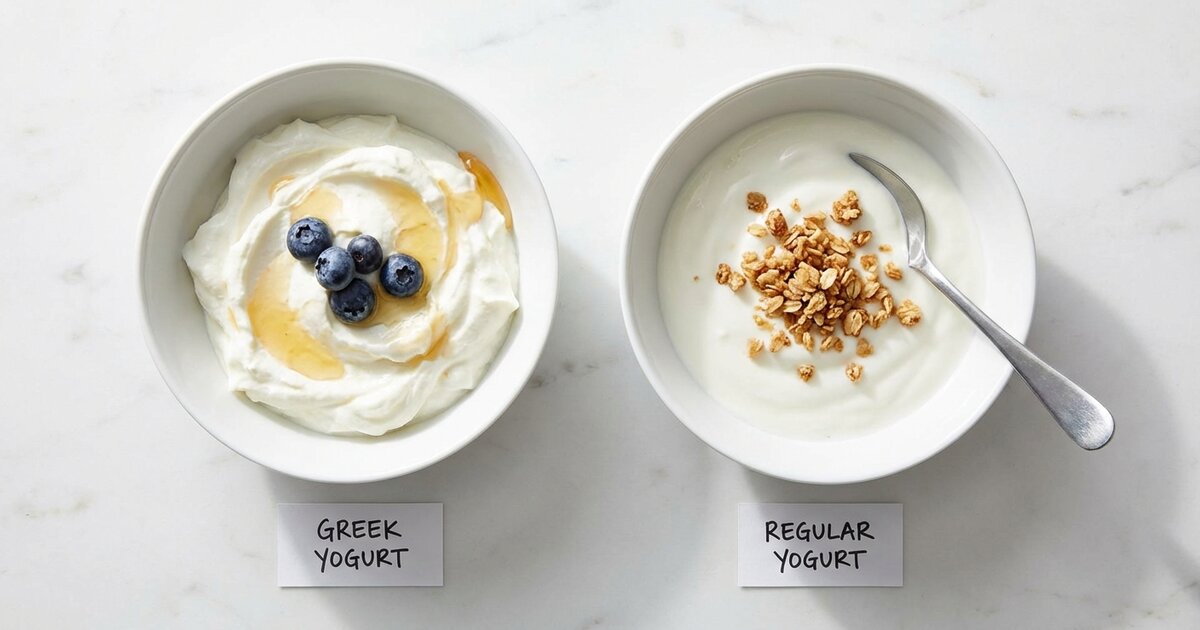
Greek yogurt and regular yogurt may look similar, but their macros tell very different stories. Greek yogurt packs nearly double the protein with fewer carbs, while regular yogurt is lighter and sometimes easier on the stomach.
For macro trackers, this is one of the clearer comparisons out there: Greek yogurt wins on protein efficiency, making it the go-to choice for most fitness goals. But regular yogurt has its place, especially if you’re on a budget or prefer a lighter texture.
This guide breaks down everything you need to know to choose the right yogurt for your macros.
Quick Comparison Table
Here’s the head-to-head breakdown per 100g (plain, nonfat versions):
| Nutrient | Greek Yogurt | Regular Yogurt | Difference |
|---|---|---|---|
| Calories | 59 | 63 | -6% |
| Protein | 10g | 5g | +100% |
| Carbs | 3.6g | 7g | -49% |
| Sugar | 3.2g | 5g | -36% |
| Fat | 0.7g | 0.2g | +250% |
| Calcium | 11% DV | 17% DV | -35% |
Winner overall: Greek yogurt (for protein and macros)
Detailed Macro Breakdown
Greek Yogurt (100g, plain, nonfat)
| Macro | Amount |
|---|---|
| Calories | 59 kcal |
| Protein | 10g |
| Carbohydrates | 3.6g |
| Sugar | 3.2g |
| Fat | 0.7g |
| Calcium | 11% DV |
Greek yogurt is made by straining regular yogurt multiple times to remove liquid whey. This concentrates the protein and creates that characteristic thick, creamy texture.
For complete nutrition information, check out our full guide to Greek yogurt macros.
Regular Yogurt (100g, plain, nonfat)
| Macro | Amount |
|---|---|
| Calories | 63 kcal |
| Protein | 5g |
| Carbohydrates | 7g |
| Sugar | 5g |
| Fat | 0.2g |
| Calcium | 17% DV |
Regular yogurt is strained fewer times, leaving more liquid and a thinner consistency. It retains more calcium but has less concentrated protein.
Per Standard Container (170g/6oz)
| Nutrient | Greek Yogurt | Regular Yogurt |
|---|---|---|
| Calories | 100 | 107 |
| Protein | 17g | 8.5g |
| Carbs | 6g | 12g |
| Sugar | 5.4g | 8.5g |
In a standard single-serve container, Greek yogurt provides double the protein with half the carbs. That’s a significant difference for macro tracking.
Which Is Better for Weight Loss?
Winner: Greek yogurt
Greek yogurt has three major advantages for weight loss:
-
Double the protein – Protein is the most satiating macronutrient. 17g in a 100-calorie serving keeps you full for hours.
-
Half the carbs – Lower carbs leave more room for other foods in your diet.
-
Better protein-to-calorie ratio – Greek yogurt delivers 0.17g protein per calorie vs 0.08g for regular yogurt.
Practical impact: A 6oz Greek yogurt as a snack provides significant protein (17g) that genuinely reduces hunger. The same serving of regular yogurt provides modest protein (8.5g) that won’t keep you as satisfied.
The satiety factor: Studies consistently show that higher-protein foods reduce subsequent calorie intake. Swapping regular yogurt for Greek is one of the easiest upgrades for anyone cutting calories.
Use our macro calculator to determine your protein needs and see how yogurt fits your goals.
Which Is Better for Muscle Gain?
Winner: Greek yogurt
For muscle building, protein quality and quantity matter—and Greek yogurt excels at both.
Greek yogurt advantages:
- 17g protein per serving – A meaningful contribution to daily protein targets
- Complete protein – Contains all essential amino acids
- Casein-dominant – Slow-digesting protein ideal for sustained muscle protein synthesis
- Contains whey – Fast-digesting protein for immediate amino acid availability
How athletes use Greek yogurt:
- Pre-bed snack: Casein provides amino acids throughout sleep
- Post-workout: Mix with fruit for protein + carbs
- Meal addition: Add to smoothies, oatmeal, or as a side
Volume advantage: Eating 2-3 containers of Greek yogurt daily provides 34-51g protein. You’d need 4-6 containers of regular yogurt to match that—and you’d get double the carbs.
For complete muscle-building strategies, read our guide on macros for muscle gain.
Which Is Better for Keto/Low-Carb?
Winner: Greek yogurt (especially full-fat)
Neither yogurt is extremely low-carb, but Greek yogurt fits keto better:
| Yogurt Type | Carbs per 6oz | Keto Compatibility |
|---|---|---|
| Full-fat Greek | 5-6g | Fits most keto diets |
| Nonfat Greek | 6-7g | May fit strict keto |
| Full-fat Regular | 8-10g | Borderline |
| Nonfat Regular | 12-14g | Doesn’t fit keto |
Keto strategy: Choose full-fat Greek yogurt for the best carb-to-fat ratio. The fat adds satiety without adding carbs. Avoid flavored varieties—even “low sugar” versions often have 8-12g carbs.
Net carbs consideration: If you count net carbs, Greek yogurt typically has minimal fiber, so total carbs ≈ net carbs.
To understand how yogurt fits into different dietary approaches, read our guide on what macronutrients are.
Taste and Texture Considerations
Greek Yogurt
Pros:
- Thick, creamy texture (almost like sour cream)
- Tangy flavor with depth
- Works as a substitute for sour cream, mayo, or cream cheese
- Doesn’t water-separate as easily
Cons:
- Tangier taste—some find it too sour
- Thicker texture isn’t ideal for all uses
- Can feel “heavier” than regular yogurt
- More expensive per ounce
Best uses: Protein-rich snacks, smoothie bases, dips, toppings for tacos/baked potatoes, baking substitute
Regular Yogurt
Pros:
- Milder, less tangy flavor
- Lighter, smoother texture
- Easier to drink (think: liquid drinkable yogurts)
- Generally cheaper
- Higher calcium content
Cons:
- Less protein per serving
- More carbs and sugar
- Thinner texture may not work for all recipes
- Can water-separate when sitting
Best uses: Smoothies, parfaits, baking, sauces, those who prefer mild dairy flavor
Cost Comparison
| Yogurt Type | Average Price/6oz | Protein per Dollar |
|---|---|---|
| Store brand Greek | $0.80-1.00 | 17-21g |
| Name brand Greek (Fage, Chobani) | $1.25-1.75 | 10-14g |
| Store brand regular | $0.50-0.70 | 12-17g |
| Name brand regular | $0.75-1.00 | 8-11g |
Winner: Store brand Greek yogurt
Store brand Greek yogurt offers the best protein per dollar. Name brand Greek yogurt is pricier but not nutritionally superior.
Budget strategies:
- Buy large containers (32oz) instead of single servings—often 40% cheaper per ounce
- Store brands like Kirkland (Costco) or Aldi Greek yogurts match name brand nutrition
- Watch for BOGO sales on Greek yogurt
Variety Comparison: Fat Levels
Both yogurt types come in different fat levels with different macros:
Greek Yogurt by Fat Content (per 100g)
| Fat Level | Calories | Protein | Carbs | Fat |
|---|---|---|---|---|
| Nonfat (0%) | 59 | 10g | 3.6g | 0.7g |
| Low-fat (2%) | 73 | 9g | 4g | 2g |
| Full-fat (5%) | 97 | 9g | 3.5g | 5g |
Regular Yogurt by Fat Content (per 100g)
| Fat Level | Calories | Protein | Carbs | Fat |
|---|---|---|---|---|
| Nonfat | 63 | 5g | 7g | 0.2g |
| Low-fat | 85 | 5g | 8g | 2g |
| Full-fat | 104 | 5g | 5g | 6g |
Key insight: Even full-fat Greek yogurt maintains a protein advantage. It has nearly double the protein of full-fat regular yogurt (9g vs 5g).
The Flavored Yogurt Trap
Plain yogurt macros look great—but most people eat flavored varieties. Here’s where things get tricky:
| Product | Calories | Protein | Sugar |
|---|---|---|---|
| Plain Greek (6oz) | 100 | 17g | 5g |
| Vanilla Greek (6oz) | 140 | 12g | 15g |
| Fruit-on-bottom Greek (6oz) | 150 | 11g | 18g |
| Plain regular (6oz) | 107 | 8.5g | 8.5g |
| Strawberry regular (6oz) | 170 | 6g | 25g |
The problem: Flavored yogurts often have 2-4x more sugar than plain versions. That “healthy yogurt” can have as much sugar as a candy bar.
Solution: Buy plain yogurt and add your own flavor:
- Fresh berries (minimal sugar, adds fiber)
- A drizzle of honey (you control the amount)
- Sugar-free sweetener
- Vanilla extract and cinnamon
This gives you the macros of plain yogurt with flavors you enjoy.
Winner by Goal
| Goal | Best Choice | Why |
|---|---|---|
| Weight Loss | Greek yogurt | 2x protein, better satiety, fewer carbs |
| Muscle Gain | Greek yogurt | More protein, complete amino acids |
| Keto | Full-fat Greek | Fewer carbs, higher fat |
| Budget | Store brand Greek | Best protein per dollar |
| Calcium Needs | Regular yogurt | 50% more calcium |
| Mild Flavor | Regular yogurt | Less tangy |
| Cooking/Baking | Greek yogurt | Better texture for substitutions |
| Pre-bed Snack | Greek yogurt | Casein for overnight recovery |
The Bottom Line
Greek yogurt is the better choice for most macro-focused goals. Double the protein, half the carbs, and comparable calories make it a no-brainer for weight loss, muscle building, and general protein efficiency.
Choose Greek yogurt if:
- Protein intake is a priority
- You want maximum satiety from snacks
- You’re tracking macros closely
- You prefer thick, creamy texture
Choose regular yogurt if:
- Budget is the primary concern
- You prefer milder, thinner yogurt
- Calcium intake is especially important
- You’re making smoothies or drinkable preparations
Best approach: Keep plain Greek yogurt as a staple and flavor it yourself. A 32oz container of store-brand Greek yogurt costs about $5, provides 68g of protein, and lasts for multiple servings. It’s one of the most cost-effective protein sources available.
Frequently Asked Questions
Which has more protein, Greek yogurt or regular yogurt? Greek yogurt has nearly double the protein—10g per 100g vs 5g for regular yogurt. The straining process removes liquid whey and concentrates the protein.
Is Greek yogurt better than regular yogurt for weight loss? Yes, for most people. Greek yogurt has more protein (better satiety) and fewer carbs. The higher protein keeps you fuller longer, reducing overall calorie intake.
Why is Greek yogurt thicker than regular yogurt? Greek yogurt is strained 3 times to remove liquid whey, while regular yogurt is strained once or twice. This extra straining creates the thick, creamy texture and concentrates protein.
Does Greek yogurt have less sugar than regular yogurt? Plain Greek yogurt has about 40% less sugar (3.2g vs 5g per 100g) due to the straining process. Flavored versions of both can have high added sugar—always check labels.
Is Greek yogurt good for building muscle? Excellent. Greek yogurt provides 17g protein per 6oz container with high-quality casein and whey proteins. It’s one of the best whole food protein sources available.
Can I substitute Greek yogurt for regular yogurt in recipes? Usually yes, but the texture will be different. Greek yogurt is thicker, so you may need to thin it with milk for smoothies or baking. For dips and toppings, it works as a direct substitute.
Which yogurt is better for gut health? Both contain probiotics for gut health when labeled ‘live active cultures.’ Greek yogurt has a slight edge due to higher protein content, which feeds beneficial gut bacteria.
Is Greek yogurt keto-friendly? Plain, full-fat Greek yogurt can work on keto (4-6g carbs per serving). Nonfat Greek yogurt is slightly higher in carbs. Regular yogurt’s higher carb content makes it less keto-compatible.
Related Articles

Travel Macros: How to Track Nutrition While Traveling
Complete guide to managing macros while traveling. Learn meal planning strategies,...
Read guide →
Macros for Shift Workers: Complete Guide to Nutrition on Rotating Schedules
Master macro tracking on night shifts and rotating schedules. Learn meal timing, sleep...
Read guide →
Macros During Ramadan: Complete Nutrition Guide for Fasting
Learn how to track macros during Ramadan fasting. Expert guide covering meal timing,...
Read guide →Disclaimer: This content is for informational purposes only. Consult a healthcare provider before making changes to your diet.