Macro Diet vs Keto: Which Is Better for Weight Loss?
Reviewed by Sarah Chen, MS, RD
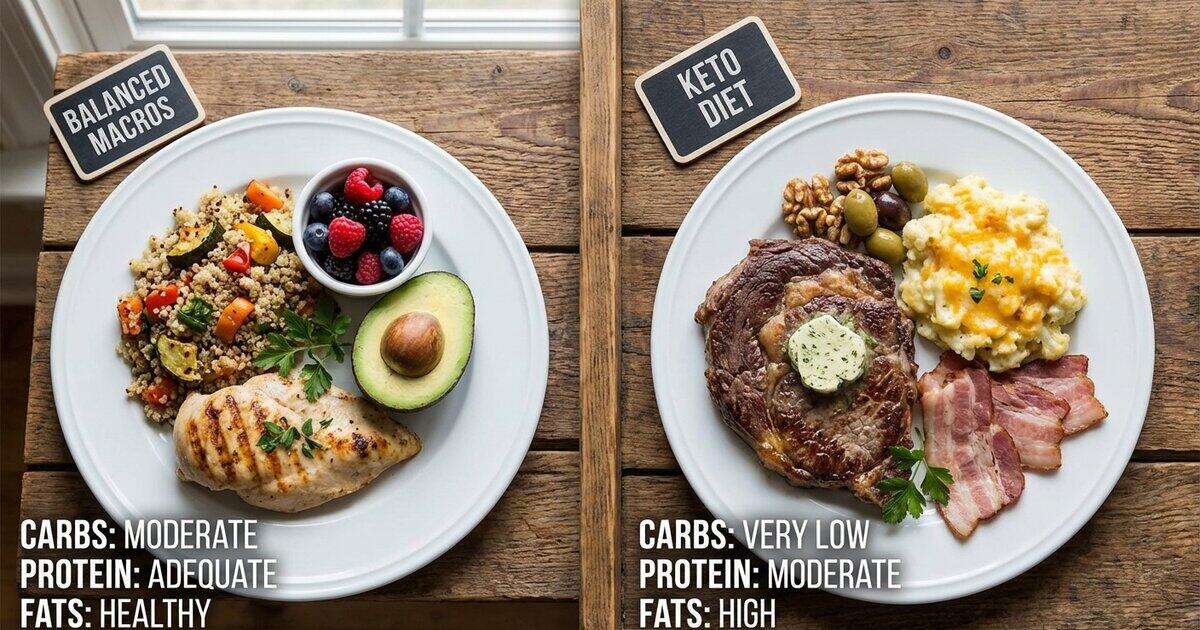
Two of the most popular approaches to weight loss. One lets you eat anything that fits your numbers—known as flexible dieting—while the other restricts an entire macronutrient. Both have passionate advocates claiming their method is superior.
So which actually works better—counting macros or going keto?
The honest answer: both can work. But they’re fundamentally different approaches with different trade-offs. This guide breaks down exactly how each method works, the real science behind them, and helps you determine which fits your lifestyle, preferences, and goals.
No agenda here. Just the facts you need to make an informed choice.
What Is the Macro Diet?
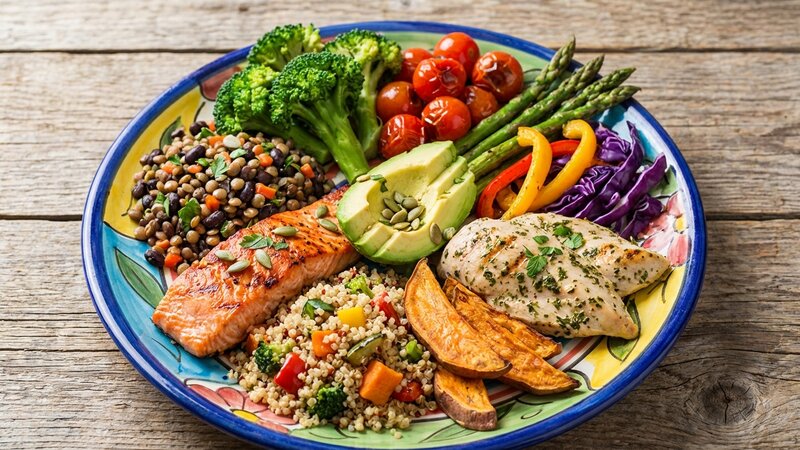
Macro counting (also called “flexible dieting” or “IIFYM”—If It Fits Your Macros) is an approach where you track the grams of protein, carbohydrates, and fat you eat each day, aiming for specific targets based on your goals.
How It Works
- Calculate your calorie needs based on your goals (fat loss, maintenance, or muscle gain)
- Set macro targets — specific grams of protein, carbs, and fat
- Track everything you eat to hit those targets
- Food choices are flexible — no foods are forbidden if they fit
For example, a fat loss macro target might be:
- 1,800 calories
- 150g protein
- 160g carbs
- 65g fat
You can reach those numbers eating chicken and rice or pizza and ice cream—as long as you hit the targets. In practice, most macro counters eat mostly whole foods because it’s easier to hit protein goals and feel full, but nothing is strictly off-limits.
What Are Macronutrients for a complete foundation.
The Philosophy Behind Macro Counting
The macro approach is built on a simple idea: calories and macros determine body composition, not specific foods.
This means:
- There are no “bad” foods, just macros to hit
- You can enjoy treats while still making progress
- Sustainability comes from flexibility
- You learn about nutrition by tracking
Counting Macros for Beginners for a complete guide to getting started.
What Is the Keto Diet?
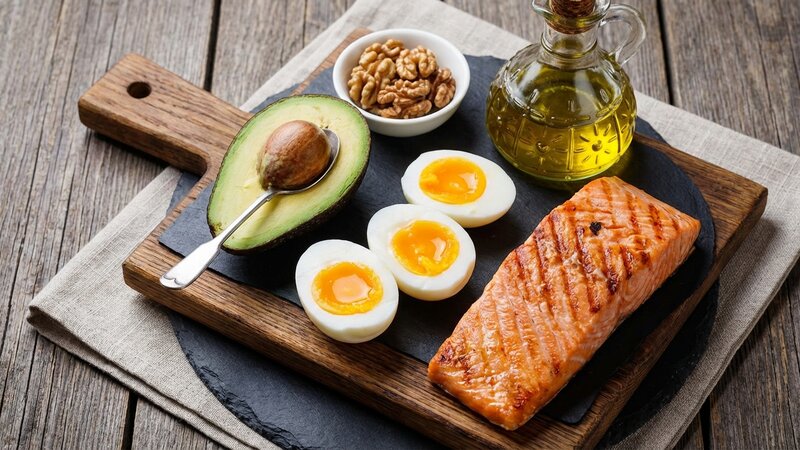
The ketogenic diet is a high-fat, very low-carbohydrate approach that shifts your body’s primary fuel source from glucose (carbs) to ketones (from fat).
How It Works
- Drastically reduce carbohydrates — typically under 20-50g per day
- Increase fat intake — fat becomes your primary energy source
- Moderate protein — too much can convert to glucose
- Enter ketosis — your body produces ketones from fat for fuel
Standard keto macros look something like:
- 70-75% of calories from fat
- 20-25% from protein
- 5-10% from carbs
For a 1,800 calorie diet, that’s:
- 140-150g fat
- 90-113g protein
- 23-45g carbs
The Philosophy Behind Keto
Keto is built on different principles:
- Ketosis provides metabolic advantages for fat burning
- Eliminating carbs reduces hunger and cravings
- Stable blood sugar prevents energy crashes
- Restrictive rules make decisions easier (yes/no on carbs)
Carbohydrates Explained to understand what you’re cutting on keto.
The Science: Do Both Actually Work?
Short answer: yes. Both approaches can produce significant weight loss. But the mechanisms and research tell an interesting story.
What Research Shows About Fat Loss
Multiple controlled studies have compared low-carb/keto diets to higher-carb diets with equal calories and protein. The findings:
When calories and protein are matched:
- Fat loss is nearly identical between approaches
- Keto shows slightly faster initial weight loss (mostly water)
- Long-term results (6+ months) are essentially the same
The 2018 DIETFITS study (one of the largest diet comparison studies) found no significant difference in weight loss between low-fat and low-carb diets after 12 months—when calories were equal.
Translation: The diet that creates a calorie deficit works. The specific macro ratio matters less than total calories and adequate protein.
The Keto “Metabolic Advantage” — Real or Not?
Keto advocates claim ketosis provides a metabolic advantage—burning more fat simply by being in ketosis. The research is mixed:
What IS true:
- Keto causes rapid initial weight loss (water weight from glycogen depletion)
- Some people report reduced hunger on keto
- Blood sugar and insulin levels are typically lower
What ISN’T supported:
- Burning significantly more fat when calories are equal
- Ketosis causing fat loss independent of calorie deficit
- “Calories don’t count” on keto
The appetite suppression effect is real for some people—ketones may reduce hunger hormones. If keto makes you naturally eat less, you’ll lose weight. But it’s still the calorie deficit doing the work.
Protein: The Overlooked Factor
Here’s what both camps often miss: protein is the most important macro for body composition, regardless of your carb/fat ratio.
Studies consistently show:
- Higher protein preserves muscle during fat loss
- Protein increases satiety (keeps you fuller)
- Protein has the highest thermic effect (burns calories to digest)
Traditional keto is actually moderate protein (not high), which can be suboptimal for muscle preservation. Macro counting typically emphasizes high protein, giving it an edge for body composition.
Protein: The Complete Guide for why protein matters so much.
Macro Diet: Pros and Cons
Pros
1. Maximum Flexibility No foods are forbidden. Birthday cake, restaurant meals, holiday dinners—all workable if you plan ahead. This flexibility makes social situations easier and prevents the “I blew it, might as well quit” mentality.
2. Sustainable Long-Term Because nothing is restricted, macro counting is easier to maintain indefinitely. It becomes a lifestyle, not a temporary diet.
3. Optimized for Muscle You can set protein high and strategically time carbs around workouts for better performance and recovery. Athletes and serious lifters often prefer macros for this reason.
4. Educational Tracking teaches you what’s actually in your food. After months of counting, you intuitively understand portion sizes and nutrition content.
5. No Adaptation Period You can start immediately without the “keto flu” transition. Energy and performance remain stable.
Cons
1. Requires Consistent Tracking You need to weigh food and log meals. Some people find this tedious or triggering.
2. Easier to Rationalize Junk “It fits my macros” can become an excuse for regular poor food choices. Technically accurate but not health-optimal.
3. Learning Curve Understanding macros, calculating targets, and learning to track takes initial effort.
4. No Hard Rules For some personalities, flexibility is a bug, not a feature. Decision fatigue can make unrestricted choices overwhelming.
Keto Diet: Pros and Cons
Pros
1. Simple Rules Eat fat and protein, avoid carbs. The binary nature makes decisions easy—you know instantly if a food is “allowed.”
2. Reduced Hunger (for Many) Ketones may suppress appetite. High fat is satiating. Many keto dieters report eating less without trying.
3. Stable Energy Without blood sugar spikes and crashes from carbs, energy levels often feel more consistent throughout the day.
4. Rapid Initial Results Losing 5-10 pounds in the first week (mostly water) is motivating, even if it’s not all fat.
5. May Improve Certain Health Markers Some people see improvements in blood sugar, triglycerides, and HDL cholesterol on keto.
Cons
1. Highly Restrictive Fruit, grains, legumes, most starchy vegetables, desserts—all essentially eliminated. Social eating becomes challenging.
2. Keto Flu The transition period (1-2 weeks) often includes fatigue, headaches, irritability, and brain fog as your body adapts.
3. Performance Impact High-intensity exercise (HIIT, heavy lifting, sprinting) relies on carbs. Keto can impair performance in these areas.
4. Potential Nutrient Gaps Eliminating food groups can lead to deficiencies in fiber, certain vitamins, and minerals if not planned carefully.
5. Difficult to Maintain Studies show keto has higher dropout rates than moderate approaches. The restriction becomes unsustainable for many people.
6. Water Weight Regain When you eventually eat carbs again, glycogen and water return. The scale jumps, which can feel like “failure” even though it’s normal.
Head-to-Head Comparison
| Factor | Macro Counting | Keto |
|---|---|---|
| Fat loss effectiveness | Highly effective | Highly effective |
| Muscle preservation | Excellent (high protein) | Good (moderate protein) |
| Flexibility | Very high | Very low |
| Social eating | Easy to manage | Challenging |
| Learning curve | Moderate | Low |
| Sustainability | High | Lower for most |
| Initial results | Steady | Rapid (water weight) |
| Energy stability | Depends on food choices | Generally stable |
| Athletic performance | Optimal | May be impaired |
| Hunger management | Depends on food choices | Often easier |
| Tracking required | Yes, detailed | Less detailed (carbs only) |
Who Should Choose Macro Counting?
Macro counting is likely better for you if:
- You value food freedom — Eating what you want (within limits) matters to you
- You’re an athlete or serious lifter — Performance requires carbs for many activities
- You enjoy variety — Eating the same foods gets boring fast
- You have active social lives — Restaurants, travel, and events are frequent
- You want to build muscle — Optimizing protein timing and carb intake helps
- You’re analytically minded — Tracking data is satisfying, not stressful
- You’ve struggled with restrictive diets — All-or-nothing approaches have failed before
How to Track Your Macros to get started with macro counting.
Who Should Choose Keto?
Keto is likely better for you if:
- You do well with clear rules — Black-and-white restrictions feel easier than flexibility
- Carbs trigger overeating for you — Some people can’t eat carbs in moderation
- You don’t mind limited food choices — Variety isn’t a priority
- Your exercise is moderate intensity — Walking, yoga, light lifting vs. HIIT or heavy training
- You have specific health goals — Certain conditions (epilepsy, some metabolic issues) respond well to keto
- You’ve struggled with hunger on other diets — Appetite suppression helps you naturally eat less
- You prefer not to track everything — Avoiding carbs is simpler than counting grams
The Hybrid Approach: Can You Combine Them?
Yes, and many people do. Several hybrid approaches exist:
Targeted Keto (TKD)
Eat very low carb most of the time, but consume 25-50g of carbs around workouts for performance. Best of both worlds for athletes.
Cyclical Keto (CKD)
5-6 days of strict keto followed by 1-2 days of higher carbs (carb refeeding). Helps with sustainability and performance.
Low-Carb Macro Counting
Track macros but set carbs on the lower end (75-125g instead of 150-200g). Not keto-level low, but reduced. Many people find this balances flexibility with blood sugar benefits.
Keto With Macro Awareness
Follow keto food rules but also track protein to ensure you’re getting enough. Addresses the typical keto weakness (under-eating protein).
Common Myths About Both Approaches
”You can eat unlimited fat on keto”
False. Calories still matter. Unlimited fat = unlimited calories = no weight loss (or gain). Keto works by naturally reducing appetite for most people, not by magical fat burning.
”Macro counting means eating junk food”
False. Most successful macro counters eat 80%+ whole foods because that’s how you hit protein goals and feel satisfied. The flexibility is for the other 20%.
”Keto is dangerous”
Mostly false. For healthy adults, keto is safe. However, it’s not appropriate for everyone (Type 1 diabetics, pregnant women, certain medical conditions should consult doctors).
”Carbs make you fat”
False. Excess calories make you gain weight. Carbs are the easiest macronutrient to overeat, which creates the association—but carbs themselves don’t cause fat gain.
”You have to choose one forever”
False. You can use keto for a period, then transition to macro counting for maintenance. Or vice versa. They’re tools, not lifelong commitments.
Macros vs Calories for more on what actually drives weight loss.
Making Your Decision
Here’s a practical framework:
Try Macro Counting First If:
- You’ve never tracked your food before
- You want to learn about nutrition
- You’re not sure which approach suits you
- You have 30+ pounds to lose (sustainability matters more)
Try Keto First If:
- You’ve tracked before but struggled with moderation
- You have a shorter-term goal (event, vacation)
- You suspect carbs are a problem for you specifically
- You want rapid initial results for motivation
The Ultimate Test
Try each for 4-6 weeks. Be consistent. Track results. See which:
- Produces better adherence (you actually follow it)
- Fits your lifestyle more naturally
- Makes you feel better physically and mentally
- Shows results you’re happy with
The “best” diet is the one you’ll actually stick to. Individual variation matters more than theoretical superiority.
The Verdict: Which Is Actually Better?
Neither. And both.
Here’s what the science and real-world experience show:
For pure fat loss: Both work equally well when calories are controlled. Choose based on preference and sustainability.
For muscle building/athletic performance: Macro counting has an edge due to carb availability and protein optimization.
For simplicity: Keto’s binary rules are simpler day-to-day, though harder to maintain long-term.
For flexibility and sustainability: Macro counting wins. Nothing forbidden means easier lifetime adherence.
For hunger control: Keto often (but not always) has an edge. Individual response varies significantly.
The honest truth? The best diet is the one you can follow consistently. If keto feels sustainable to you, do keto. If flexibility keeps you compliant, count macros. If neither has worked, consider why—and try the other approach.
Progress requires consistency. Consistency requires sustainability. Sustainability requires a method that fits your life.
Frequently Asked Questions
Is keto or macro counting better for weight loss?
Both approaches produce equal fat loss when calories and protein are matched. Research, including the large 2018 DIETFITS study, shows no significant difference in weight loss between low-carb keto diets and higher-carb macro-based diets after 6-12 months when calories are controlled. Keto often shows faster initial weight loss (2-5 pounds in the first week), but this is primarily water weight from glycogen depletion, not additional fat loss.
The “better” approach depends entirely on which you can sustain consistently. Keto works by naturally reducing appetite for many people, making it easier to maintain a calorie deficit. Macro counting works through flexible tracking that allows all foods in moderation. Choose based on your lifestyle, food preferences, and which feels more manageable long-term rather than theoretical superiority.
Can you do keto and macro counting at the same time?
Yes—many people track keto macros to ensure they stay in ketosis while hitting protein targets. Keto macros typically look like 70-75% fat, 20-25% protein, and 5-10% carbs (under 50g daily). Tracking macros on keto helps prevent common mistakes like eating too much protein (which can kick you out of ketosis) or not eating enough fat. This approach combines keto’s metabolic state with macro counting’s precision.
However, traditional flexible macro counting (IIFYM) and strict keto are philosophically opposite—one emphasizes flexibility while keto requires rigid carb restriction. You can’t have the food freedom of macro counting while maintaining ketosis, since even small carb treats will break ketosis. Most people either count macros with moderate carbs (100-200g) or do strict keto without worrying about exact fat/protein ratios.
Which is easier to follow: keto or counting macros?
Keto is simpler day-to-day (binary yes/no decisions on foods) but harder to maintain long-term due to strict restrictions. You don’t need to weigh food or track numbers—you just avoid high-carb foods. However, keto eliminates entire food groups (grains, most fruits, legumes, many vegetables), making social situations, restaurants, and travel more challenging. Many people find keto unsustainable after 3-6 months due to cravings and social limitations.
Macro counting requires more effort initially (weighing food, tracking in apps, learning nutrition content) but becomes easier over time and offers more flexibility for long-term sustainability. After a few months of tracking, most people develop intuitive portion awareness. The 80/20 approach (80% whole foods, 20% treats that fit macros) makes social situations manageable while still making progress. For most people, macro counting is more sustainable beyond 6-12 months.
Does keto have a metabolic advantage over macro counting?
No significant metabolic advantage exists when calories and protein are equated. Early keto research suggested ketosis might increase fat burning, but rigorous metabolic ward studies show that when total calories and protein are matched, fat loss is nearly identical between keto and higher-carb diets. The initial rapid weight loss on keto (5-10 pounds in week one) is primarily water weight from depleted glycogen stores, not accelerated fat burning.
What keto does offer some people is an appetite suppression effect—ketones may reduce hunger hormones ghrelin and increase satiety hormones, making it easier to maintain a calorie deficit without tracking. If keto naturally makes you eat 300-500 fewer calories daily, you’ll lose more weight—but the mechanism is still the calorie deficit, not ketosis itself. The “metabolic advantage” is actually an adherence advantage for those who experience reduced hunger.
Can you build muscle on keto or is macro counting better?
Macro counting is generally superior for muscle building due to higher carbohydrate availability and optimized protein intake. Carbs replenish muscle glycogen, support training intensity, and have a protein-sparing effect during workouts. Most bodybuilders and strength athletes prefer 2-4g carbs per pound bodyweight when building muscle. Additionally, macro counting typically emphasizes higher protein (1.0-1.2g per pound), while traditional keto is moderate protein (0.6-0.8g per pound) to maintain ketosis.
That said, you can build muscle on keto if you prioritize protein (1.0g+ per pound) and train consistently—it just may be slightly less efficient. Some athletes use targeted keto (adding 25-50g carbs around workouts) or cyclical keto (carb refeeds on heavy training days) to get benefits of both approaches. For serious muscle gain, most evidence supports moderate-to-high carb intake (200-300g+) with high protein tracked via macro counting.
How do I transition from keto to macro counting?
Transition gradually over 2-4 weeks to avoid rapid water weight gain and metabolic shock. Start by adding 25-50g carbs daily for the first week (targeting 75-100g total), then increase by another 25-50g weekly until reaching your target carb intake (typically 100-200g for fat loss, 200-300g for maintenance). Reduce fat proportionally as you add carbs to maintain the same calorie target.
Expect 3-7 pounds of water weight gain in the first week as glycogen stores refill—this is normal, not fat gain. Each gram of stored glycogen holds 3-4 grams of water. After the transition period, weight should stabilize and fat loss can continue if you maintain your calorie deficit. Track your macros carefully during transition to ensure you’re not accidentally overeating. Our Macro Calculator can help set appropriate targets for your transition phase.
Is macro counting just eating junk food?
No—successful macro counting is typically 80-90% whole, nutrient-dense foods with 10-20% flexibility for treats. You physically can’t hit high protein targets (120-180g) eating primarily junk food—it’s too filling and calorie-dense. Most macro counters eat substantial amounts of lean proteins, vegetables, whole grains, and healthy fats because these foods make hitting macros easier while managing hunger.
The key difference from restrictive diets is that no food is forbidden—if you have room in your macros for ice cream or pizza, you can fit it in. This flexibility prevents the “all-or-nothing” mentality where one “bad” meal derails your entire week. The flexible 20% improves long-term adherence by preventing feelings of deprivation. In practice, most people naturally gravitate toward whole foods 80%+ of the time simply because it’s the most efficient way to hit macros.
Which approach is better for long-term maintenance?
Macro counting tends to be more sustainable for long-term weight maintenance due to its flexibility and lack of food restrictions. Studies on diet adherence show that restrictive approaches like keto have high dropout rates after 6-12 months—eliminating entire food groups becomes difficult to maintain indefinitely, especially in social situations and during life changes. Many people regain weight after stopping keto because they never learned moderation or portion control.
Macro counting teaches sustainable skills like portion awareness, food composition knowledge, and balance that translate to intuitive eating over time. After 6-12 months of tracking, many people can maintain results without logging every meal because they’ve internalized portion sizes and nutritional content. That said, some people genuinely prefer keto long-term and maintain it successfully—individual preference and adherence determine long-term success more than the specific approach.
Taking Action
Ready to get started with either approach? Here’s your next step:
For macro counting: Use the Macro Calculator to calculate your personalized targets based on your goals. Then check out Counting Macros for Beginners for a complete how-to guide.
For keto: Focus on foods naturally high in fat and protein while eliminating grains, sugar, fruit, and starchy vegetables. Track carbs to stay under 20-50g daily.
For either approach: Give it a genuine 4-6 week effort before judging results. Consistency during that window matters more than perfection.
The diet debate will rage on. But now you have the information to cut through the noise and choose what works for you.

Related Articles

Travel Macros: How to Track Nutrition While Traveling
Complete guide to managing macros while traveling. Learn meal planning strategies,...
Read guide →
Macros for Shift Workers: Complete Guide to Nutrition on Rotating Schedules
Master macro tracking on night shifts and rotating schedules. Learn meal timing, sleep...
Read guide →
Macros During Ramadan: Complete Nutrition Guide for Fasting
Learn how to track macros during Ramadan fasting. Expert guide covering meal timing,...
Read guide →Disclaimer: This content is for informational purposes only. Consult a healthcare provider before making changes to your diet.