Macros for Bulking: The Complete Lean Bulk Guide
Reviewed by Dr. Michael Torres, PhD
What Is Bulking?
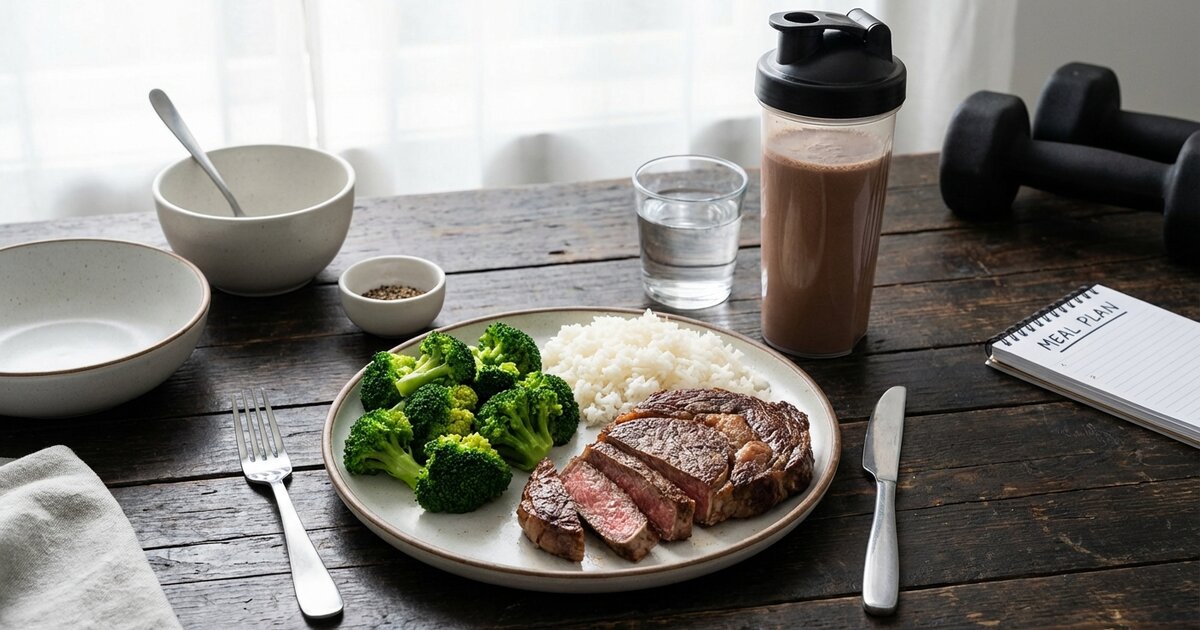
Bulking is a deliberate phase of eating more calories than you burn to support muscle growth. It’s the “building” phase that comes before cutting—where you focus entirely on gaining size, strength, and muscle mass.
The concept is simple: your body needs extra energy to build new tissue. Without a caloric surplus, muscle growth is limited or impossible for most people. But here’s the catch—eat too much, and you’ll gain excessive fat that makes your eventual cut miserable.
This guide shows you how to set up your bulking macros for maximum muscle with minimal fat gain. Whether you’re a first-time bulker or coming back from a cut, these principles will help you build lean mass efficiently.
Ready for personalized bulking macros? Use our Macro Calculator to get your exact numbers.

Lean Bulk vs. Dirty Bulk: Which Is Better?
Before diving into macro numbers, let’s address the elephant in the room: how aggressively should you eat?
The Dirty Bulk Approach
A “dirty bulk” means eating in a large caloric surplus (500-1000+ calories above maintenance) without much concern for food quality. The philosophy: more food = more muscle.
The reality? It doesn’t work that way.
Your body can only synthesize so much muscle tissue per day, regardless of how much you eat. For natural lifters, that’s approximately:
- Beginners: 1-2 lbs of muscle per month
- Intermediate: 0.5-1 lb per month
- Advanced: 0.25-0.5 lbs per month
Eating 1,000 extra calories won’t double your muscle gains compared to eating 400 extra. The excess just gets stored as fat. Dirty bulking builds muscle at roughly the same rate as lean bulking—but adds significantly more fat in the process.
Then you face the painful reality: a longer, harder cut to remove all that extra fat, during which you risk losing some of that hard-earned muscle.
The Lean Bulk Approach (Recommended)
A lean bulk uses a moderate surplus of 200-400 calories above TDEE. You still gain weight and build muscle, but the ratio of muscle-to-fat is much better.
Benefits of lean bulking:
- Build the same amount of muscle as dirty bulking
- Gain far less fat in the process
- Shorter, easier cuts afterward
- Look better year-round
- Maintain insulin sensitivity (important for body composition)
- Stay healthier overall
The tradeoff: Patience. Lean bulking takes the same time for muscle growth but requires you to resist the urge to “speed things up” with more food.
For most people, lean bulking is the smarter long-term approach. You might feel impatient watching the scale move slowly, but you’ll be grateful when cutting season arrives.
Optimal Macros for Bulking
Here are the evidence-based macro ranges for building muscle:
The Bulking Macro Framework
| Macro | % of Calories | Grams Calculation |
|---|---|---|
| Protein | 25-30% | 0.8-1g per pound bodyweight |
| Carbohydrates | 45-55% | 2-3g per pound bodyweight |
| Fat | 20-25% | 0.3-0.4g per pound bodyweight |
This framework prioritizes carbs for training performance while ensuring adequate protein for muscle synthesis and fat for hormonal health.
Protein: The Building Block
Protein provides amino acids—the literal building blocks of muscle tissue. Without adequate protein, your body can’t construct new muscle, no matter how perfect your training is.
Target: 0.8-1g per pound of bodyweight
Research consistently shows this range maximizes muscle protein synthesis. Going significantly higher (1.5g+) provides no additional benefit for muscle building but does take calories away from carbs and fats.
| Bodyweight | Minimum Protein | Optimal Protein |
|---|---|---|
| 150 lbs | 120g | 135-150g |
| 175 lbs | 140g | 158-175g |
| 200 lbs | 160g | 180-200g |
| 225 lbs | 180g | 200-225g |
Quality protein sources for bulking:
- Chicken breast (31g per 4oz)
- Lean beef (26g per 4oz)
- Fish and seafood (22-28g per 4oz)
- Eggs (6g per egg)
- Greek yogurt (17g per cup)
- Cottage cheese (14g per half cup)
- Whey protein (25g per scoop)
Spread your protein across 4-5 meals with 25-50g per meal for optimal muscle protein synthesis throughout the day.
Protein: The Complete Macronutrient Guide
Carbohydrates: The Performance Fuel
This is where bulking differs most from cutting. Carbs are your primary training fuel and recovery nutrient—and during a bulk, you need plenty of them.
Target: 2-3g per pound of bodyweight
Carbohydrates:
- Fuel intense training — Glycogen powers your heaviest lifts
- Support recovery — Replenish depleted muscle glycogen post-workout
- Spike insulin — The anabolic hormone that drives nutrients into muscle cells
- Preserve protein — Your body uses carbs for energy instead of breaking down protein
- Support testosterone — Low-carb diets often correlate with lower testosterone
During a bulk, you have the caloric room to eat plenty of carbs. Use this advantage—your training performance will thank you.
| Bodyweight | Moderate Carbs | High Carbs |
|---|---|---|
| 150 lbs | 300g | 375-450g |
| 175 lbs | 350g | 440-525g |
| 200 lbs | 400g | 500-600g |
| 225 lbs | 450g | 560-675g |
Best carb sources for bulking:
- White and brown rice (45g per cup cooked)
- Oatmeal (27g per cup cooked)
- Potatoes and sweet potatoes (26-37g per medium)
- Whole grain bread (15g per slice)
- Pasta (43g per cup cooked)
- Fruits (variable, great around workouts)
- Beans and lentils (40g per cup)
Time carbs strategically: larger portions before and after training, moderate amounts at other meals.
Carbohydrates Explained: Complete Guide
Fat: The Hormone Support
Fat is essential for hormone production—including testosterone, the primary muscle-building hormone. Cut fat too low, and your hormones (and muscle gains) will suffer.
Target: 0.3-0.4g per pound of bodyweight
This ensures adequate hormone support without taking too many calories from protein and carbs. During a bulk, fat is important but doesn’t need to be extremely high.
| Bodyweight | Minimum Fat | Moderate Fat |
|---|---|---|
| 150 lbs | 45g | 60g |
| 175 lbs | 53g | 70g |
| 200 lbs | 60g | 80g |
| 225 lbs | 68g | 90g |
Quality fat sources:
- Olive oil (14g per tablespoon)
- Nuts and nut butters (14-16g per oz/2 tbsp)
- Avocado (21g per whole)
- Fatty fish (10-15g per 4oz)
- Eggs (5g per egg)
- Cheese (9g per oz)
Distribute fats throughout the day, but consider keeping pre-workout meals lower in fat since fat slows digestion.
How to Calculate Your Bulking Macros
Let’s walk through the exact process step by step.
Step 1: Calculate Your TDEE (Maintenance Calories)
Your Total Daily Energy Expenditure is how many calories you burn including all activity. This is your baseline—the number you need to exceed to gain weight.
Quick estimation:
- Sedentary: Bodyweight × 12-13
- Lightly active: Bodyweight × 13-14
- Moderately active: Bodyweight × 14-15
- Very active: Bodyweight × 15-17
Example: A 175-lb moderately active person burns approximately 2,450-2,625 calories daily.
For a more accurate calculation, use our TDEE Calculator which factors in age, height, weight, and activity level using the Mifflin-St Jeor equation.
TDEE Explained: What It Is and How to Calculate It
Step 2: Add Your Surplus
For a lean bulk, add 200-400 calories above your TDEE.
Example:
- TDEE: 2,500 calories
- Lean bulk target: 2,700-2,900 calories
If you’re a beginner with high muscle-building potential, you can push toward the higher end (400 cal surplus). Intermediate and advanced lifters should stay closer to 200-300.
Warning signs your surplus is too large:
- Gaining more than 1 lb per week consistently
- Visible fat accumulation, especially in the midsection
- Feeling sluggish and bloated
- Strength gains stagnating despite weight gain (fat, not muscle)
Step 3: Set Your Protein
Calculate protein by bodyweight, not by percentage:
Target: 0.8-1g per pound of bodyweight
Example (180 lb person):
- Protein target: 145-180g per day
- Let’s use 160g
- Calories from protein: 160 × 4 = 640 calories
Step 4: Set Your Fat
Target: 0.3-0.4g per pound of bodyweight
Example (180 lb person):
- Fat target: 54-72g per day
- Let’s use 65g
- Calories from fat: 65 × 9 = 585 calories
Step 5: Fill Remaining Calories with Carbs
Subtract protein and fat calories from your total, then divide by 4.
Example:
- Total bulk calories: 2,800
- Protein calories: 640
- Fat calories: 585
- Remaining for carbs: 2,800 - 640 - 585 = 1,575 calories
- Carb grams: 1,575 ÷ 4 = 394g carbohydrates
Complete Bulking Macro Example (180 lbs)
| Macro | Grams | Calories | % of Total |
|---|---|---|---|
| Protein | 160g | 640 | 23% |
| Carbs | 394g | 1,576 | 56% |
| Fat | 65g | 585 | 21% |
| Total | — | 2,801 | 100% |
Sample Bulking Meal Plan
Here’s what a day of eating 2,800 calories with bulking macros might look like:
Meal 1: Breakfast (7:00 AM)
- 1 cup oatmeal with 1 scoop whey protein
- 1 banana
- 2 tablespoons peanut butter
Macros: 45g protein, 75g carbs, 18g fat (640 cal)
Meal 2: Lunch (12:00 PM)
- 6oz grilled chicken breast
- 1.5 cups white rice
- 1 cup steamed broccoli
- 1 tablespoon olive oil
Macros: 48g protein, 70g carbs, 16g fat (620 cal)
Meal 3: Pre-Workout (3:30 PM)
- Greek yogurt parfait (1 cup Greek yogurt, 1/2 cup granola, berries)
Macros: 25g protein, 55g carbs, 8g fat (395 cal)
Meal 4: Post-Workout (6:00 PM)
- 6oz lean beef (sirloin)
- 1 large baked potato
- Side salad with light dressing
Macros: 42g protein, 60g carbs, 14g fat (535 cal)
Meal 5: Evening (9:00 PM)
- 2 whole eggs + 3 egg whites scrambled
- 2 slices whole grain toast
- 1oz cheese
Macros: 32g protein, 30g carbs, 18g fat (405 cal)
Daily Totals
- Protein: 192g
- Carbs: 290g
- Fat: 74g
- Calories: ~2,595
Adjust portions up or down based on your specific targets.
Bulking Workout Nutrition Timing
While total daily macros matter most, strategic timing can enhance muscle growth and performance.
Pre-Workout Nutrition
Eat 1-3 hours before training:
- Protein: 25-40g (provides amino acids for training)
- Carbs: 40-60g (tops off glycogen, provides energy)
- Fat: Keep low (slows digestion)
Good pre-workout meals:
- Chicken and rice
- Protein shake with banana and oats
- Turkey sandwich on whole grain bread
- Greek yogurt with granola
Intra-Workout (Optional)
For sessions over 90 minutes:
- Fast-digesting carbs (15-30g per hour)
- Options: Sports drink, fruit, candy (yes, really)
Not necessary for typical 45-75 minute sessions.
Post-Workout Nutrition
Eat within 2 hours after training:
- Protein: 30-50g (stimulates muscle protein synthesis)
- Carbs: 50-80g (replenishes glycogen, enhances protein uptake)
- Fat: Moderate (doesn’t impair recovery)
Good post-workout meals:
- Whey protein shake with fruit and oats
- Steak with potatoes
- Salmon with rice
- Chicken stir-fry with noodles
The “anabolic window” isn’t as narrow as once believed—you don’t need to chug a shake immediately. But eating a solid meal within a couple hours post-training is beneficial.
Tracking Progress During Your Bulk
You can’t manage what you don’t measure. Here’s how to track your bulk effectively:
What to Track
1. Body Weight
- Weigh daily, same conditions (morning, after bathroom)
- Track weekly averages, not daily fluctuations
- Target: 0.5-1 lb gain per week
2. Strength Progress
- Log all workouts
- Strength should be steadily increasing
- If lifts plateau despite eating enough, examine training
3. Body Measurements
- Arms, chest, shoulders, thighs (monthly)
- Waist measurement (if increasing rapidly, surplus too high)
4. Progress Photos
- Same lighting, pose, time of day
- Compare every 4-6 weeks
- Visual progress can be subtle but significant
Adjusting Your Macros During the Bulk
If you’re not gaining weight:
- Increase carbs by 25-50g per day
- Wait 2 weeks before adjusting again
- Your TDEE estimate may have been low
If you’re gaining too fast (>1 lb/week):
- Reduce carbs by 25-50g per day
- Check if tracking is accurate
- Your surplus is larger than intended
If strength isn’t increasing:
- Ensure sleep is adequate (7-9 hours)
- Check protein timing and distribution
- Evaluate training program
Common Bulking Mistakes to Avoid
Mistake #1: Too Large a Surplus
The most common error. Eating 500-1000+ calories over maintenance doesn’t build more muscle—it just adds fat faster. Stick to 200-400 calories over TDEE.
Mistake #2: Insufficient Protein
Some people get so focused on eating more that they neglect protein quality. You need adequate protein to build muscle—carbs and fat alone won’t cut it.
Mistake #3: Neglecting Food Quality
Just because you’re in a surplus doesn’t mean food quality doesn’t matter. Highly processed foods spike inflammation, impair recovery, and don’t provide the micronutrients muscles need.
Rule of thumb: 80% of calories from whole, minimally processed foods. 20% flexibility for treats.
Mistake #4: Skipping Workouts
Extra calories without training stimulus = fat gain, not muscle gain. The surplus provides the raw materials, but training provides the signal to build.
Mistake #5: Bulking Too Long
Extended bulks at higher body fat percentages become increasingly inefficient. Insulin sensitivity decreases, and a larger portion of weight gained becomes fat.
Stop bulking when you reach:
- 15-18% body fat (men)
- 25-28% body fat (women)
- Or after 4-6 months, regardless
Mistake #6: Ignoring Recovery
Muscles grow during rest, not during training. Poor sleep, chronic stress, and insufficient rest days limit muscle growth regardless of nutrition.
Prioritize:
- 7-9 hours of sleep
- 1-2 rest days per week
- Stress management
Common Macro Tracking Mistakes
When to Transition from Bulking to Cutting
All bulks must eventually end. Here’s how to know when:
Signs It’s Time to Cut
- Body fat reaching threshold (15-18% men, 25-28% women)
- Been bulking 4-6+ months
- Diminishing returns on muscle gain
- Feeling uncomfortable with current body fat
- Summer/event approaching where you want to look leaner
How to Transition
Don’t crash into a cut. Gradually reduce calories:
Week 1-2: Drop to maintenance calories Week 3-4: Create small deficit (200-300 cal) Week 5+: Increase deficit to target (400-500 cal)
This gradual transition helps preserve muscle and prevents metabolic stress.
Macros for Cutting: The Complete Guide
Bulking on Special Diets
Vegan Bulking
Absolutely possible with planning:
- Combine plant proteins (legumes + grains)
- Emphasize high-protein plants: tofu, tempeh, seitan, legumes
- Consider protein powder to hit targets
- B12 and potentially creatine supplementation
- May need slightly higher protein (1-1.1g/lb) to account for lower bioavailability
Gluten-Free Bulking
Focus on naturally gluten-free carbs:
- Rice (all varieties)
- Potatoes and sweet potatoes
- Quinoa
- Gluten-free oats
- Corn and corn-based products
Lactose-Intolerant Bulking
Protein alternatives:
- Egg-based protein powder
- Plant-based protein powder
- Lactose-free dairy
- More meat, fish, and eggs
Supplements for Bulking
Supplements are optional but can help fill gaps:
Evidence-Based Recommendations
Creatine Monohydrate ⭐
- 3-5g daily (no loading necessary)
- Improves strength, power, and muscle growth
- One of the most researched supplements with strong evidence
Protein Powder
- Not necessary if hitting targets with food
- Convenient for on-the-go or post-workout
- Whey, casein, or plant-based all work
Vitamin D (if deficient)
- Get tested first
- Important for testosterone and overall health
- Many people are deficient, especially in winter
Fish Oil (if not eating fatty fish regularly)
- 1-2g EPA+DHA daily
- Supports recovery and overall health
Skip These
- Mass gainers (expensive, mostly sugar)
- Testosterone boosters (don’t work)
- Most pre-workouts (caffeine is the only effective ingredient)
- BCAAs (redundant if eating adequate protein)
Putting It All Together
Successful bulking comes down to:
- Moderate surplus (200-400 cal over TDEE)
- High protein (0.8-1g per pound)
- Plenty of carbs (2-3g per pound)
- Adequate fat (0.3-0.4g per pound)
- Consistent training (progressive overload)
- Sufficient recovery (sleep, rest days)
- Patience (muscle builds slowly)
Your macros provide the raw materials. Your training provides the signal. Your recovery allows the growth. Get all three right, and the muscle will come.
Ready to calculate your personalized bulking macros? Use our Macro Calculator and select “Muscle Gain” as your goal.
Related Resources
Related Articles
Travel Macros: How to Track Nutrition While Traveling
Complete guide to managing macros while traveling. Learn meal planning strategies,...
Read guide →
Macros for Shift Workers: Complete Guide to Nutrition on Rotating Schedules
Master macro tracking on night shifts and rotating schedules. Learn meal timing, sleep...
Read guide →
Macros During Ramadan: Complete Nutrition Guide for Fasting
Learn how to track macros during Ramadan fasting. Expert guide covering meal timing,...
Read guide →Disclaimer: This content is for informational purposes only. Consult a healthcare provider before making changes to your diet.