Macros for Men: Complete Guide to Male-Specific Nutrition
Reviewed by Sarah Chen, MS, RD
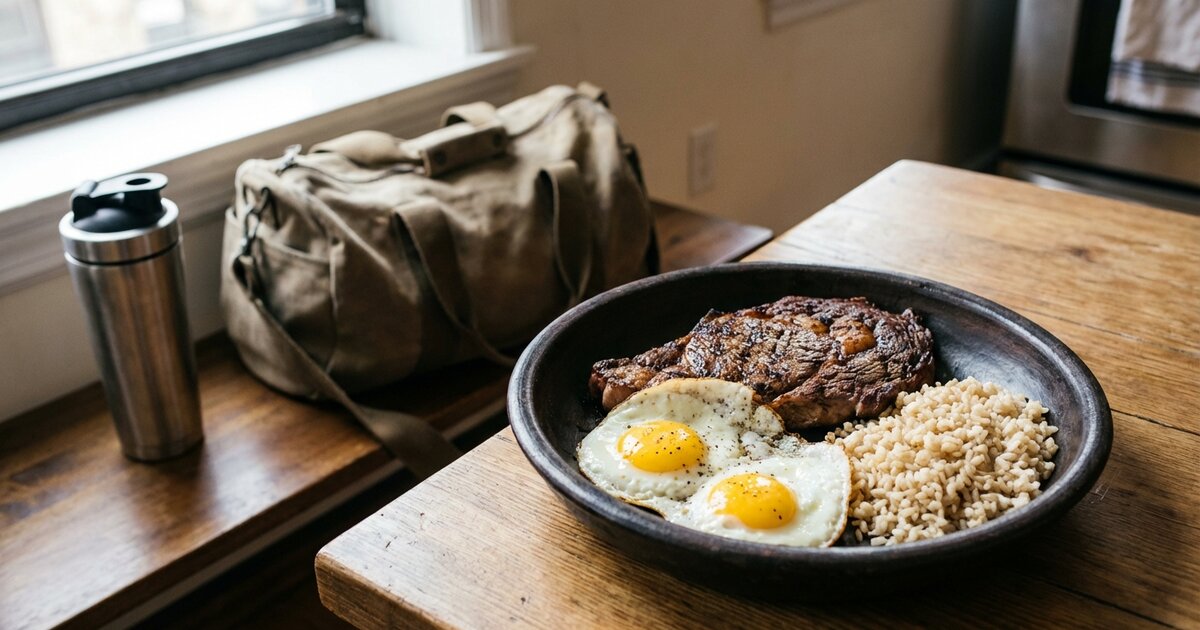
Men have nutritional advantages—more muscle, higher testosterone, faster metabolism. But that doesn’t mean you can eat whatever you want and get results.
Whether you’re trying to build muscle, lose fat, or optimize performance, your macros determine whether you succeed or spin your wheels. For men focused on adding size, understanding the right macros for muscle gain is the foundation of your nutrition plan.
This guide covers everything men need to know about setting up macros for their goals, with specific considerations for male physiology.

Related Guide: What Are Macronutrients? Complete Guide — Learn the foundations of protein, carbs, and fats.
How Men’s Bodies Work (Nutritionally)
Understanding male physiology helps you make better nutritional choices.
The Testosterone Advantage
Testosterone is your primary anabolic hormone, and men have 15-20x more of it than women. This means:
Muscle building is easier: You can build muscle faster and maintain more of it over time. With proper training and nutrition, men can add 1-2 lbs of muscle per month as beginners (tapering as you advance).
Fat loss is often faster: Higher muscle mass means a higher metabolic rate. Men typically burn more calories at rest and lose fat more quickly during a deficit.
Recovery is faster: Testosterone supports recovery from training. Men can often handle higher training volumes and frequencies.
But it’s not automatic: These advantages only manifest with proper nutrition and training. A man eating poorly will still look and feel terrible despite his testosterone.
Metabolic Differences
Men generally have a higher basal metabolic rate (BMR) than women due to:
- Larger average body size
- More muscle mass
- Higher testosterone levels
The average man’s TDEE (Total Daily Energy Expenditure) ranges from 2,200-3,200 calories depending on size and activity level. Active men regularly need 3,000+ calories.
This higher calorie budget gives you more flexibility—but it also means you need to eat more to fuel performance and muscle growth.
Where Men Store Fat
Men typically store fat in the abdominal region first (visceral and subcutaneous belly fat). This pattern is:
Health-relevant: Visceral fat (around organs) increases risk of metabolic disease, heart disease, and diabetes more than fat stored elsewhere.
Stubborn: Lower belly fat is often the last to go. Men frequently see face, arms, and chest lean out before the belly catches up.
Hormone-influenced: Excess belly fat can actually lower testosterone through increased aromatase activity (converting testosterone to estrogen).
The Aging Factor
Male physiology changes with age:
20s-30s: Peak testosterone, fastest muscle building potential, highest metabolism 40s: Testosterone begins declining (~1% per year), muscle maintenance becomes more important 50s+: Significant testosterone decline, increased importance of protein and strength training
These changes don’t mean you can’t build an impressive physique at any age—they mean your approach needs to evolve.
The Male Macro Framework
Here’s how to set up macros optimized for male physiology and goals.
Protein for Men
The Target: 0.8-1.2g per pound of bodyweight
Protein is the building block of muscle, and men can typically utilize more of it than women due to higher muscle mass and testosterone.
Goal-specific targets:
| Goal | Protein Target | Why |
|---|---|---|
| Building muscle | 1.0-1.2g/lb | Maximum muscle protein synthesis |
| Maintaining muscle | 0.8-1.0g/lb | Prevents muscle loss |
| Losing fat | 1.0-1.2g/lb | Preserves muscle in a deficit |
| Very lean (sub-12% BF) | 1.2g/lb | Extra protection for muscle |
Practical targets by bodyweight:
| Body Weight | Muscle Building | Fat Loss | Maintenance |
|---|---|---|---|
| 150 lbs | 150-180g | 150-180g | 120-150g |
| 175 lbs | 175-210g | 175-210g | 140-175g |
| 200 lbs | 200-240g | 200-240g | 160-200g |
| 225 lbs | 225-270g | 225-270g | 180-225g |
The upper limit: Going above 1.2g/lb doesn’t provide additional benefit for most men. Those calories are better spent on carbs or fats.
Carbs for Men
The Target: 1.0-3.0g per pound of bodyweight (highly variable)
Carbs are your performance fuel. Men, especially active ones, generally thrive on higher carb intakes than they might expect.
Why men do well with carbs:
- Fuel for intense training
- Support testosterone production (very low-carb diets can decrease testosterone)
- Support muscle glycogen (muscle “fullness”)
- Power high-intensity work
Carb targets by activity:
| Activity Level | Carb Target | Example (180 lb man) |
|---|---|---|
| Sedentary | 1.0-1.5g/lb | 180-270g |
| Moderate (3-4x/week) | 1.5-2.0g/lb | 270-360g |
| Active (5-6x/week) | 2.0-2.5g/lb | 360-450g |
| Very active (athletes) | 2.5-3.0g/lb | 450-540g |
Low-carb caution: Chronically low carb intake can:
- Decrease testosterone
- Impair training performance
- Reduce muscle glycogen (flatter appearance)
- Negatively affect mood and energy
Unless you have a medical reason or specific preference for low-carb eating, men generally perform better with moderate-to-high carbs.
Fat for Men
The Target: 0.3-0.5g per pound of bodyweight
Fat is essential for hormone production, including testosterone. But there’s a balance—too little hurts hormones, too much crowds out carbs.
Why fat matters for men:
- Required for testosterone production
- Supports absorption of vitamins A, D, E, K
- Provides satiety
- Supports brain function
Fat targets:
| Body Weight | Minimum | Optimal Range |
|---|---|---|
| 150 lbs | 45g | 52-75g |
| 175 lbs | 52g | 61-87g |
| 200 lbs | 60g | 70-100g |
| 225 lbs | 67g | 78-112g |
Types of fat:
- Prioritize: Monounsaturated fats (olive oil, avocado, nuts), omega-3s (fatty fish, fish oil)
- Include moderately: Saturated fat (meat, eggs, dairy)—not evil but doesn’t need emphasis
- Minimize: Trans fats (processed foods, fried foods)
Macros by Goal
Your goal determines how you set up your macros.
Macros for Building Muscle
Building muscle requires a caloric surplus—eating more than you burn. But the surplus doesn’t need to be massive.
The setup:
- Calculate TDEE (maintenance calories)
- Add 200-400 calories (surplus)
- Set protein at 1.0-1.2g/lb
- Set fat at 0.3-0.4g/lb
- Fill remaining calories with carbs
Example: 180 lb man, moderately active, building muscle
- TDEE: 2,700 calories
- Target: 3,000 calories (+300 surplus)
| Macro | Grams | Calories | Percentage |
|---|---|---|---|
| Protein | 200g | 800 | 27% |
| Fat | 67g | 600 | 20% |
| Carbs | 400g | 1,600 | 53% |
Key points:
- High carbs fuel training and support muscle growth
- Surplus provides energy for new tissue
- Protein provides the building blocks
- Expect to gain 0.5-1 lb per week (half muscle, half fat is realistic)
Macros for Losing Fat
Losing fat requires a caloric deficit—eating less than you burn. The goal is to lose fat while preserving muscle.
The setup:
- Calculate TDEE
- Subtract 400-600 calories (deficit)
- Set protein at 1.0-1.2g/lb (higher end to preserve muscle)
- Set fat at 0.3-0.4g/lb
- Fill remaining calories with carbs
Example: 200 lb man, moderately active, losing fat
- TDEE: 2,800 calories
- Target: 2,300 calories (-500 deficit)
| Macro | Grams | Calories | Percentage |
|---|---|---|---|
| Protein | 220g | 880 | 38% |
| Fat | 67g | 600 | 26% |
| Carbs | 205g | 820 | 36% |
Key points:
- Higher protein protects muscle during the deficit
- Moderate deficit is sustainable (1 lb/week fat loss)
- Carbs are reduced but still adequate for training
- Expect weight loss of 0.75-1.25 lbs per week
Macros for Recomposition
Body recomposition—losing fat while building muscle simultaneously—is possible, especially for:
- Beginners to strength training
- Those returning after a layoff
- Men with higher body fat percentages
The setup:
- Calculate TDEE
- Eat at maintenance or slight deficit (100-200 calories)
- Set protein at 1.0-1.2g/lb
- Set fat at 0.3-0.4g/lb
- Fill remaining with carbs
Example: 175 lb man, newer to lifting, recomp goal
- TDEE: 2,500 calories
- Target: 2,400 calories (slight deficit)
| Macro | Grams | Calories | Percentage |
|---|---|---|---|
| Protein | 190g | 760 | 32% |
| Fat | 67g | 600 | 25% |
| Carbs | 260g | 1,040 | 43% |
Key points:
- Scale weight may not change much
- Progress shows in mirror and strength gains
- This approach is slower but effective
- Works best with consistent strength training
Macros for Maintenance
Once you’ve achieved your goals, maintenance keeps you there.
The setup:
- Calculate current TDEE (may have changed since you started)
- Eat at maintenance calories
- Set protein at 0.8-1.0g/lb
- Set fat at 0.3-0.5g/lb
- Fill remaining with carbs
Key points:
- More flexibility in macro distribution
- Focus on sustainability
- Can be more intuitive after practice
- Continue strength training to maintain muscle
Sample Macro Setups for Men
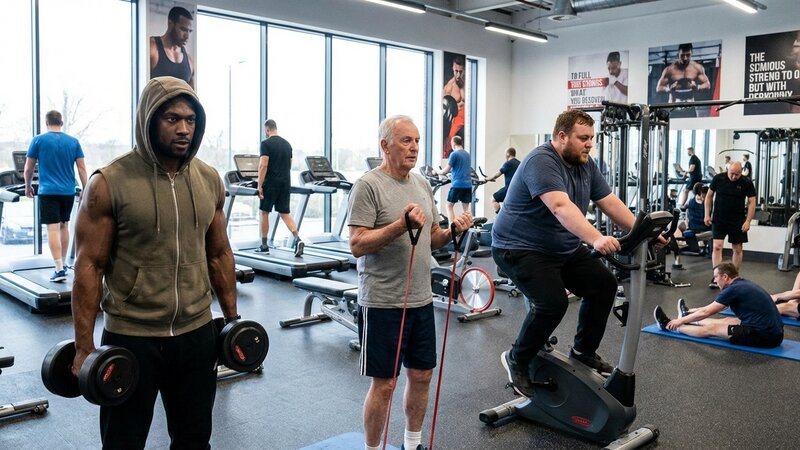
Example 1: The Skinny Beginner Trying to Build Muscle
Jake’s stats:
- Age: 23
- Height: 5’10”
- Weight: 155 lbs
- Activity: Lifting 4x/week, minimal cardio
- Goal: Gain 20 lbs of muscle over the next year
Calculations:
- TDEE: ~2,400 calories
- Target: 2,750 calories (+350 surplus)
His macros:
| Macro | Grams | Calories | Percentage |
|---|---|---|---|
| Protein | 170g | 680 | 25% |
| Fat | 55g | 495 | 18% |
| Carbs | 395g | 1,580 | 57% |
Why this works: High carbs fuel his training and support muscle growth. The moderate surplus promotes muscle gain without excessive fat gain. Protein is adequate for his current size and will increase as he grows.
Diet notes: Jake needs to prioritize eating enough. Classic mistake for skinny guys is thinking they eat a lot when they don’t. Food tracking will reveal the truth.
Example 2: The Office Worker Cutting Fat
Mike’s stats:
- Age: 35
- Height: 5’11”
- Weight: 210 lbs (about 25% body fat)
- Activity: Lifting 3x/week, walks daily
- Goal: Drop to 185 lbs while preserving muscle
Calculations:
- TDEE: ~2,600 calories
- Target: 2,100 calories (-500 deficit)
His macros:
| Macro | Grams | Calories | Percentage |
|---|---|---|---|
| Protein | 220g | 880 | 42% |
| Fat | 70g | 630 | 30% |
| Carbs | 150g | 600 | 28% |
Why this works: High protein preserves muscle during the deficit. Fat is adequate for hormones and satiety. Lower carbs reflect his desk job and moderate activity, but still enough to fuel his training.
Diet notes: Mike should track carefully, especially on weekends (where many office workers undo their weekly deficit). Meal prep will be crucial.
Example 3: The Active 45-Year-Old Maintaining
Tom’s stats:
- Age: 45
- Height: 6’0”
- Weight: 190 lbs (about 18% body fat)
- Activity: Lifting 4x/week, plays recreational sports
- Goal: Maintain physique, optimize health
Calculations:
- TDEE: ~2,800 calories
- Target: 2,800 calories (maintenance)
His macros:
| Macro | Grams | Calories | Percentage |
|---|---|---|---|
| Protein | 180g | 720 | 26% |
| Fat | 90g | 810 | 29% |
| Carbs | 315g | 1,260 | 45% |
Why this works: Slightly higher protein for his age supports muscle maintenance. Good fat intake supports testosterone. Plenty of carbs for his active lifestyle.
Diet notes: At maintenance, Tom has more flexibility. He can eat intuitively most of the time, tracking occasionally to make sure he hasn’t drifted.
Example 4: The Athlete Fueling Performance
David’s stats:
- Age: 28
- Height: 6’2”
- Weight: 200 lbs
- Activity: CrossFit 5-6x/week, runs, plays basketball
- Goal: Optimize performance, maintain current body composition
Calculations:
- TDEE: ~3,400 calories
- Target: 3,400 calories (maintenance)
His macros:
| Macro | Grams | Calories | Percentage |
|---|---|---|---|
| Protein | 200g | 800 | 23% |
| Fat | 75g | 675 | 20% |
| Carbs | 480g | 1,920 | 57% |
Why this works: Very high carbs fuel intense, frequent training. Adequate protein for muscle maintenance and recovery. Moderate fat keeps hormones healthy without crowding out carbs.
Diet notes: David needs to eat frequently—3,400 calories of clean food is a lot. He’ll need 4-5 meals plus snacks. Timing matters more for him (carbs around training).
Building the High-Protein Plate
Most men underestimate protein needs when they start tracking. Here’s how to hit your targets.
Protein Sources for Men
Highest protein per calorie:
| Food | Protein | Calories | Notes |
|---|---|---|---|
| Chicken breast | 31g per 4oz | 140 | Lean muscle-building staple |
| Turkey breast | 29g per 4oz | 135 | Similar to chicken |
| White fish (cod, tilapia) | 25g per 4oz | 110 | Very lean |
| Shrimp | 20g per 4oz | 85 | Lowest calorie protein |
| Egg whites | 11g per cup | 50 | Pure protein, no fat |
Higher protein with fats:
| Food | Protein | Calories | Notes |
|---|---|---|---|
| Salmon | 25g per 4oz | 230 | Great omega-3 source |
| Whole eggs | 6g each | 70 | Complete nutrition |
| Ground beef (90/10) | 22g per 4oz | 200 | Includes creatine |
| Steak (sirloin) | 28g per 4oz | 180 | Zinc and iron |
| Pork tenderloin | 26g per 4oz | 150 | Lean and affordable |
Convenient options:
| Food | Protein | Notes |
|---|---|---|
| Greek yogurt | 20g per cup | Great for smoothies or snacks |
| Cottage cheese | 14g per ½ cup | Casein protein, good before bed |
| Protein powder | 20-25g per scoop | Convenient gap-filler |
| Deli meat | 12g per 3oz | Easy for sandwiches |
| Protein bars | 20-25g | Emergency option |
Hitting 200g+ Protein Daily
Here’s what 200g of protein looks like in a day:
Meal 1 - Breakfast: 3 whole eggs + 3 egg whites, turkey sausage
- Protein: 35g
Meal 2 - Lunch: 6oz chicken breast, rice, vegetables
- Protein: 45g
Meal 3 - Snack: Greek yogurt with protein powder mixed in
- Protein: 40g
Meal 4 - Dinner: 8oz steak, potato, salad
- Protein: 55g
Meal 5 - Evening: Cottage cheese
- Protein: 28g
Total: 203g protein
Pre- and Post-Workout Nutrition
Pre-workout (1-2 hours before):
- 20-40g protein
- 40-80g carbs
- Low fat (slows digestion)
- Example: Chicken and rice, or protein shake with banana
Post-workout (within 2 hours):
- 30-50g protein
- 50-100g carbs (higher after intense sessions)
- Fat is fine here
- Example: Steak and potatoes, or shake with oats
Does timing matter? For most men, total daily intake matters more than precise timing. But if you train hard and want to optimize, eating protein and carbs around training does help.
Training and Macros: The Connection
Macros don’t exist in isolation—they fuel your training.
How Training Affects Macro Needs
More volume = more carbs: If you’re training 5-6x per week with high volume, you need more carbs than someone training 3x per week.
More muscle = more protein: Bigger guys need more protein in absolute terms to maintain and build more tissue.
More activity = more calories: Your TDEE scales with activity. Don’t eat like a sedentary person if you’re highly active.
Signs Your Macros Need Adjustment
Not enough carbs:
- Low energy during workouts
- Poor pump
- Feeling flat
- Decreased performance over time
- Irritability
Not enough protein:
- Muscle loss during cuts
- Slow recovery between sessions
- Not getting stronger
- Losing muscle fullness
Not enough fat:
- Low testosterone symptoms (fatigue, low libido, poor mood)
- Joint issues
- Dry skin
- Vitamin deficiency symptoms
Too many calories:
- Gaining fat faster than muscle (bulk)
- Clothes getting tighter in the wrong places
- Declining conditioning
Too few calories:
- Losing strength
- Constant hunger
- Muscle loss
- Low energy
- Poor recovery
Common Mistakes Men Make with Macros
Mistake #1: Bulking Too Aggressively
The “see food diet” leads to more fat than muscle. Gaining 2+ lbs per week? Most of that is fat, not muscle.
Fix: Keep surplus to 200-400 calories. Accept that muscle building is slow (0.5-1 lb per month after the beginner phase).
Mistake #2: Cutting Carbs Too Low
Men often assume carbs are the enemy. But very low carb intakes can:
- Hurt testosterone
- Tank training performance
- Make you irritable and foggy
- Lead to muscle loss
Fix: Unless you have a specific reason for low-carb, keep carbs at least 1.0-1.5g/lb, higher if very active.
Mistake #3: Protein Obsession
Going above 1.2g/lb doesn’t provide additional muscle-building benefit. Those 300g+ protein diets are overkill.
Fix: Stay in the 0.8-1.2g/lb range. The extra calories from excessive protein would be better spent on carbs.
Mistake #4: Ignoring Weekend Calories
A perfect Monday-Friday followed by weekend binges erases most of your progress.
Fix: Track weekends too, or at least plan for them. A few drinks and a big meal out can easily add 2,000+ calories to your week.
Mistake #5: Not Adjusting Over Time
The macros that got you from 200 to 180 lbs won’t get you from 180 to 160. Your body adapts.
Fix: Reassess every 4-8 weeks. As you lose weight, you burn fewer calories. As you gain weight, you need more.
Mistake #6: Neglecting Food Quality
You can hit your macros with Pop-Tarts and protein shakes, but you’ll feel terrible and likely undernourish yourself.
Fix: 80% of your food should be whole, minimally processed foods. Save the “flexible” 20% for foods you enjoy that might not be as nutritious.

Tracking and Adjusting
How to Track Effectively
The basics:
- Use a food tracking app (MyFitnessPal, Cronometer, MacroFactor)
- Weigh food when possible (don’t trust estimates)
- Log everything, including oils, sauces, and drinks
- Be honest—you’re only cheating yourself
Pro tips:
- Pre-log your day in the morning
- Build a library of meals you eat regularly
- Meal prep makes tracking much easier
- Restaurant meals are estimates at best
What to Do When Progress Stalls
First, make sure it’s a real stall:
- 2-3 weeks of no change in weight, measurements, or photos
- You’ve been consistent with tracking and training
Then troubleshoot:
-
Verify your tracking: Are you actually eating what you think? Weigh food for a week to double-check.
-
Check compliance: Honest assessment—are weekends undoing weekdays? Are you logging everything?
-
Adjust intake: If verified, reduce calories by 100-200 (cutting) or increase by 100-200 (bulking).
-
Add activity: Increase steps, add a cardio session.
-
Consider a diet break: If you’ve been in a deficit for 12+ weeks, 1-2 weeks at maintenance can help reset hormones and reduce fatigue.
Macros as You Age
Men in Their 20s
Advantages:
- Peak testosterone
- Fastest muscle building potential
- Highest metabolism
- Best recovery
Approach:
- Standard macro recommendations work well
- Can be slightly more flexible with food quality
- Focus on building a solid muscle base
Men in Their 30s
Changes:
- Testosterone begins slow decline
- Life stress often increases (career, family)
- Recovery may slow slightly
- Metabolism may decrease if activity decreases
Approach:
- Focus on maintaining the muscle you built in your 20s
- Prioritize sleep for recovery
- May need slightly higher protein
- Don’t let life derail your training
Men in Their 40s and Beyond
Changes:
- Testosterone decline accelerates (~1-2% per year)
- Muscle loss increases without intervention
- Recovery takes longer
- Injury risk increases
Approach:
- Protein becomes MORE important (0.9-1.2g/lb)
- Quality of food matters more
- Recovery and sleep are critical
- Strength training is non-negotiable
- Consider testosterone testing if experiencing symptoms
Key insight: Men who lift weights and eat adequate protein can maintain most of their muscle well into their 60s and beyond. It’s the men who stop training and eating well who see dramatic decline.
FAQ: Men’s Macro Questions
How much protein can I absorb per meal?
The “30g per meal” myth is outdated. Your body can absorb and use more than 30g—it just takes longer to digest. Aim for 30-50g per meal for convenience and satiety, but don’t stress if you have a larger portion.
Do I need to eat immediately after my workout?
No. The “anabolic window” is much longer than previously thought—several hours, not 30 minutes. Eating within a couple hours after training is ideal but not critical if you’ve eaten pre-workout.
Should I do a “dirty bulk” to build muscle faster?
No. Eating everything in sight leads to excessive fat gain, which you’ll then have to diet off. A controlled surplus of 200-400 calories builds muscle efficiently without the fat gain penalty.
Can I drink alcohol and still make progress?
Yes, in moderation. But alcohol impairs protein synthesis, disrupts sleep, and adds empty calories. Limit to 1-2 drinks a few times per week max if you’re serious about goals.
Is intermittent fasting good for men?
It can be, but it’s a meal timing strategy, not a magic bullet. IF works if it helps you control calories. It doesn’t work if it leads to overeating in your feeding window. Total macros still matter most.
Do I need supplements?
Very few are necessary. Focus on food first. The ones with good evidence: creatine monohydrate (for training), vitamin D (if deficient), omega-3s (if you don’t eat fatty fish), protein powder (for convenience, not magic).
Frequently Asked Questions
What are the best macros for men to build muscle?
Men building muscle should eat 200-400 calories above maintenance (TDEE) with 0.8-1.0g protein per pound bodyweight, 0.4-0.5g fat per pound, and remaining calories from carbs. For a 180lb man with 2,800 TDEE, a muscle-building phase would be 3,000-3,200 calories: 160-180g protein, 75-90g fat, and 350-450g carbs. This modest surplus maximizes muscle gain while minimizing fat accumulation.
Higher protein (1.0g+ per pound) offers no additional muscle-building benefits for most men—your body can only synthesize so much muscle tissue. Focus energy on progressive overload in the gym and adequate carbs to fuel intense training. Bigger surpluses (500+ calories) primarily add fat, not additional muscle.
How much protein do men need per day?
Most men need 0.7-1.0g protein per pound of bodyweight, with 0.8-1.0g optimal during fat loss or muscle building. A 180lb man should target 126-180g protein daily. Men naturally have higher testosterone and more muscle mass than women, but protein needs are still based on body weight and activity level—not drastically higher than women of the same weight.
Distribute protein across 4-5 meals (30-40g per feeding) to optimize muscle protein synthesis throughout the day. Total daily protein matters most, but spreading intake supports recovery better than eating it all at dinner. Very high protein (1.5g+ per pound) provides no additional benefits and makes hitting other macros unnecessarily difficult.
Should men eat more calories than women for the same goals?
Yes—men typically have 10-20% higher metabolic rates than women of equal weight due to greater muscle mass and higher testosterone levels. A 150lb man might have a TDEE of 2,400 calories, while a 150lb woman’s TDEE might be 2,000 calories. This means men can eat more while achieving the same caloric deficit or surplus for fat loss or muscle gain.
However, individual variation matters more than gender—a very active woman may need more calories than a sedentary man of the same weight. Calculate TDEE based on your specific stats (weight, height, age, activity level) rather than making assumptions based on gender alone. Men’s higher calorie budgets make hitting protein targets easier but also make it easier to overeat if not tracking.
What macro ratio is best for men trying to lose fat?
Men losing fat should aim for 35-40% protein, 30-35% carbs, and 25-30% fat—prioritizing protein to preserve muscle mass during the deficit. In grams, this typically means 0.8-1.0g protein per pound, 0.3-0.4g fat per pound, and remaining calories from carbs within a 400-600 calorie deficit. For a 200lb man eating 2,400 calories: 180g protein (30%), 225g carbs (38%), and 75g fat (28%).
Men can typically sustain larger deficits (500-600 calories) than women without severe hormonal consequences, making fat loss slightly faster. However, aggressive deficits (1,000+ calories) still cause muscle loss, performance decline, and metabolic slowdown—stick to moderate deficits for sustainable results.
How many calories should men eat to lose weight?
Most men need 2,000-2,800 calories daily for fat loss, depending on size, activity level, and metabolism. Sedentary men may need 1,800-2,200 calories, while very active men (training 5-6 days weekly) can lose fat eating 2,400-3,000+ calories. Calculate TDEE first, then subtract 400-600 calories to create a deficit producing 1-1.5 pounds weekly loss.
Men should rarely eat below 1,800 calories—chronic undereating damages metabolism, causes muscle loss, and reduces testosterone. If calculated deficit falls below 1,800 calories, increase activity (walking, resistance training) rather than cutting calories further. Men’s higher muscle mass and metabolic rates allow for faster fat loss than women when deficits are properly managed.
Do men need carbs to build muscle?
Carbs aren’t strictly required to build muscle, but they significantly improve performance, recovery, and muscle protein synthesis. Carbs replenish muscle glycogen depleted during training, provide readily available fuel for high-intensity lifting, and have a protein-sparing effect (preventing protein from being burned for energy). Most men build muscle optimally eating 2-4g carbs per pound bodyweight—higher for very active individuals.
Low-carb or keto diets can support muscle maintenance but typically impair muscle growth due to reduced training intensity, decreased glycogen stores, and lower anabolic signaling. If building muscle is your primary goal, prioritize adequate carbs (300-400g+ daily for most men) rather than restricting them unnecessarily.
Should men adjust macros on rest days versus training days?
Many men benefit from carb cycling—eating more carbs on training days and fewer on rest days while keeping protein consistent. On heavy training days, increase carbs by 50-100g to fuel performance; on rest or light days, reduce carbs by 50-100g and slightly reduce total calories. Example: Training days 200P/350C/75F (2,900 cal); rest days 200P/250C/75F (2,500 cal).
However, this added complexity isn’t necessary for most men—consistent daily macros work perfectly well and are simpler to follow. If your schedule and preferences allow carb cycling without creating confusion, it can optimize fuel availability. If not, focus on weekly calorie and macro averages rather than daily precision.
How long does it take for men to see results from tracking macros?
Men typically see measurable changes within 3-4 weeks when macros and training are consistent. Fat loss becomes noticeable after 2-3 weeks (2-4 pounds lost), though scale weight may fluctuate daily. Muscle gain is slower—expect 1-2 pounds monthly under optimal conditions (surplus, progressive lifting). Strength improvements may appear within 2-3 weeks as neuromuscular adaptations occur before visible muscle growth.
Progress photos and measurements reveal changes the scale doesn’t show—take front, side, and back photos every 2 weeks under consistent lighting. Men’s higher testosterone and muscle mass allow faster visible changes than women, but consistency over 8-12 weeks is necessary for significant transformations. Patience and adherence matter more than perfection.
Your Action Plan
Step 1: Calculate your TDEE Macro Calculator
Step 2: Set your goal
- Building muscle: Add 200-400 calories
- Losing fat: Subtract 400-600 calories
- Recomp: Slight deficit or maintenance
Step 3: Set your macros
- Protein: 0.8-1.2g per pound
- Fat: 0.3-0.5g per pound
- Carbs: Remaining calories
Step 4: Track consistently
- Use an app
- Weigh food when possible
- Log everything
Step 5: Evaluate and adjust
- Check progress every 2-4 weeks
- Make small adjustments (100-200 calories)
- Be patient—real results take time
Men have biological advantages for building muscle and losing fat. But those advantages only materialize when you put in the work—in the gym AND the kitchen.
Your macros are the fuel for your results. Treat them with the same attention you give your training program.
Last updated: February 2026
Related Articles
Travel Macros: How to Track Nutrition While Traveling
Complete guide to managing macros while traveling. Learn meal planning strategies,...
Read guide →
Macros for Shift Workers: Complete Guide to Nutrition on Rotating Schedules
Master macro tracking on night shifts and rotating schedules. Learn meal timing, sleep...
Read guide →
Macros During Ramadan: Complete Nutrition Guide for Fasting
Learn how to track macros during Ramadan fasting. Expert guide covering meal timing,...
Read guide →Disclaimer: This content is for informational purposes only. Consult a healthcare provider before making changes to your diet.