Macros vs Calories
Reviewed by Dr. Michael Torres, PhD
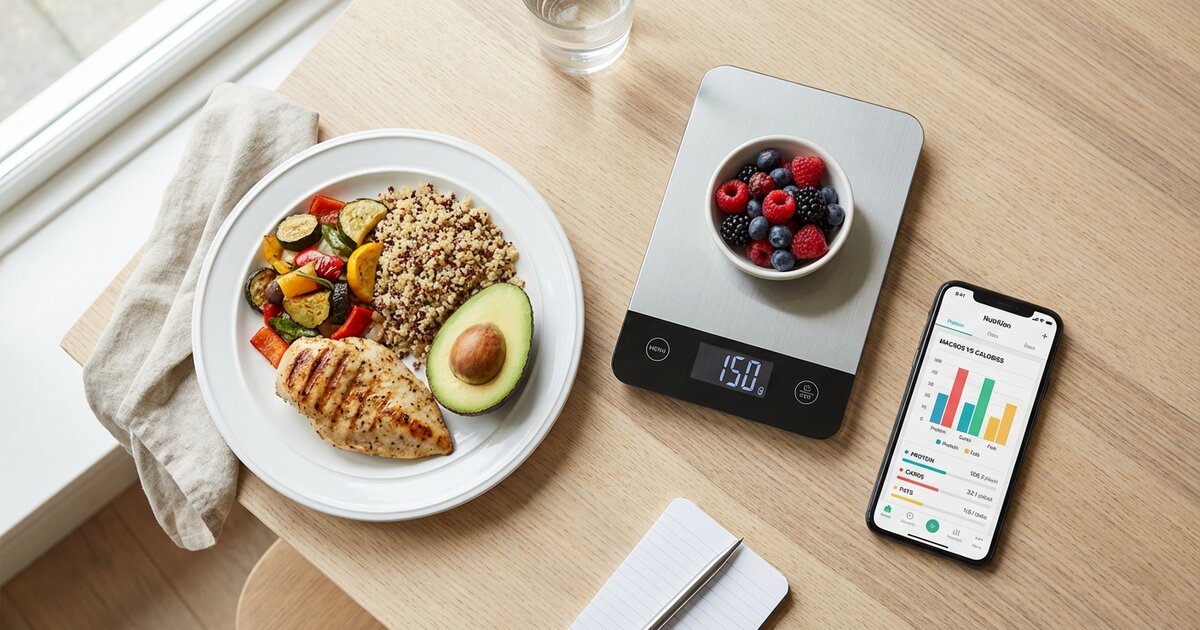
Quick Answer (as of 2026): Both work for weight management, but tracking macros provides more control over body composition. Calorie counting alone controls weight, but macro tracking controls whether that weight change comes from fat or muscle. For optimal results, track both—macros inherently include calorie counting.
The Fundamental Question
“Should I count calories or track macros?”
It’s one of the most common nutrition questions, and the confusion is understandable. Both approaches appear in fitness advice everywhere. Some experts swear by calorie counting. Others insist macros are the only way to go.
Here’s the truth: you don’t have to choose. Tracking macros inherently means tracking calories, since each macro contributes a specific number of calories. But understanding the difference—and when each approach matters most—will help you make smarter nutrition decisions.
This guide breaks down the macros vs. calories debate with practical guidance for your specific goals.
Use our Macro Calculator to get personalized targets for both macros AND calories.

Understanding the Basics
Before diving into which is “better,” let’s make sure we’re speaking the same language.
What Are Calories?
A calorie is a unit of energy. Specifically, it’s the energy needed to raise the temperature of 1 gram of water by 1 degree Celsius. For nutrition, we use “kilocalories” (kcal), which is what you see on food labels—though we commonly just say “calories.”
Your body needs energy to:
- Keep your heart beating and lungs breathing (basal metabolism)
- Digest and absorb food (thermic effect of food)
- Move and exercise (physical activity)
- Maintain body temperature
- Think and process information
The energy balance equation:
- Calories in > Calories out = Weight gain
- Calories in < Calories out = Weight loss
- Calories in = Calories out = Weight maintenance
This is fundamental physics. No diet can escape it.
What Are Macros?
Macros (macronutrients) are the three main categories of nutrients that provide calories. For a complete breakdown of what macronutrients are and how they work in your body, see our complete macronutrient guide.
Protein — 4 calories per gram
- Builds and repairs muscle tissue
- Supports immune function
- Creates enzymes and hormones
- Most satiating macro
Carbohydrates — 4 calories per gram
- Primary energy source, especially for brain and intense exercise
- Stored as glycogen in muscles and liver
- Includes fiber (which doesn’t contribute calories)
Fat — 9 calories per gram
- Essential for hormone production
- Absorbs fat-soluble vitamins (A, D, E, K)
- Provides sustained energy
- Crucial for cell membrane integrity
The relationship: Calories come FROM macros. Every calorie you eat started as protein, carbs, or fat. When you track macros, you’re automatically tracking calories too.
Calorie Counting: Pros and Cons
How Calorie Counting Works
Simple: track total calories consumed, stay within a target number based on your goal.
Weight loss: Eat fewer calories than you burn Maintenance: Match calories to expenditure Muscle gain: Eat more calories than you burn
Advantages of Calorie Counting
1. Simplicity One number to track. Easy to understand. Lower barrier to entry.
2. Flexibility Eat whatever you want as long as you stay within your calorie budget.
3. Effective for Weight Management Calorie deficit = weight loss. It works because it addresses the fundamental requirement.
4. Less Overwhelming For people new to nutrition tracking, managing one variable is easier than three.
Disadvantages of Calorie Counting
1. Ignores Body Composition Two people can eat identical calories and have vastly different outcomes:
| Person A | Person B |
|---|---|
| 1800 calories | 1800 calories |
| 50g protein | 150g protein |
| Loses 10 lbs (5 muscle, 5 fat) | Loses 10 lbs (1 muscle, 9 fat) |
| Ends up “skinny fat” | Ends up lean and toned |
Same calories. Different macros. Completely different results.
2. Doesn’t Address Hunger A 500-calorie meal of candy will leave you hungry an hour later. A 500-calorie meal of chicken and vegetables will keep you full for hours. Calorie counting alone doesn’t distinguish between these.
3. Misses the Thermic Effect Protein burns 20-30% of its calories during digestion. Fat burns only 0-3%. Two diets with identical calories but different macro ratios have different “net” calories.
4. Can Lead to Poor Food Choices “I have 400 calories left, so I’ll eat a donut” is technically valid with calorie counting—but nutritionally problematic.
Macro Tracking: Pros and Cons
How Macro Tracking Works
Set targets for protein, carbs, and fat in grams. Track each food’s macro content. Ensure you hit (or get close to) all three targets daily.
Example targets:
- Protein: 150g
- Carbs: 200g
- Fat: 65g
- Total: 1,985 calories
Advantages of Macro Tracking
1. Controls Body Composition By controlling protein specifically, you can:
- Preserve muscle during fat loss
- Build muscle during bulking
- Maintain muscle at maintenance
This is the biggest advantage of macros over calories alone.
2. Addresses Satiety Adequate protein and fiber (from carbs) keep you fuller. You can design macros that minimize hunger while still being in a deficit.
3. Optimizes Performance Carb timing and amounts affect training. Athletes can fuel performance specifically with macro tracking.
4. Accounts for Thermic Effect High protein diets have a higher thermic effect—you burn more calories digesting food. Macro tracking lets you leverage this.
5. Still Includes Calorie Tracking When you track macros, calories are automatically tracked. You get the benefits of both.
Disadvantages of Macro Tracking
1. More Complex Three numbers to hit instead of one. Steeper learning curve. More mental effort.
2. Can Feel Restrictive “I’m out of carbs but have fat left” can create meal-planning challenges.
3. Requires More Tracking Precision You need to know the macro breakdown of foods, not just total calories.
4. May Lead to Obsessive Behavior For some people, tracking three numbers creates anxiety or unhealthy relationships with food.
Head-to-Head Comparison
Let’s compare these approaches across different scenarios:
For Weight Loss
| Factor | Calorie Counting | Macro Tracking |
|---|---|---|
| Will you lose weight? | Yes (if in deficit) | Yes (if in deficit) |
| What weight do you lose? | Unknown mix of fat and muscle | Primarily fat (with adequate protein) |
| Hunger management | Variable | Better (protein prioritized) |
| Long-term results | Risk of muscle loss, lower metabolism | Better muscle retention, healthier metabolism |
| Simplicity | ✅ Easier | ❌ More complex |
Verdict: Macro tracking wins for quality of weight loss. Calorie counting works but with worse body composition outcomes.
For Muscle Building
| Factor | Calorie Counting | Macro Tracking |
|---|---|---|
| Will you gain weight? | Yes (if in surplus) | Yes (if in surplus) |
| What weight do you gain? | Unknown mix of muscle and fat | More muscle, less fat (with adequate protein) |
| Training performance | Depends on food choices | Optimized (carbs fueling workouts) |
| Recovery | Variable | Better (protein supporting repair) |
Verdict: Macro tracking wins clearly. Building muscle requires adequate protein—calorie counting alone doesn’t ensure this.
For Maintenance
| Factor | Calorie Counting | Macro Tracking |
|---|---|---|
| Will weight stay stable? | Yes (if calories balanced) | Yes (if calories balanced) |
| Body composition | May shift over time | Preserved |
| Effort required | Minimal | Moderate |
| Food freedom | Maximum | High |
Verdict: Either can work for maintenance. If you’re happy with your current physique and just maintaining, calorie counting may be sufficient. If preserving specific body composition matters, macros are better.
For Athletes/Performance
| Factor | Calorie Counting | Macro Tracking |
|---|---|---|
| Fueling training | Hit or miss | Optimized |
| Recovery | Depends | Maximized |
| Competition prep | Inadequate | Necessary |
| Periodization | Difficult | Possible |
Verdict: Macro tracking is essential for serious athletic performance.
The Science: Why Macros Matter Beyond Calories
Research consistently shows that macro composition affects outcomes beyond simple calorie balance:
Protein and Muscle Retention
A landmark study published in the American Journal of Clinical Nutrition compared two groups eating identical calories but different protein levels during a deficit:
- High protein group (1.2g/kg): Lost 53% more body fat, retained significantly more muscle
- Low protein group (0.8g/kg): Lost less fat, lost more muscle
Same calories. Different results. The difference was protein.
Thermic Effect of Food
The energy cost of processing different macros:
| Macro | Thermic Effect |
|---|---|
| Protein | 20-30% |
| Carbohydrates | 5-10% |
| Fat | 0-3% |
If you eat 1,000 calories of pure protein, you effectively only get 700-800 usable calories after digestion. Eat 1,000 calories of fat, and you get 970-1,000 usable calories.
Two diets with identical “calories in” can have different “calories available” based on macros.
Satiety Differences
Research on satiety (feeling full) consistently ranks the macros:
Protein > Fiber/Carbs > Fat
High-protein diets result in:
- Lower spontaneous calorie intake
- Reduced hunger hormones
- Increased fullness hormones
- Better diet adherence
A calorie-only approach misses these effects entirely.
Hormonal Effects
Different macro ratios affect hormones differently:
Very low fat can reduce:
- Testosterone production
- Estrogen regulation
- Vitamin absorption
Very low carb can affect:
- Thyroid function
- Cortisol levels
- Training performance
Tracking macros helps maintain hormonal balance that calorie counting alone ignores.
When to Use Each Approach
Choose Calorie Counting When:
- You’re a complete beginner and need to start somewhere simple
- Your only goal is basic weight management
- You have a healthy relationship with food and don’t need optimization
- You’re maintaining and satisfied with your body composition
- Tracking three numbers feels overwhelming
Choose Macro Tracking When:
- Body composition matters (not just scale weight)
- You want to preserve or build muscle
- You’ve hit plateaus with calorie counting alone
- You’re an athlete or serious trainee
- You experience significant hunger on calorie-only diets
- You want to understand nutrition more deeply
The Best of Both Worlds
For many people, the ideal approach combines elements:
“Protein-First” Calorie Counting
- Set a calorie target
- Set a protein minimum (0.8-1g per pound bodyweight)
- Let carbs and fats fall where they may
This captures most of the macro benefits (protein’s muscle-preserving and satiety effects) while keeping tracking simpler than full macro counting.
Practical Application
Starting with Calorie Counting
If you’re new to tracking, here’s how to begin:
Step 1: Calculate your TDEE Use our TDEE Calculator or estimate:
- Bodyweight × 12-13 (sedentary)
- Bodyweight × 14-15 (moderate activity)
- Bodyweight × 15-17 (very active)
Step 2: Set your target
- Weight loss: TDEE - 500 calories
- Maintenance: TDEE
- Muscle gain: TDEE + 300 calories
Step 3: Track for 2 weeks
- Use an app (MyFitnessPal, Cronometer, etc.)
- Log everything you eat
- Focus on accuracy
Step 4: Assess results
- Weight changing as expected? Great.
- Not seeing results? Verify tracking accuracy or adjust target.
Transitioning to Macro Tracking
Once comfortable with calorie counting, add macros:
Step 1: Keep your calorie target This doesn’t change.
Step 2: Set protein first 0.8-1g per pound of bodyweight. This is your anchor macro.
Step 3: Set fat minimum 0.3-0.4g per pound of bodyweight. Protects hormones.
Step 4: Carbs fill the rest Whatever calories remain after protein and fat.
Step 5: Aim for close, not perfect Hitting within 5-10g of each macro is excellent. Don’t stress over hitting exact numbers.
Use our Macro Calculator to get personalized targets instantly.
Common Misconceptions
”Macros are just calories with extra steps”
Partly true—macros do equal calories. But macro composition affects:
- Body composition
- Satiety
- Thermic effect
- Hormonal function
- Training performance
These matter beyond the calorie number.
”A calorie is a calorie”
For pure weight change, mostly true. For body composition, health, and how you feel—definitely not.
”You can’t out-macro a calorie surplus”
True. If you’re in a surplus, you’ll gain weight regardless of macros. But macros determine whether that weight is more muscle or more fat.
”Tracking macros leads to eating disorders”
For some people, any tracking can trigger obsessive behavior. But for most, macro tracking is simply a tool—no different from using a budget for finances. If tracking causes anxiety, seek professional support.
”Clean eating matters more than macros”
Food quality matters for health, micronutrients, and satiety. But for body composition specifically, macros matter more. You can get lean eating “dirty” foods and gain weight eating “clean” foods. Ideally, combine good macros with quality food choices.
IIFYM: If It Fits Your Macros
IIFYM (also called “flexible dieting”) is the approach that sparked the macros vs. calories debate.
What IIFYM Means
As long as you hit your macro targets, the specific foods don’t matter (for body composition). Want ice cream? Fit it into your macros. Pizza? Same deal.
The IIFYM Reality
True: You can achieve your body composition goals while including “fun” foods if they fit your macros.
Also true: Food quality still affects:
- Micronutrient intake
- Fiber and gut health
- Energy levels
- Long-term health
- How full you feel
The Balanced Approach
80/20 Rule:
- 80% of calories from whole, nutrient-dense foods
- 20% flexibility for treats, convenience, social eating
This gets macro benefits AND health benefits AND psychological sustainability.
Flexible Dieting: Complete Guide
What About Micronutrients?
Neither calorie counting nor macro tracking addresses micronutrients (vitamins, minerals, fiber, etc.).
The solution: Prioritize whole foods.
- Vegetables provide vitamins, minerals, fiber
- Fruits provide vitamins, antioxidants, fiber
- Whole grains provide B vitamins, fiber
- Quality proteins provide iron, zinc, B12
- Nuts and seeds provide minerals, healthy fats
If your macros come primarily from whole foods, micronutrients usually take care of themselves.
Tracking Tools and Apps
For Calorie Counting
- Lose It! — Simple interface, good for beginners
- Samsung Health — Basic tracking, integrated with devices
- Google Fit — Simple, integrates with Google ecosystem
For Macro Tracking
- MyFitnessPal — Largest food database, macro goals
- Cronometer — Most accurate, includes micronutrients
- MacroFactor — Adaptive algorithm, excellent for serious trackers
- Carbon Diet Coach — AI-powered macro adjustments
For Both
- MyFitnessPal — Free tier tracks calories and macros
- Cronometer — Gold standard for accuracy
Making Your Decision
Ask Yourself:
1. What’s your primary goal?
- Just lose/gain weight? Calories may suffice.
- Optimize body composition? Macros are better.
2. How much complexity can you handle?
- Overwhelmed by numbers? Start with calories + protein.
- Ready for detailed tracking? Full macros work well.
3. What’s your history?
- New to tracking? Start simple.
- Experienced but plateaued? Add macro tracking.
4. Do you have obsessive tendencies?
- If tracking causes anxiety, consider working with a professional.
- Tracking should be a tool, not a stressor.
My Recommendation for Most People
Beginners: Start with calorie counting + protein minimum. Master this foundation first.
Intermediate: Transition to full macro tracking. The additional precision yields noticeably better results.
Advanced/Athletes: Full macro tracking with potential periodization (different macros for training vs. rest days, etc.).
Maintainers: If you’re happy with your body, calorie awareness (not necessarily strict tracking) with protein prioritization is sufficient.
The Bottom Line
Calories control weight. Macros control what that weight is made of.
Both matter. You don’t have to choose one or the other—tracking macros inherently includes calorie tracking.
If you’re only going to pay attention to one thing, make it protein. Adequate protein (0.8-1g per pound bodyweight) captures most of the benefits of macro tracking while keeping things simpler.
For optimal results—whether fat loss, muscle gain, or performance—track all three macros within appropriate calorie targets.
Ready to get your personalized numbers? Use our Macro Calculator to get science-based targets for both macros and calories.
Related Resources
- What Are Macronutrients? Complete Guide — Main pillar guide covering protein, carbs, and fats
- Macro Counting vs Calorie Counting — In-depth comparison with real examples
- Flexible Dieting Guide — IIFYM philosophy and sustainable macro tracking
- How to Count Macros: Beginner Guide
- Macros for Weight Loss
- Macros for Muscle Gain
- TDEE Explained
- Counting Macros for Beginners
Related Articles

What Should My Macros Be? Find Your Perfect Macro Numbers
Find out exactly what your macros should be based on your weight, goals, and activity...
Read guide →
Macros for 100 lb Man (Maintenance)
If you're 100 lb and aiming for maintenance, your daily macros are 2164 calories, 90g...
Read guide →
Macros for 100 lb Man (Muscle Gain)
If you're 100 lb and aiming for muscle gain, your daily macros are 2414 calories, 110g...
Read guide →Disclaimer: This content is for informational purposes only. Consult a healthcare provider before making changes to your diet.