Maintenance Macros: Eating at Your TDEE
Reviewed by Dr. Michael Torres, PhD
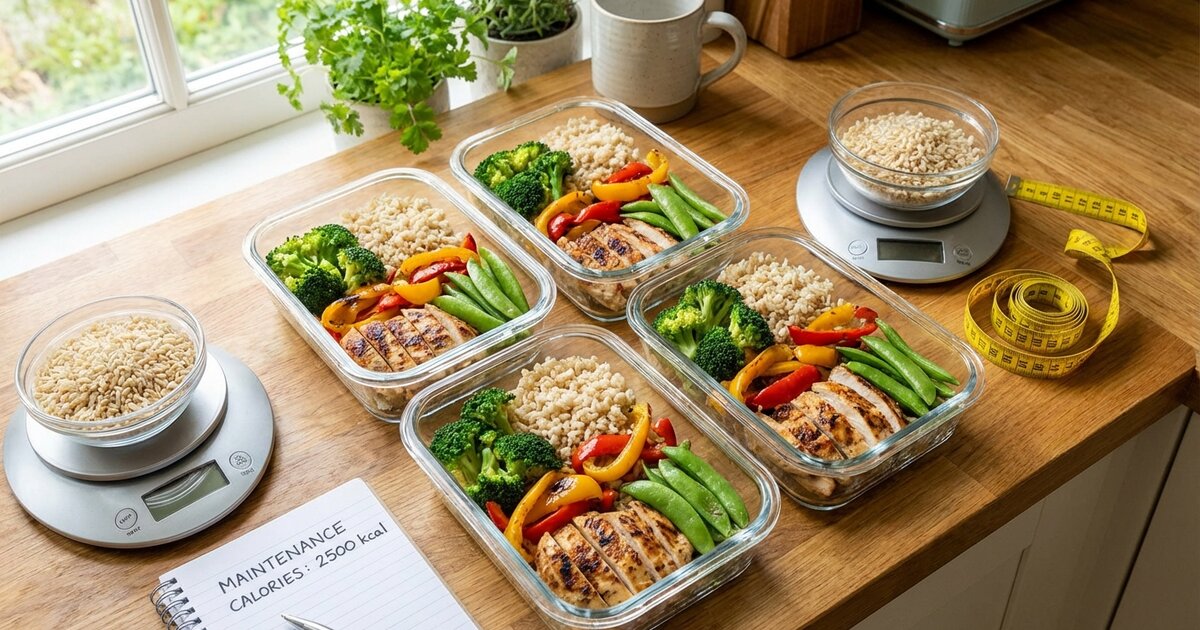
You’ve spent months in a calorie deficit, grinding through fat loss. Or maybe you’ve finished a bulk and need to assess your gains. Or perhaps you’re simply done with the yo-yo cycle and want to maintain your physique long-term.
Whatever brought you here, understanding maintenance macros is one of the most underrated skills in nutrition. Most fitness content focuses on losing fat or building muscle—but knowing how to maintain is what separates people who achieve lasting results from those stuck in endless diet cycles.
This guide covers everything: what maintenance macros actually are, how to calculate them precisely, why maintenance phases are crucial for long-term success, and exactly how to transition from cutting or bulking into a sustainable maintenance phase.
Ready to find your numbers? The Macro Calculator can set you up for maintenance in under 60 seconds.
What Are Maintenance Macros?
Maintenance macros are the specific amounts of protein, carbohydrates, and fat you need to consume each day to maintain your current body weight—not gaining, not losing.
They’re derived from your TDEE (Total Daily Energy Expenditure), which represents the total number of calories your body burns in a 24-hour period through:
- BMR (Basal Metabolic Rate): Calories burned at complete rest (60-75% of TDEE)
- TEF (Thermic Effect of Food): Calories burned digesting food (10% of TDEE)
- NEAT (Non-Exercise Activity Thermogenesis): Daily movement, fidgeting, walking (15-30% of TDEE)
- EAT (Exercise Activity Thermogenesis): Intentional workouts (5-10% of TDEE)
When your calorie intake equals your TDEE, you’re at maintenance. Your weight stays stable over time.
Why Maintenance Gets Overlooked
The fitness industry profits from transformation. “Lose 20 pounds!” and “Gain 10 pounds of muscle!” sell programs. “Maintain your current physique!” doesn’t generate the same excitement.
But here’s the reality: most of your life should be spent at or near maintenance. Perpetual dieting is unsustainable. Endless bulking leads to excessive fat gain. The people who maintain great physiques year-round understand how to eat at maintenance most of the time, with strategic phases of cutting or bulking.
Learning maintenance is learning sustainability.
TDEE Explained: Complete Guide breaks down exactly how your body burns calories.
How to Calculate Your Maintenance Macros
Calculating maintenance macros is a two-step process: first determine your TDEE, then distribute those calories across macronutrients.
Step 1: Find Your TDEE
Your TDEE is the foundation. There are several methods to estimate it:
Method 1: Calculator Estimation Use our Macro Calculator or the Mifflin-St Jeor equation with an activity multiplier:
| Activity Level | Multiplier | Example |
|---|---|---|
| Sedentary (desk job, little exercise) | 1.2 | Office worker, no gym |
| Lightly Active (light exercise 1-3 days) | 1.375 | Casual gym 2x/week |
| Moderately Active (moderate exercise 3-5 days) | 1.55 | Regular training 4x/week |
| Very Active (hard exercise 6-7 days) | 1.725 | Athlete, physical job |
| Extremely Active (very hard exercise + physical job) | 1.9 | Construction worker who lifts daily |
Method 2: Track and Observe The most accurate method: track everything you eat for 2-3 weeks while monitoring your weight. If your weight stays stable, that’s your maintenance. If you’re gaining, you’re above maintenance. Losing? Below.
Method 3: Body Weight Multiplier (Quick Estimate) For a rough starting point:
- Sedentary: Bodyweight (lbs) × 12-13
- Moderately Active: Bodyweight (lbs) × 14-16
- Very Active: Bodyweight (lbs) × 17-19
A 170-pound moderately active person: 170 × 15 = 2,550 calories as a starting estimate.
Step 2: Set Your Macros
Once you have your TDEE, distribute calories across the three macronutrients:
Protein (4 calories per gram)
- Target: 0.7-1.0g per pound of bodyweight
- Higher end if training hard, lower if sedentary
- Example: 170 lbs × 0.85 = ~145g protein
Fat (9 calories per gram)
- Target: 0.3-0.4g per pound of bodyweight
- Minimum ~0.3g for hormonal health
- Example: 170 lbs × 0.35 = ~60g fat
Carbohydrates (4 calories per gram)
- Fill remaining calories after protein and fat
- More flexible based on preference and activity
Example Calculation
Let’s walk through a complete example:
Person: 170 lbs, moderately active, estimated TDEE of 2,500 calories
Protein: 170 × 0.85 = 145g (580 calories) Fat: 170 × 0.35 = 60g (540 calories) Remaining for Carbs: 2,500 - 580 - 540 = 1,380 calories Carbs: 1,380 ÷ 4 = 345g
Final Maintenance Macros:
- Protein: 145g
- Carbs: 345g
- Fat: 60g
- Total: 2,500 calories
This gives roughly a 23% protein, 55% carbs, 22% fat split—perfectly reasonable for an active person.
How to Count Macros explains how to track these numbers accurately.
Why You Need Maintenance Phases
Maintenance isn’t just “not dieting.” It’s an active strategy with significant physiological and psychological benefits.
1. Hormonal Recovery
Extended dieting suppresses several hormones:
- Leptin: The satiety hormone drops during deficits, increasing hunger
- Thyroid hormones (T3/T4): Decrease during prolonged dieting, slowing metabolism
- Testosterone/Estrogen: Can decline with aggressive or extended deficits
- Cortisol: Rises during dieting, promoting water retention and muscle breakdown
Eating at maintenance for several weeks helps restore these hormones to normal levels. Leptin recovery alone can take 2-4 weeks of adequate calories.
2. Metabolic Rate Restoration
Your metabolism adapts to calorie restriction through “metabolic adaptation”—your body burns fewer calories as an energy-conservation mechanism. This adaptation persists even after you stop dieting.
Maintenance phases give your metabolism time to recover. Research shows that periods of eating at TDEE can help restore metabolic rate, making future fat loss phases more effective.
3. Psychological Reset
Diet fatigue is real. Constantly restricting creates:
- Decision fatigue from constant food choices
- Social stress around eating
- Reduced enjoyment of food
- Potential binge-restrict cycles
Maintenance provides mental relief while keeping you on track. You’re not “off the wagon”—you’re strategically maintaining.
4. Training Performance
Calorie deficits impair recovery and limit strength gains. At maintenance:
- Training intensity can increase
- Recovery improves significantly
- You can actually build strength and muscle
- Energy for workouts is restored
5. Set Point Establishment
Your body has a “set point”—a weight range it defends through hunger and metabolic adjustments. Staying at a new weight for extended periods helps establish a new, lower set point, making it easier to maintain long-term.
Adjusting Your Macros When You Hit a Plateau covers how to break through stalls when transitioning between phases.
When to Use Maintenance Macros
Understanding when to maintain is as important as knowing how.
Diet Breaks During Extended Cuts
If you’re dieting for more than 8-12 weeks, scheduled maintenance breaks improve outcomes:
The Protocol:
- Diet for 8-12 weeks in a deficit
- Take 1-2 weeks at maintenance
- Resume deficit if needed
Benefits:
- Partial leptin restoration (reduces hunger when returning to deficit)
- Cortisol reduction (less water retention)
- Mental break (renewed motivation)
- Performance restoration (better workouts)
Research supports this: one study found that dieters who took scheduled breaks lost more fat and retained more muscle than continuous dieters, even with the same total time in deficit.
After Achieving Fat Loss Goals
Completed your cut? Don’t immediately reverse or start bulking. Spend 4-8 weeks at maintenance to:
- Lock in your new weight
- Let your body establish a new set point
- Ensure hormonal recovery before your next phase
- Enjoy your results without restriction
Reverse Diet Transition
Coming out of an aggressive deficit, you might use maintenance as your endpoint for a reverse diet:
Reverse Diet Protocol:
- Finish your cut
- Add 100-150 calories per week
- Continue until reaching estimated TDEE
- Stay at maintenance for 4-8+ weeks
This gradual approach minimizes fat regain while allowing metabolic recovery.
Post-Bulk Assessment
After a muscle-building phase, maintenance lets you:
- Assess how much muscle vs. fat you gained
- Decide if you need to cut or continue
- Give your body a break from calorie surplus
- Potentially recompose slightly at maintenance
Lifestyle Maintenance
Maybe you’ve reached a physique you’re happy with. Congratulations—maintenance can be your permanent approach. You don’t need to be constantly “on a diet” or “in a bulk.” Many people maintain excellent physiques eating at TDEE year-round.
Signs You’re Actually at Maintenance
How do you know if your calculated macros are truly your maintenance? Monitor these indicators:
Primary Indicator: Weight Stability
- Track daily: Same time, same conditions (morning, after bathroom, before food)
- Compare weekly averages: Day-to-day fluctuations are meaningless
- True maintenance: Weekly averages stay within 1-2 pounds over several weeks
| Week | Daily Weights | Weekly Average |
|---|---|---|
| 1 | 169.2, 170.8, 169.5, 171.2, 170.0, 169.8, 170.5 | 170.1 |
| 2 | 170.4, 169.8, 171.0, 170.2, 170.8, 169.5, 170.3 | 170.3 |
| 3 | 169.8, 170.6, 170.0, 171.2, 169.4, 170.8, 170.2 | 170.3 |
This person is at maintenance—averages stable despite daily fluctuations.
Secondary Indicators
Energy Levels
- Consistent energy throughout the day
- No afternoon crashes
- Normal mental clarity
Workout Performance
- Maintaining or improving strength
- Good recovery between sessions
- Energy for intense training
Hunger Signals
- Hungry at meal times, satisfied after eating
- No constant cravings or excessive hunger
- No need to “white-knuckle” through the day
Sleep Quality
- Falling asleep easily
- Staying asleep through the night
- Waking feeling rested
Mood
- Stable, positive mood
- No excessive irritability
- Normal stress response
If your weight is stable AND these secondary indicators are positive, you’ve found your maintenance.
Maintenance Macro Splits by Goal
While total calories matter most for maintenance, macro distribution can be adjusted based on your lifestyle and preferences.
High Activity / Athletic Performance
If you’re training intensely 5+ days per week:
- Protein: 0.8-1g per lb
- Carbs: Higher (50-55% of calories)
- Fat: Moderate (25-30% of calories)
Higher carbs support glycogen replenishment and training performance.
Moderate Activity / General Fitness
Training 3-4 days per week:
- Protein: 0.7-0.9g per lb
- Carbs: Moderate (40-50% of calories)
- Fat: Moderate (30-35% of calories)
Balanced approach that works for most people.
Lower Activity / Sedentary
Minimal structured exercise:
- Protein: 0.7-0.8g per lb (still prioritize protein)
- Carbs: Lower (35-45% of calories)
- Fat: Higher (35-40% of calories)
Less need for carbohydrate fuel; fat provides satiety.
Preference-Based Adjustments
Beyond activity level, personal preference matters:
- Love carbs? Skew higher carb, lower fat
- Feel better with more fat? Higher fat, moderate carbs
- Vegetarian/vegan? May need slightly higher protein targets to ensure complete amino acid intake
The key: hit your protein target, then distribute carbs and fat based on what keeps you satisfied and performing well.
Macros for Weight Loss covers deficit strategies when you’re ready to cut again.
How Long to Stay at Maintenance
Duration depends on your situation:
After a Moderate Cut (8-12 weeks)
Minimum: 4 weeks at maintenance Recommended: 6-8 weeks
After an Aggressive/Extended Cut (12+ weeks or large deficit)
Minimum: 6-8 weeks Recommended: 2-3 months or longer
After a Bulk
Minimum: 2-4 weeks Recommended: 4-8 weeks before cutting
For Lifestyle Maintenance
Duration: Indefinitely
The general principle: the longer and more aggressive your previous phase, the longer your maintenance phase should be.
Transitioning From Deficit to Maintenance
The transition matters. Here are two approaches:
Option 1: Direct Jump
Simply increase calories to your calculated TDEE immediately.
Pros:
- Simple and straightforward
- Faster recovery
- No prolonged tracking complexity
Cons:
- May see rapid scale weight increase (water/glycogen, not fat)
- Can feel psychologically uncomfortable
Best for: Moderate deficits, people comfortable with weight fluctuations
What to expect: The scale may jump 2-5+ pounds in the first week. This is NOT fat—it’s water retention and glycogen replenishment from increased carbs. True weight stabilizes within 2-3 weeks.
Option 2: Reverse Diet
Gradually increase calories by 100-150 per week until reaching TDEE.
Sample Reverse Diet:
| Week | Calorie Increase | New Total |
|---|---|---|
| 1 | +100 (carbs) | 1,900 |
| 2 | +100 (carbs) | 2,000 |
| 3 | +100 (carbs/fat) | 2,100 |
| 4 | +100 (carbs) | 2,200 |
| 5 | +100 (carbs/fat) | 2,300 |
| 6 | TDEE reached | 2,400 |
Pros:
- Minimizes water weight spike
- Allows metabolic adaptation
- Psychologically easier for some
Cons:
- Takes longer
- More weeks of tracking
- May prolong some deficit symptoms
Best for: After aggressive cuts, people with diet history, those anxious about weight regain
Body Recomposition Macros covers how to improve body composition at maintenance.
Transitioning From Surplus to Maintenance
Coming out of a bulk requires different considerations:
Drop to Estimated TDEE
Calculate your new TDEE based on your current (higher) weight and drop directly there.
What to expect:
- Initial weight drop of 2-5 pounds (water/glycogen from lower carbs)
- This is NOT muscle loss
- Weight stabilizes within 2-3 weeks
Assessment Period
Use the first 2-4 weeks at maintenance to assess your bulk:
- How much did the scale actually increase?
- How do your measurements compare to pre-bulk?
- How does your strength compare?
- Are you comfortable at this new weight?
This information guides your next decision: cut, continue maintaining, or return to a lean bulk.
Sample Maintenance Meal Plans
Here are practical meal plans at different calorie levels:
2,000 Calorie Maintenance (Smaller Individual)
Macros: 150g protein, 220g carbs, 65g fat
Breakfast (450 cal, 35P/45C/15F)
- 3 whole eggs scrambled
- 2 slices whole grain toast
- 1/2 avocado (small)
- Coffee with splash of milk
Lunch (550 cal, 40P/55C/20F)
- 5 oz grilled chicken breast
- 1 cup brown rice
- 2 cups mixed vegetables
- 1 tbsp olive oil for cooking
Snack (250 cal, 25P/20C/8F)
- 1 cup Greek yogurt
- 1/2 cup berries
- 10 almonds
Dinner (550 cal, 40P/50C/18F)
- 5 oz salmon fillet
- 1 medium sweet potato
- Large mixed salad
- 1 tbsp dressing
Evening Snack (200 cal, 10P/50C/4F)
- 1 banana
- 2 tbsp peanut butter
2,500 Calorie Maintenance (Average Active Adult)
Macros: 175g protein, 280g carbs, 80g fat
Breakfast (550 cal, 40P/60C/18F)
- 1 cup oatmeal with 1 scoop protein powder
- 1 tbsp almond butter
- 1 banana
- Coffee
Lunch (650 cal, 45P/65C/22F)
- 6 oz grilled chicken
- 1.5 cups rice
- 2 cups roasted vegetables
- 1.5 tbsp olive oil
Pre-Workout Snack (300 cal, 20P/45C/5F)
- Rice cakes with turkey slices
- Apple
Dinner (700 cal, 50P/60C/25F)
- 7 oz lean beef or fish
- 1 large potato
- Large salad with feta
- Dressing
Evening (300 cal, 20P/50C/10F)
- Protein smoothie: milk, banana, protein powder, peanut butter
3,000 Calorie Maintenance (Larger/Very Active)
Macros: 200g protein, 350g carbs, 95g fat
Breakfast (700 cal, 50P/75C/22F)
- 4 eggs + 4 egg whites
- 2 cups oatmeal
- 1 tbsp honey
- 1 banana
Lunch (800 cal, 55P/85C/25F)
- 8 oz chicken breast
- 2 cups rice
- Large portion vegetables
- 2 tbsp sauce/oil
Snack (350 cal, 25P/40C/12F)
- Protein bar
- Large apple
- String cheese
Dinner (800 cal, 55P/80C/26F)
- 8 oz fish or lean meat
- 2 cups pasta or large potato
- Vegetables
- Olive oil/butter
Evening (350 cal, 15P/70C/10F)
- Large bowl cereal with milk
- Or: toast with nut butter and honey
These are templates—adjust specific foods based on your preferences while hitting your macro targets.
Macro Meal Prep Guide helps you batch-prepare these meals efficiently.
Common Maintenance Mistakes
Mistake 1: Treating Maintenance as “Off the Diet”
Maintenance isn’t a break from tracking—it’s a different target. You still need awareness of what you’re eating. “Eating intuitively” after months of restriction often leads to overshooting.
Fix: Continue tracking, at least loosely, for the first 4-6 weeks of maintenance.
Mistake 2: Panicking at Water Weight
Increasing calories (especially carbs) causes water retention. Seeing the scale jump 3-5 pounds after ending a cut is normal and expected.
Fix: Trust the process. Give it 2-3 weeks for water to stabilize before adjusting.
Mistake 3: Not Actually Eating at Maintenance
Some people mentally struggle to increase calories and subconsciously stay in a deficit. If you’re still losing weight, you’re not at maintenance.
Fix: Hit your targets consistently. Use a food scale. Track honestly.
Mistake 4: Skipping Maintenance Entirely
Going directly from cut to bulk (or vice versa) without a maintenance phase reduces the effectiveness of both.
Fix: Build maintenance phases into your yearly plan. They’re not wasted time—they’re investment in long-term success.
Mistake 5: Obsessing Over Daily Fluctuations
Weight fluctuates daily. If you weigh yourself every day and react to each fluctuation, you’ll drive yourself crazy.
Fix: Track daily, but only assess weekly averages. Look at trends over 2-3+ weeks.
Maintenance as a Lifestyle
For many people, the ultimate goal isn’t endless transformation—it’s reaching a physique you’re happy with and maintaining it sustainably.
This means:
- Eating at or near TDEE most of the time
- Periodic mini-cuts or mini-bulks as desired (4-8 weeks)
- Focus on performance and health, not just aesthetics
- Building habits that don’t require constant willpower
The people who maintain great physiques year-round aren’t always dieting. They’ve found their maintenance calories, built sustainable habits, and live their lives. That’s the real goal.
Flexible Dieting Guide covers how to build sustainable long-term eating habits.
Your Maintenance Action Plan
- Calculate your TDEE using the Macro Calculator
- Set your macros prioritizing protein, then distributing carbs and fat
- Track consistently for 2-3 weeks
- Monitor your weight (daily weigh-ins, weekly averages)
- Adjust if needed (+/- 100 calories based on weight trends)
- Enjoy the stability while your body recovers and adapts
Maintenance isn’t glamorous. It doesn’t make for exciting before-and-after photos. But it’s the skill that makes lasting transformation possible.
References
- Trexler ET, Smith-Ryan AE, Norton LE. Metabolic adaptation to weight loss: implications for the athlete. J Int Soc Sports Nutr. 2014;11(1):7.
- Byrne NM, Sainsbury A, King NA, Hills AP, Wood RE. Intermittent energy restriction improves weight loss efficiency in obese men: the MATADOR study. Int J Obes. 2018;42(2):129-138.
- Dulloo AG, Jacquet J, Montani JP, Schutz Y. How dieting makes the lean fatter: from a perspective of body composition autoregulation through adipostats and proteinstats. Obes Rev. 2015;16 Suppl 1:25-35.
- Rosenbaum M, Leibel RL. Adaptive thermogenesis in humans. Int J Obes. 2010;34 Suppl 1:S47-S55.
- Morton RW, Murphy KT, McKellar SR, et al. A systematic review, meta-analysis and meta-regression of the effect of protein supplementation on resistance training-induced gains in muscle mass and strength in healthy adults. Br J Sports Med. 2018;52(6):376-384.
Related Articles

Travel Macros: How to Track Nutrition While Traveling
Complete guide to managing macros while traveling. Learn meal planning strategies,...
Read guide →
Macros for Shift Workers: Complete Guide to Nutrition on Rotating Schedules
Master macro tracking on night shifts and rotating schedules. Learn meal timing, sleep...
Read guide →
Macros During Ramadan: Complete Nutrition Guide for Fasting
Learn how to track macros during Ramadan fasting. Expert guide covering meal timing,...
Read guide →Disclaimer: This content is for informational purposes only. Consult a healthcare provider before making changes to your diet.