Oatmeal vs Cereal: Which Breakfast Has Better Macros?
Reviewed by Jessica Williams, CPT, CSCS
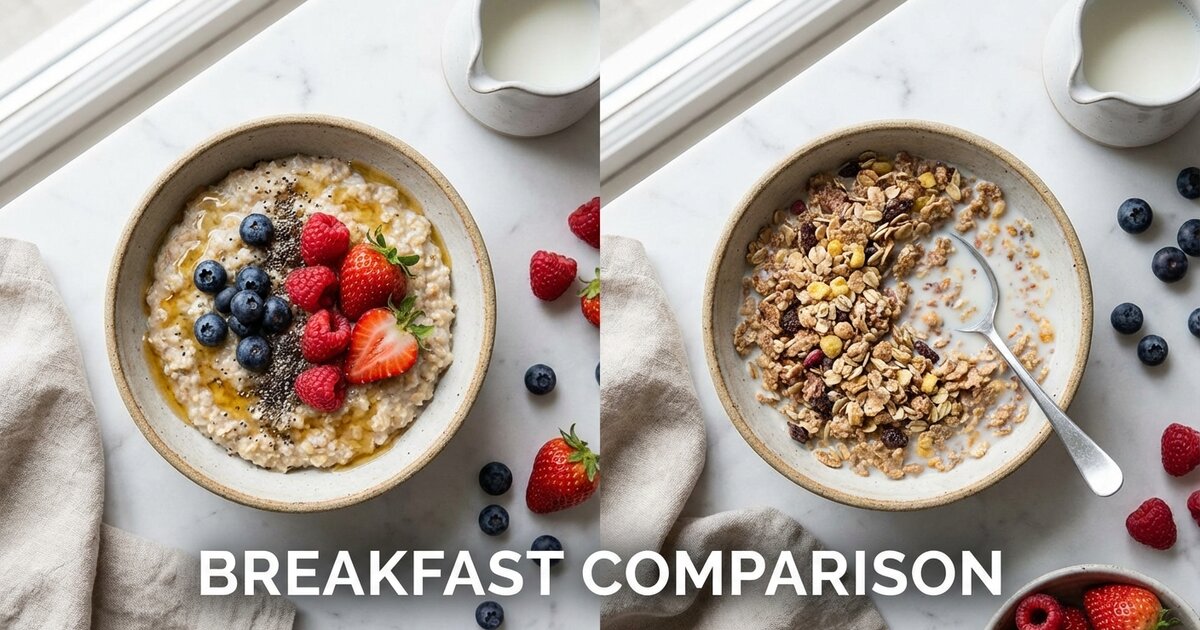
The breakfast battle between oatmeal and cereal has clear winners and losers—depending on your goals. Oatmeal offers superior satiety and steadier energy. Many cereals are glorified desserts masquerading as breakfast.
But not all cereals are created equal, and oatmeal has its own drawbacks (hello, boring plain oats). This guide breaks down the complete macro comparison so you can build a breakfast that actually supports your goals.
Quick Comparison Table
Here’s the head-to-head breakdown per typical serving:
| Nutrient | Oatmeal (1/2 cup dry) | Cheerios (1 cup) | Frosted Flakes (3/4 cup) |
|---|---|---|---|
| Calories | 150 | 100 | 110 |
| Protein | 5g | 3g | 1g |
| Carbs | 27g | 20g | 27g |
| Fiber | 4g | 3g | 0g |
| Sugar | 1g | 1g | 10g |
| Fat | 2.5g | 2g | 0g |
Note: These are dry amounts without milk. Add 60-150 calories for milk depending on type.
Winner for satiety: Oatmeal Winner for convenience: Cereal
Detailed Macro Breakdown
Oatmeal (1/2 cup dry / 1 cup cooked)
| Macro | Amount |
|---|---|
| Calories | 150 kcal |
| Protein | 5g |
| Carbohydrates | 27g |
| Fiber | 4g |
| Sugar | 1g |
| Fat | 2.5g |
Oatmeal is a whole grain with minimal processing. The fiber content—particularly beta-glucan—slows digestion and promotes lasting fullness.
For complete nutrition information, see our guide to oatmeal macros.
Cereal (Varies Widely by Brand)
Cereals range from relatively healthy to candy-in-a-box. Here’s the spectrum:
Healthier cereals (per serving):
| Cereal | Calories | Protein | Fiber | Sugar |
|---|---|---|---|---|
| Cheerios | 100 | 3g | 3g | 1g |
| Grape-Nuts | 200 | 6g | 7g | 5g |
| Fiber One | 60 | 2g | 14g | 0g |
| Shredded Wheat | 160 | 5g | 6g | 0g |
High-sugar cereals (per serving):
| Cereal | Calories | Protein | Fiber | Sugar |
|---|---|---|---|---|
| Frosted Flakes | 110 | 1g | 0g | 10g |
| Lucky Charms | 110 | 2g | 2g | 10g |
| Honey Bunches of Oats | 120 | 2g | 1g | 6g |
| Raisin Bran | 190 | 5g | 7g | 18g |
For detailed cereal information, check out our guide to cereal macros.
The Serving Size Problem
Here’s the catch with cereal: serving sizes are deceptively small.
| What You’re Told | What People Actually Pour |
|---|---|
| 3/4 cup (30g) | 1.5-2 cups (60-80g) |
| 100-120 calories | 250-350 calories |
| 10g sugar | 25-35g sugar |
Most people pour 2-3x the labeled serving without realizing it. That “healthy” bowl of cereal becomes 300+ calories before milk.
Oatmeal advantage: 1/2 cup dry oats expands to 1 full cup when cooked—a visually satisfying portion that matches the label.
Which Is Better for Weight Loss?
Winner: Oatmeal (in most cases)
Oatmeal wins on the factors that matter for weight loss:
- Higher fiber – 4g vs 0-3g for most cereals, keeping you full longer
- More protein – 5g vs 1-3g helps preserve muscle during a deficit
- Lower glycemic index – Steadier blood sugar = fewer cravings
- Better satiety – Thick texture triggers fullness signals
The cereal trap: Cereal with milk often leaves you hungry by mid-morning. You either snack or eat a larger lunch, negating any calorie savings from breakfast.
Exception: High-fiber cereals like Fiber One (14g fiber) or All-Bran can match oatmeal for satiety. But most people don’t eat those—they eat Honey Bunches of Oats and wonder why they’re hungry at 10am.
Weight loss strategy:
- Choose oatmeal for satiety
- If you prefer cereal, measure your portion
- Add protein (Greek yogurt, eggs on the side) to either option
Use our macro calculator to set your breakfast calorie target.
Which Is Better for Muscle Gain?
Winner: Oatmeal (with protein additions)
For muscle building, breakfast should provide:
- Enough calories to support training
- Adequate protein to start muscle protein synthesis
- Carbs to fuel workouts
Oatmeal advantages:
- More protein base (5g vs 1-3g)
- Easy to add protein powder (creates “proats”)
- Whole grain carbs for sustained training energy
- Can be calorie-dense when bulking (add nuts, honey)
Optimized muscle-building oatmeal:
| Ingredient | Protein | Carbs | Calories |
|---|---|---|---|
| 1/2 cup oats | 5g | 27g | 150 |
| 1 scoop whey | 25g | 2g | 110 |
| 1 banana | 1g | 27g | 105 |
| 1 tbsp peanut butter | 4g | 3g | 95 |
| Total | 35g | 59g | 460 |
That’s a complete muscle-building breakfast that keeps you full until lunch.
Cereal for bulking: Can work if you need easy calories, but the low protein and fiber make it less ideal. You’d need to add significant protein from other sources.
For complete muscle-building nutrition, read our guide on macros for muscle gain.
Which Is Better for Keto/Low-Carb?
Winner: Neither (but some options exist)
Both oatmeal and typical cereal are too high in carbs for keto:
| Food | Net Carbs per Serving | Keto Limit |
|---|---|---|
| Oatmeal (1/2 cup dry) | 23g | 20-50g/day |
| Cheerios (1 cup) | 17g | 20-50g/day |
| Frosted Flakes | 27g | 20-50g/day |
One serving of either would consume half or more of your daily carb allowance.
Keto breakfast alternatives:
- Eggs and bacon (0g carbs)
- Keto granola with unsweetened almond milk (5-8g carbs)
- Chia seed pudding (4g net carbs)
- Full-fat Greek yogurt with berries (8g carbs)
Low-carb oatmeal hack: Some brands make keto “oatmeal” from hemp hearts and flax. It’s not quite the same texture but provides 3-5g net carbs per serving.
For understanding how carbs fit into your diet, read our guide on what macronutrients are.
Glycemic Index Comparison
The glycemic index affects energy levels and hunger:
| Food | Glycemic Index | Impact |
|---|---|---|
| Steel-cut oats | 42 | Low |
| Rolled oats | 55 | Low-Medium |
| Instant oatmeal | 66 | Medium |
| Cheerios | 74 | Medium-High |
| Cornflakes | 81 | High |
| Frosted Flakes | 55 | Medium |
Why this matters: High-GI foods spike blood sugar quickly, followed by a crash that leaves you hungry and tired. Low-GI foods provide steadier energy.
Practical advice: If you choose cereal, pair it with protein (Greek yogurt) or fat (nuts) to lower the overall glycemic impact of your meal.
Taste and Convenience Considerations
Oatmeal
Pros:
- Hearty, satisfying texture
- Extremely customizable
- Can be sweet or savory
- Overnight oats require zero morning prep
Cons:
- Plain oatmeal is boring
- Takes time to cook (except instant)
- Requires toppings to taste good
- Can become calorie-dense with additions
Best flavor combinations:
- Classic: Banana, cinnamon, honey
- Protein: Protein powder, peanut butter
- Berry: Mixed berries, Greek yogurt
- Savory: Egg, cheese, hot sauce
Cereal
Pros:
- Instant convenience (pour and eat)
- Consistent taste every time
- Huge variety of flavors
- Kids love it
Cons:
- Often high in sugar
- Not very filling
- Easy to overeat
- Nutrient-poor compared to whole foods
Healthier cereal choices:
- Plain Cheerios or Multigrain Cheerios
- Grape-Nuts (dense calories, high fiber)
- Shredded Wheat (no added sugar)
- Fiber One (maximum fiber)
Cost Comparison
| Breakfast | Cost per Serving |
|---|---|
| Store brand oats | $0.15-0.25 |
| Quaker oats | $0.25-0.35 |
| Steel-cut oats | $0.30-0.45 |
| Store brand cereal | $0.30-0.50 |
| Name brand cereal | $0.50-0.80 |
| Premium cereal | $0.75-1.25 |
Winner: Oatmeal
Plain oats are one of the cheapest breakfast options available. Even premium steel-cut oats cost less than most name-brand cereals.
Budget tip: Buy a large canister of oats—it lasts weeks and costs pennies per serving.
Healthiest Cereal Options
If you prefer cereal, choose wisely:
Best overall (macros + taste):
- Cheerios – Low sugar, decent fiber, tastes good
- Grape-Nuts – High fiber and protein, filling
- Shredded Wheat – Zero added sugar, whole grain
Best for protein:
- Special K Protein – 10g protein per serving
- Kashi GO – 9g protein, whole grains
Best for fiber:
- Fiber One – 14g fiber per serving
- All-Bran – 10g fiber per serving
Cereals to avoid for macros:
- Frosted anything (high sugar, no fiber)
- Lucky Charms, Froot Loops (candy)
- Granola (calorie-dense, often sugary)
- Honey Bunches of Oats (sounds healthy, isn’t)
Winner by Goal
| Goal | Best Choice | Why |
|---|---|---|
| Weight Loss | Oatmeal | More fiber, protein, better satiety |
| Muscle Gain | Oatmeal | Better protein base, easy to customize |
| Keto | Neither | Both too high in carbs |
| Budget | Oatmeal | Pennies per serving |
| Convenience | Cereal | Zero prep time |
| Blood Sugar | Steel-cut oats | Lowest glycemic index |
| Kids | Healthy cereal | They’ll actually eat it |
| Sustained Energy | Oatmeal | Slow-digesting carbs |
The Bottom Line
For most fitness goals, oatmeal beats cereal. It keeps you fuller, has better macros, and costs less. The only advantage cereal has is convenience—and overnight oats eliminate even that.
Choose oatmeal if:
- Satiety and fullness matter
- You want to maximize nutrition
- Budget is important
- You’re building muscle or losing fat
Choose cereal if:
- Convenience is your top priority
- You measure portions carefully
- You select low-sugar, high-fiber options
- You genuinely prefer it (adherence matters)
Best approach: Make oatmeal your default breakfast but keep healthy cereal for busy mornings. The 5 minutes to make oatmeal usually pays off in hours of better energy and reduced snacking.
Pro tip: Prepare overnight oats the night before. You get oatmeal nutrition with cereal convenience—no morning cooking required.
Frequently Asked Questions
Is oatmeal better than cereal for weight loss? Generally yes. Oatmeal has more fiber (4g vs 1-3g per serving) and protein, keeping you fuller longer. It also has a lower glycemic index, preventing blood sugar spikes and crashes.
Which has more protein, oatmeal or cereal? Oatmeal typically has more protein—5g per serving vs 2-3g for most cereals. High-protein cereals (like Special K Protein) can match or exceed oatmeal at 10g per serving.
Is cereal or oatmeal better before a workout? Oatmeal is better for pre-workout due to its lower glycemic index providing sustained energy. Cereal’s faster digestion may cause energy crashes mid-workout.
How much sugar is in cereal compared to oatmeal? Plain oatmeal has 1g sugar per serving. Most cereals have 5-15g. Even “healthy” cereals often have 8-10g sugar. Always check labels.
Can I eat cereal and still lose weight? Yes, if you measure portions accurately. The problem is serving sizes—most people pour 2-3x the labeled serving. Measure your cereal and add the milk calories.
Why is oatmeal more filling than cereal? Oatmeal has more fiber (4g vs 1-3g) and beta-glucan, a soluble fiber that slows digestion. It also has a thicker texture that triggers satiety signals.
Which is faster to prepare, oatmeal or cereal? Cereal is faster—just pour and add milk. Oatmeal takes 2-5 minutes for instant/microwave or 10-30 minutes for traditional/steel-cut. Overnight oats require no morning prep.
Is overnight oats healthier than cereal? Yes. Overnight oats have the same benefits as cooked oatmeal—high fiber, low sugar, good protein—with cereal-level convenience. Just prep the night before.
Related Articles
Travel Macros: How to Track Nutrition While Traveling
Complete guide to managing macros while traveling. Learn meal planning strategies,...
Read guide →
Macros for Shift Workers: Complete Guide to Nutrition on Rotating Schedules
Master macro tracking on night shifts and rotating schedules. Learn meal timing, sleep...
Read guide →
Macros During Ramadan: Complete Nutrition Guide for Fasting
Learn how to track macros during Ramadan fasting. Expert guide covering meal timing,...
Read guide →Disclaimer: This content is for informational purposes only. Consult a healthcare provider before making changes to your diet.