Sweet Potato vs White Potato: Complete Macro Comparison
Reviewed by Jessica Williams, CPT, CSCS
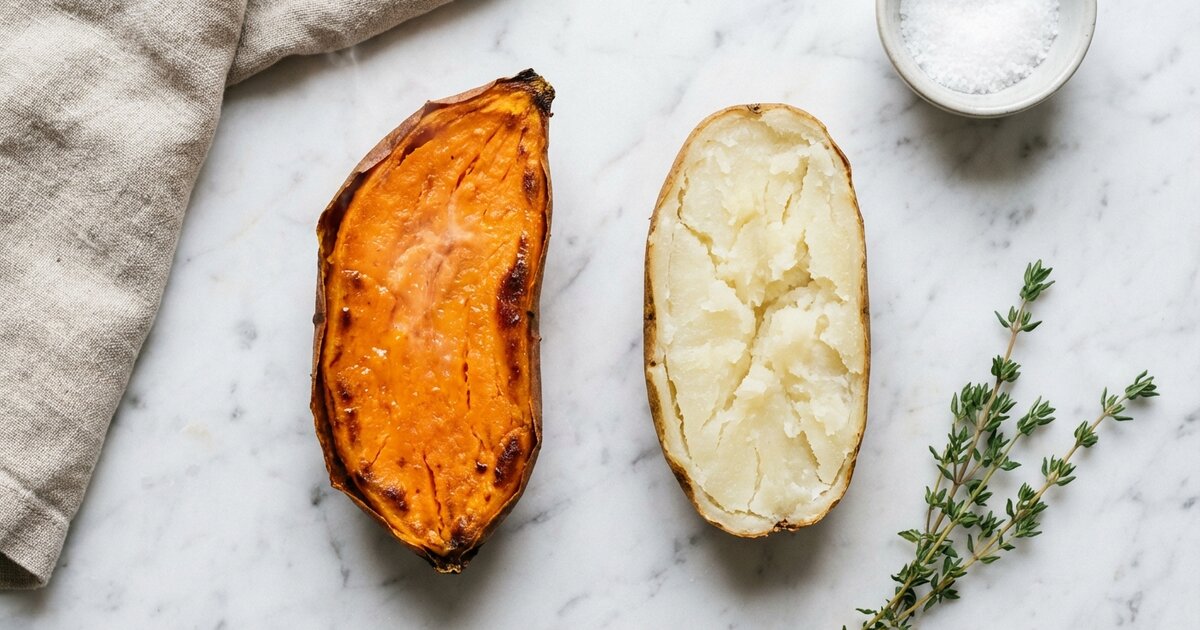
Sweet potatoes and white potatoes are both nutritious, filling carb sources—but they’ve been pitted against each other in the nutrition world. Sweet potatoes are often labeled “healthy” while white potatoes get dismissed as fattening.
The truth? Both potatoes are excellent whole foods with similar macros. The nutritional differences exist but are smaller than most people think. This guide breaks down the facts so you can make an informed choice.
Quick Comparison Table
Here’s the head-to-head breakdown per 100g baked (flesh and skin):
| Nutrient | Sweet Potato | White Potato (Russet) | Difference |
|---|---|---|---|
| Calories | 90 | 93 | -3% |
| Carbs | 20g | 21g | -5% |
| Fiber | 3.3g | 2.1g | +57% |
| Sugar | 6g | 1g | +500% |
| Protein | 2g | 2.5g | -20% |
| Fat | 0.1g | 0.1g | Same |
| Vitamin A | 438% DV | 0% DV | Sweet potato wins |
| Potassium | 14% DV | 18% DV | White potato wins |
Winner for fiber and vitamin A: Sweet potato Winner for satiety: White potato (surprisingly)
Detailed Macro Breakdown
Sweet Potato (100g baked, with skin)
| Macro | Amount |
|---|---|
| Calories | 90 kcal |
| Carbohydrates | 20g |
| Fiber | 3.3g |
| Net Carbs | 16.7g |
| Sugar | 6g |
| Protein | 2g |
| Fat | 0.1g |
Sweet potatoes are famous for their bright orange color—and that color indicates beta-carotene, which converts to vitamin A. One medium sweet potato provides over 400% of your daily vitamin A needs.
For complete nutrition information, see our guide to sweet potato macros.
White Potato (100g baked, russet, with skin)
| Macro | Amount |
|---|---|
| Calories | 93 kcal |
| Carbohydrates | 21g |
| Fiber | 2.1g |
| Net Carbs | 18.9g |
| Sugar | 1g |
| Protein | 2.5g |
| Fat | 0.1g |
White potatoes are unfairly demonized. They’re actually one of the most satiating foods ever measured—ranking #1 on the Satiety Index, beating even high-protein foods.
For detailed information, check out our complete guide to potato macros.
Per Medium Potato (More Practical Serving)
| Nutrient | Sweet Potato (150g) | White Potato (173g) |
|---|---|---|
| Calories | 135 | 161 |
| Carbs | 30g | 37g |
| Fiber | 5g | 4g |
| Protein | 3g | 4.3g |
A medium white potato is typically larger than a medium sweet potato, which accounts for the calorie difference. Per 100g, they’re nearly identical.
Which Is Better for Weight Loss?
Winner: It’s closer than you think
The sweet potato myth suggests it’s far superior for weight loss. The reality:
Sweet potato advantages:
- More fiber (3.3g vs 2.1g per 100g) for satiety
- Lower glycemic index (steadier energy)
- Slightly fewer calories
White potato advantages:
- #1 ranking on Satiety Index (keeps you fuller longer)
- Less sugar (may reduce cravings)
- Slightly more protein
The satiety surprise: Research shows white potatoes are the most filling food per calorie tested. In studies, people who ate white potatoes at a meal consumed fewer total calories than those eating other carbs—including sweet potatoes.
Practical weight loss advice: Either potato works. Both are:
- Low in calories for their volume
- High in fiber (relatively)
- Whole foods that promote fullness
The real weight loss issue with potatoes isn’t the potato—it’s what you put on it. A plain baked potato is 90-160 calories. Add butter, sour cream, and cheese, and you’re at 400+ calories.
Use our macro calculator to determine your carb needs for weight loss.
Which Is Better for Muscle Gain?
Winner: White potato (marginally)
For muscle building, you need carbs to fuel workouts and support recovery. Both potatoes deliver, but white potato has slight advantages:
- Higher glycemic index – Faster glycogen replenishment post-workout
- Easier to eat in volume – Less fiber means less bloating when eating large portions
- Slightly more protein – 2.5g vs 2g per 100g (minor but adds up)
When sweet potatoes work better:
- Pre-workout (sustained energy from lower GI)
- If you prefer the taste
- When eating moderate portions
Bodybuilding reality: Many athletes eat both. Sweet potatoes before training for steady energy, white potatoes after training for fast carb replenishment.
For complete muscle-building strategies, read our guide on macros for muscle gain.
Which Is Better for Keto/Low-Carb?
Winner: Neither (both are too high in carbs)
Neither potato fits keto:
| Potato Type | Carbs per Medium | Typical Keto Limit |
|---|---|---|
| Sweet Potato | 26g | 20-50g/day |
| White Potato | 37g | 20-50g/day |
One medium potato of either type would consume most or all of your daily keto carb allowance.
Low-carb alternatives to potatoes:
- Cauliflower mash: 5g carbs per cup
- Turnips: 8g carbs per cup
- Radishes (roasted): 4g carbs per cup
- Celery root: 14g carbs per cup
If you’re doing cyclical keto with carb refeeds, either potato works. White potato may be slightly better for glycogen replenishment due to faster absorption.
To understand how potatoes fit into different dietary approaches, read our guide on what macronutrients are.
Glycemic Index Comparison
The glycemic index (GI) measures how quickly foods raise blood sugar. This matters for:
- Blood sugar management
- Sustained energy vs. quick energy
- Insulin response
| Potato Preparation | Sweet Potato GI | White Potato GI |
|---|---|---|
| Baked | 94 | 111 |
| Boiled | 46 | 82 |
| Mashed | 70 | 85 |
| Microwaved | 82 | 93 |
Key insight: Cooking method dramatically affects GI. Boiled sweet potato has a GI of 46 (low), while baked sweet potato spikes to 94 (high). The same pattern applies to white potatoes.
For stable blood sugar: Choose boiled over baked, either potato type.
Taste and Cooking Considerations
Sweet Potato
Flavor profile:
- Naturally sweet (hence the name)
- Earthy undertones
- Caramelizes when roasted
Best cooking methods:
- Baked whole (enhances sweetness)
- Roasted cubes (crispy exterior)
- Mashed (naturally creamy)
- Fries (healthier than white potato fries, arguably)
Cuisine pairings:
- Works in both savory and sweet dishes
- Common in fall/winter recipes
- Pairs well with cinnamon, maple, and savory spices
White Potato
Flavor profile:
- Neutral, earthy
- Takes on flavors of seasonings
- Starchy, satisfying
Best cooking methods:
- Baked (classic, versatile)
- Mashed (fluffy texture)
- Roasted (crispy)
- Fries (the classic)
- Boiled (for potato salad)
Cuisine pairings:
- Extremely versatile
- Works with any cuisine
- Classic comfort food applications
Variety Notes
Sweet potato varieties:
- Orange (most common, sweetest)
- White/Japanese (less sweet, drier)
- Purple (similar to orange, with antioxidants)
White potato varieties:
- Russet (fluffy, best for baking/mashing)
- Red (waxy, holds shape, good for roasting)
- Yukon Gold (buttery, good all-purpose)
Cost Comparison
| Potato Type | Average Price/lb | Cost per Serving |
|---|---|---|
| White potato (russet) | $0.80-1.20 | $0.15-0.25 |
| Sweet potato | $1.20-1.80 | $0.25-0.40 |
| Red potato | $1.00-1.50 | $0.20-0.30 |
| Yukon Gold | $1.20-1.80 | $0.25-0.35 |
Winner: White potato
White potatoes are typically 30-50% cheaper than sweet potatoes. Both are affordable carb sources compared to alternatives like quinoa or specialty grains.
Budget tip: Buy potatoes in 5-10lb bags for significant savings. They keep for weeks in a cool, dark place.
Micronutrient Comparison
Beyond macros, here’s how these potatoes differ nutritionally:
| Nutrient | Sweet Potato | White Potato | Winner |
|---|---|---|---|
| Vitamin A | 438% DV | 0% DV | Sweet potato |
| Vitamin C | 5% DV | 28% DV | White potato |
| Potassium | 14% DV | 18% DV | White potato |
| Manganese | 25% DV | 15% DV | Sweet potato |
| Vitamin B6 | 14% DV | 18% DV | White potato |
| Iron | 4% DV | 6% DV | White potato |
Sweet potato wins on: Vitamin A (massively), manganese, fiber White potato wins on: Vitamin C, potassium, B6, iron
Both are nutritious—they just have different nutrient profiles. Eating both throughout the week gives you the best of both worlds.
Winner by Goal
| Goal | Best Choice | Why |
|---|---|---|
| Weight Loss | Either (preference) | Both filling and low-cal; sweet potato has more fiber |
| Muscle Gain | White potato | Higher GI for post-workout, easier to eat in volume |
| Keto | Neither | Both too high in carbs |
| Blood Sugar Control | Sweet potato (boiled) | Lower glycemic index |
| Budget | White potato | 30-50% cheaper |
| Vitamin A | Sweet potato | 400%+ DV per serving |
| Potassium | White potato | Higher content |
| Satiety | White potato | #1 on Satiety Index |
| Versatility | White potato | More neutral flavor |
The Bottom Line
The sweet potato vs white potato debate is largely artificial. Both are excellent, nutritious whole foods that fit most diets well.
Choose sweet potatoes if:
- You need more vitamin A
- You prefer their sweeter taste
- You want more fiber
- Blood sugar stability is important
Choose white potatoes if:
- Maximum satiety matters
- Budget is a concern
- You need faster post-workout carbs
- You prefer neutral flavor for various dishes
Best approach: Eat both. They have different nutrient profiles that complement each other. Rotate between them for variety and complete nutrition.
The most important factor isn’t which potato you choose—it’s how you prepare it. Both potatoes are healthy when baked, roasted, or boiled. Both become calorie bombs when fried or loaded with toppings.
Frequently Asked Questions
Which has fewer calories, sweet potato or white potato? Sweet potato has slightly fewer calories—90 per 100g baked vs 93 for white potato. The difference is negligible. Both are low-calorie for their volume and satiety.
Is sweet potato better than white potato for weight loss? Slightly, due to more fiber (3.3g vs 2.1g) and lower glycemic index. But white potatoes rank #1 on the satiety index. Either works for weight loss—portion control matters more.
Which potato has more carbs? White potato has slightly more carbs—21g per 100g baked vs 20g for sweet potato. The difference is minimal and shouldn’t drive your choice.
Are sweet potatoes healthier than white potatoes? Sweet potatoes have more fiber and vitamin A (over 400% DV). White potatoes have more potassium. Both are nutritious whole foods—sweet potato has a slight edge overall.
Can I eat potatoes on keto? Neither potato fits keto well. A medium potato has 25-30g carbs, exceeding most daily keto limits. Use cauliflower as a potato substitute on keto.
Which potato is better for diabetics? Sweet potato has a lower glycemic index (50-70 vs 80-90 for white potato), causing a slower blood sugar rise. This makes sweet potato the better choice for blood sugar management.
Why do bodybuilders eat sweet potatoes instead of white potatoes? Mostly tradition and marketing. White potatoes work just as well. Sweet potatoes’ lower glycemic index may provide more sustained energy, but the difference is minor for most athletes.
Do sweet potatoes have more protein than white potatoes? Nearly identical—both have about 2g protein per 100g baked. Neither is a significant protein source. Pair potatoes with protein-rich foods for balanced macros.
Related Articles
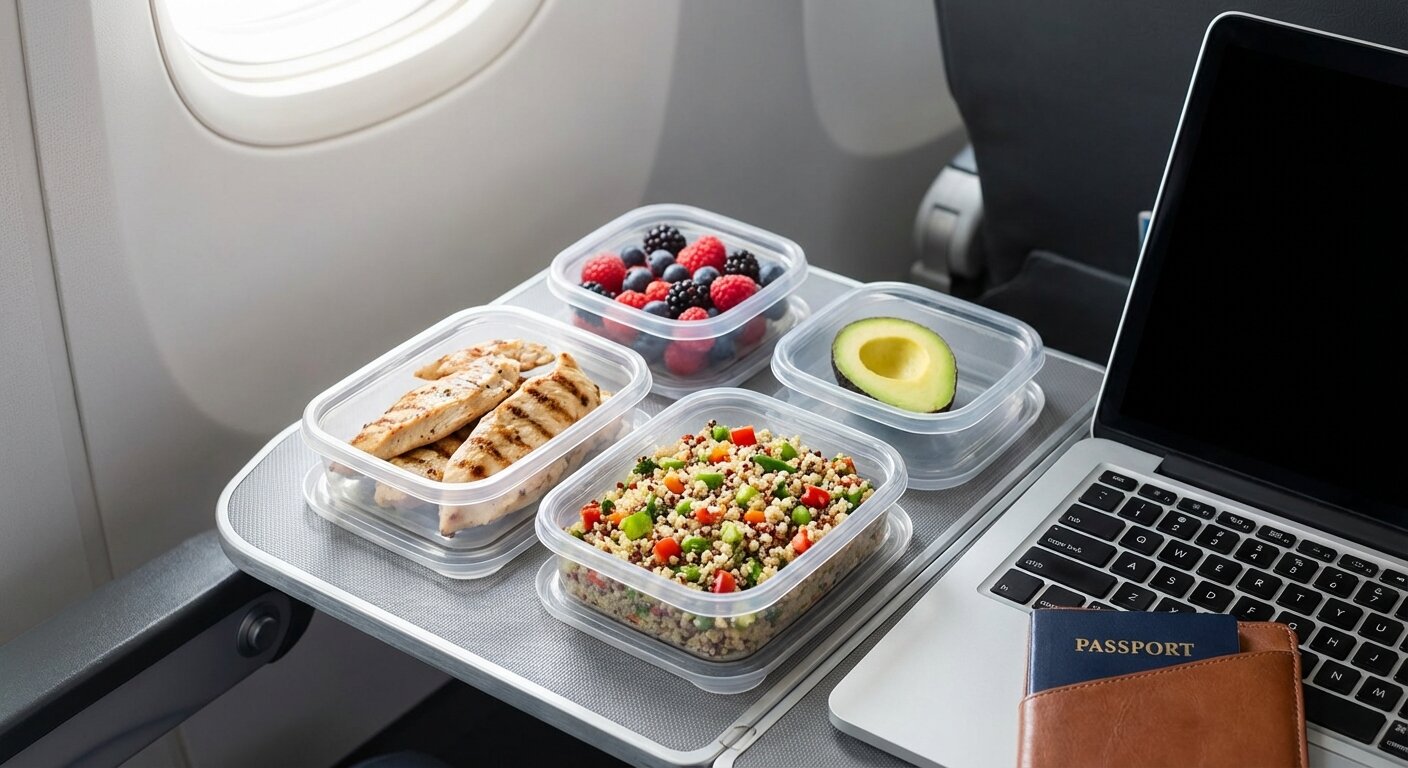
Travel Macros: How to Track Nutrition While Traveling
Complete guide to managing macros while traveling. Learn meal planning strategies,...
Read guide →
Macros for Shift Workers: Complete Guide to Nutrition on Rotating Schedules
Master macro tracking on night shifts and rotating schedules. Learn meal timing, sleep...
Read guide →
Macros During Ramadan: Complete Nutrition Guide for Fasting
Learn how to track macros during Ramadan fasting. Expert guide covering meal timing,...
Read guide →Disclaimer: This content is for informational purposes only. Consult a healthcare provider before making changes to your diet.