Whey vs Plant Protein: Which Is Better for Your Goals?
Reviewed by Dr. Michael Torres, PhD
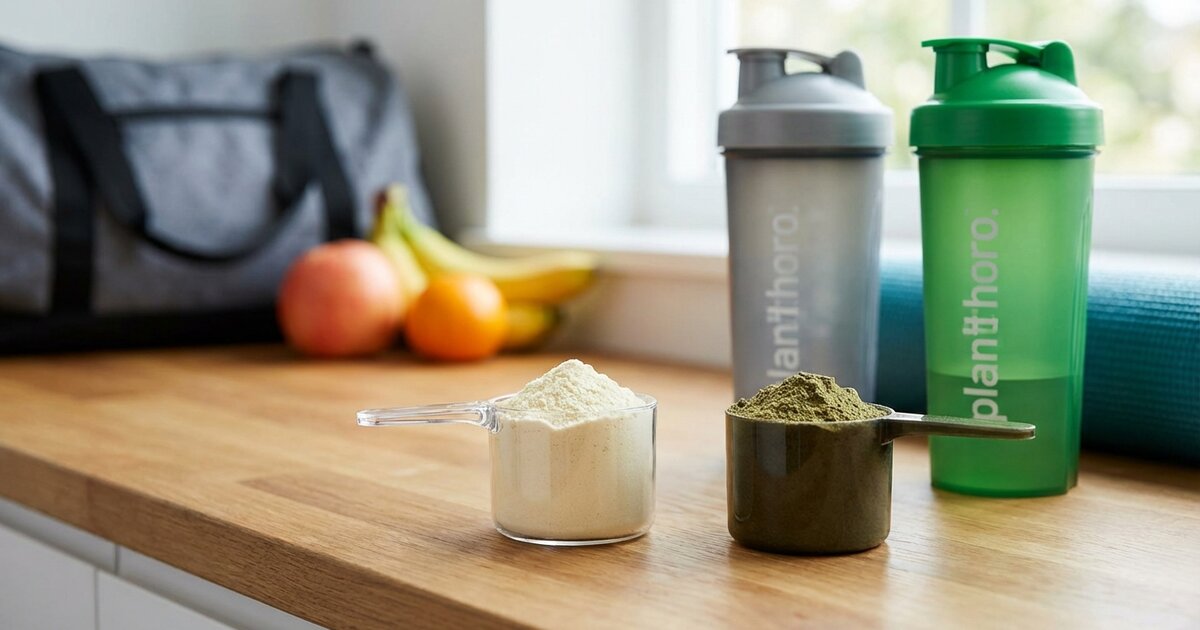
Whey protein has been the gold standard for decades, but plant-based proteins have evolved dramatically. Today’s pea protein blends can rival whey for muscle building—at least according to recent research.
So which should you choose? The answer depends on your dietary preferences, digestive needs, and specific goals. This guide breaks down the complete macro comparison and the science behind each protein type.
Quick Comparison Table
Here’s the head-to-head breakdown per 30g scoop (typical serving):
| Nutrient | Whey Isolate | Whey Concentrate | Plant Blend |
|---|---|---|---|
| Calories | 110 | 120 | 120 |
| Protein | 26g | 24g | 21g |
| Carbs | 1g | 3g | 4g |
| Fat | 0.5g | 1.5g | 2g |
| Fiber | 0g | 0g | 2g |
| Leucine | 2.7g | 2.5g | 1.8g |
Winner for pure protein: Whey isolate Winner for plant-based diets: Quality plant blend
Detailed Macro Breakdown
Whey Protein Isolate (30g scoop)
| Macro | Amount |
|---|---|
| Calories | 110 kcal |
| Protein | 26g |
| Carbohydrates | 1g |
| Sugar | 0.5g |
| Fat | 0.5g |
| Lactose | <1g |
Whey isolate is the most processed form of whey, with lactose and fat largely removed. It’s 90%+ protein by weight and ideal for those wanting maximum protein with minimum extras.
Whey Protein Concentrate (30g scoop)
| Macro | Amount |
|---|---|
| Calories | 120 kcal |
| Protein | 24g |
| Carbohydrates | 3g |
| Sugar | 2g |
| Fat | 1.5g |
| Lactose | 2-3g |
Concentrate is less processed (70-80% protein by weight) and retains some lactose and fat. It’s cheaper than isolate and maintains more naturally occurring nutrients.
For complete information, see our guide to protein powder macros.
Plant Protein Blend (30g scoop, pea + rice)
| Macro | Amount |
|---|---|
| Calories | 120 kcal |
| Protein | 21g |
| Carbohydrates | 4g |
| Fiber | 2g |
| Net Carbs | 2g |
| Fat | 2g |
Quality plant blends combine multiple sources (pea, rice, hemp) to create a complete amino acid profile. The macros are competitive with whey, though protein content per scoop is typically 2-5g lower.
The Science: Muscle Building Comparison
This is the question everyone asks: Is plant protein as effective as whey for building muscle?
What the Research Shows
Recent studies comparing whey and plant proteins have found:
-
Pea protein vs whey (2015 study): No significant difference in muscle thickness gains over 12 weeks when protein amounts were matched.
-
Rice protein vs whey (2013 study): Similar improvements in body composition and exercise performance over 8 weeks.
-
Mixed plant vs whey (2019 study): Plant protein group gained comparable lean mass when consuming slightly higher total protein.
The Leucine Factor
Leucine is the amino acid that triggers muscle protein synthesis. This is where whey has an edge:
| Protein Source | Leucine per 25g Protein |
|---|---|
| Whey | 2.7g |
| Pea protein | 1.8g |
| Rice protein | 2.0g |
| Soy protein | 1.9g |
Whey provides about 50% more leucine per serving. However, the “leucine threshold” for muscle protein synthesis is about 2.5g—which plant proteins can reach with slightly larger servings.
The Practical Bottom Line
For maximum muscle building efficiency: Whey has a 10-20% edge due to higher leucine, complete amino profile, and faster absorption.
For real-world results: Both work. If you eat 0.8-1g protein per pound bodyweight from any quality source, you’ll build muscle. The protein source matters less than total intake.
Which Is Better for Weight Loss?
Winner: Essentially tied
For weight loss, what matters is:
- Total calorie deficit
- Adequate protein to preserve muscle
- Satiety to prevent overeating
Both whey and plant proteins check all three boxes when used properly.
Slight advantages of whey:
- Marginally higher thermic effect (more calories burned digesting)
- May be slightly more satiating (faster absorption triggers fullness signals)
Slight advantages of plant:
- Fiber content aids satiety
- May reduce bloating for lactose-sensitive people (bloating can mask weight loss progress)
Reality: The difference is negligible. Choose whichever you’ll use consistently. Consistency with any protein powder beats optimal choice you skip.
Use our macro calculator to determine your protein needs for weight loss.
Which Is Better for Keto/Low-Carb?
Winner: Whey isolate
For strict keto, every carb counts:
| Protein Type | Carbs per Serving | Keto Fit |
|---|---|---|
| Whey isolate | 1g | Perfect |
| Whey concentrate | 3g | Good |
| Pea protein | 2-3g | Good |
| Mixed plant blend | 3-5g | Acceptable |
| Soy protein | 2g | Good |
Whey isolate is the clear winner with just 1g of carbs. However, most plant proteins fit keto fine—3-5g carbs from a protein shake rarely breaks ketosis.
Watch out for: Flavored proteins often add carbs. A “vanilla” version of any protein might have 3-8g more carbs than unflavored. Always check labels.
For a deeper understanding of how protein fits into different diets, read our guide on what macronutrients are.
Digestion and Tolerance
This is often the deciding factor between whey and plant protein.
Whey Protein Digestion
Pros:
- Fast absorption (ideal post-workout)
- Well-studied and refined
- Smooth texture when mixed
Cons:
- Contains lactose (concentrate more than isolate)
- Can cause bloating, gas, or acne in sensitive individuals
- Dairy allergies make it unusable
Who should avoid whey:
- Lactose intolerant individuals (isolate may be tolerable)
- People with dairy allergies
- Those who experience acne or bloating from dairy
Plant Protein Digestion
Pros:
- No lactose or dairy
- Generally easier on sensitive stomachs
- No dairy-related acne or inflammation
Cons:
- Some types (especially pea) can cause gas
- Fiber content may cause bloating initially
- Taste and texture can be challenging
Who does well with plant protein:
- Vegans and vegetarians
- Those with dairy intolerance
- People who experience dairy-related acne
- Anyone who gets digestive issues from whey
Taste and Mixability
Let’s be honest: this matters for long-term adherence.
Whey Protein
Taste: Ranges from excellent to good. Decades of refinement have produced smooth, palatable flavors. Chocolate and vanilla versions taste genuinely good.
Mixability: Excellent. Whey dissolves easily in water or milk with just shaking. No gritty texture.
Texture: Smooth and creamy when mixed properly.
Plant Protein
Taste: Has improved dramatically but still varies widely by brand. Some taste earthy or chalky. Quality brands (Vega, Orgain, Garden of Life) have achieved good flavor.
Mixability: Generally good but may require a blender for smoothest results. Can be slightly gritty.
Texture: Often thicker and can have a slight graininess. Blending with frozen fruit helps significantly.
Tip: If you’ve tried plant protein years ago and didn’t like it, try again. The products have improved substantially.
Cost Comparison
| Protein Type | Price per lb | Cost per 25g Protein |
|---|---|---|
| Whey concentrate | $12-18 | $0.45-0.65 |
| Whey isolate | $18-30 | $0.65-1.00 |
| Plant blend (quality) | $25-40 | $0.90-1.40 |
| Pea protein (bulk) | $10-15 | $0.40-0.55 |
Winner: Whey concentrate (or bulk pea protein)
Whey concentrate offers the best value for most people. If you need plant-based, buying bulk pea protein is more economical than premium blends—though blends have better amino acid profiles.
Budget tip: Generic/store brand whey is nutritionally identical to premium brands at 30-50% lower cost.
Environmental and Ethical Considerations
Beyond macros, some choose protein based on values:
Plant protein advantages:
- Lower environmental footprint (less water, land, emissions)
- No animal products
- Aligns with vegan/vegetarian ethics
Whey protein considerations:
- Byproduct of cheese production (some argue it reduces dairy industry waste)
- Animal-derived
- Higher environmental impact than plant sources
If environmental or ethical factors matter to you, plant protein wins clearly. If macros and performance are your only concerns, choose based on those factors.
Winner by Goal
| Goal | Best Choice | Why |
|---|---|---|
| Maximum Muscle | Whey (slight edge) | Higher leucine, faster absorption |
| Weight Loss | Either | Both work equally when consistent |
| Keto | Whey isolate | Lowest carbs |
| Dairy Sensitivity | Plant protein | No lactose or dairy |
| Budget | Whey concentrate | Cheapest per gram protein |
| Environment | Plant protein | Lower footprint |
| Vegan/Vegetarian | Plant protein | Only option |
| Post-Workout | Whey | Faster absorption |
| Before Bed | Either (casein ideal) | Both provide sustained protein |
The Bottom Line
For most people, the difference between whey and plant protein is smaller than the marketing would have you believe. Both provide high-quality protein that supports muscle building, weight loss, and overall health.
Choose whey if:
- You tolerate dairy well
- Maximum protein efficiency matters
- Budget is a concern
- You prefer the taste and texture
Choose plant protein if:
- You’re vegan or vegetarian
- Dairy causes digestive issues or acne
- Environmental impact matters to you
- You prefer to avoid animal products
Best approach: Use whichever you’ll actually drink consistently. A shake you skip does nothing for your macros. If whey works for you, stick with it. If you prefer plant, modern blends are nearly as effective.
The 10-20% efficiency advantage of whey disappears entirely if you don’t use it. Adherence beats optimization.
Frequently Asked Questions
Is plant protein as good as whey for building muscle? Nearly. Whey has a slight edge due to higher leucine content and faster absorption, but quality plant proteins (pea + rice blends) are 80-90% as effective. Total daily protein matters more than source.
Which protein powder has better macros? Whey isolate typically wins on pure numbers—more protein per scoop (25-27g vs 20-24g) with fewer carbs and fat. However, high-quality plant proteins have competitive macros.
Is plant protein easier to digest than whey? For many people, yes. Those with lactose intolerance or dairy sensitivity often tolerate plant protein better. However, some plant proteins can cause gas due to fiber content.
Which protein is better for weight loss? Both work equally well for weight loss when protein amounts are matched. Choose based on what you’ll consistently use. Whey may have a slight satiety advantage, but the difference is minor.
Can vegans build muscle without whey? Absolutely. Vegans can build muscle effectively with plant proteins. The key is eating slightly more total protein (0.1-0.2g more per pound bodyweight) to compensate for lower digestibility.
Why is whey protein more popular than plant protein? Whey has been studied longer, costs less per serving, mixes more smoothly, and has a more neutral taste. Plant proteins have improved dramatically but whey remains the gold standard.
Is whey or plant protein better for keto? Whey isolate is typically better for keto—near zero carbs. Some plant proteins have 3-5g carbs per serving from fiber. Check labels, as both vary significantly by brand.
Should I switch from whey to plant protein? Only if you have reasons to: dairy intolerance, ethical concerns, or environmental preference. If whey works for you, there’s no nutritional reason to switch.
Related Articles

Travel Macros: How to Track Nutrition While Traveling
Complete guide to managing macros while traveling. Learn meal planning strategies,...
Read guide →
Macros for Shift Workers: Complete Guide to Nutrition on Rotating Schedules
Master macro tracking on night shifts and rotating schedules. Learn meal timing, sleep...
Read guide →
Macros During Ramadan: Complete Nutrition Guide for Fasting
Learn how to track macros during Ramadan fasting. Expert guide covering meal timing,...
Read guide →Disclaimer: This content is for informational purposes only. Consult a healthcare provider before making changes to your diet.