Banana Macros
Reviewed by Dr. Michael Torres, PhD
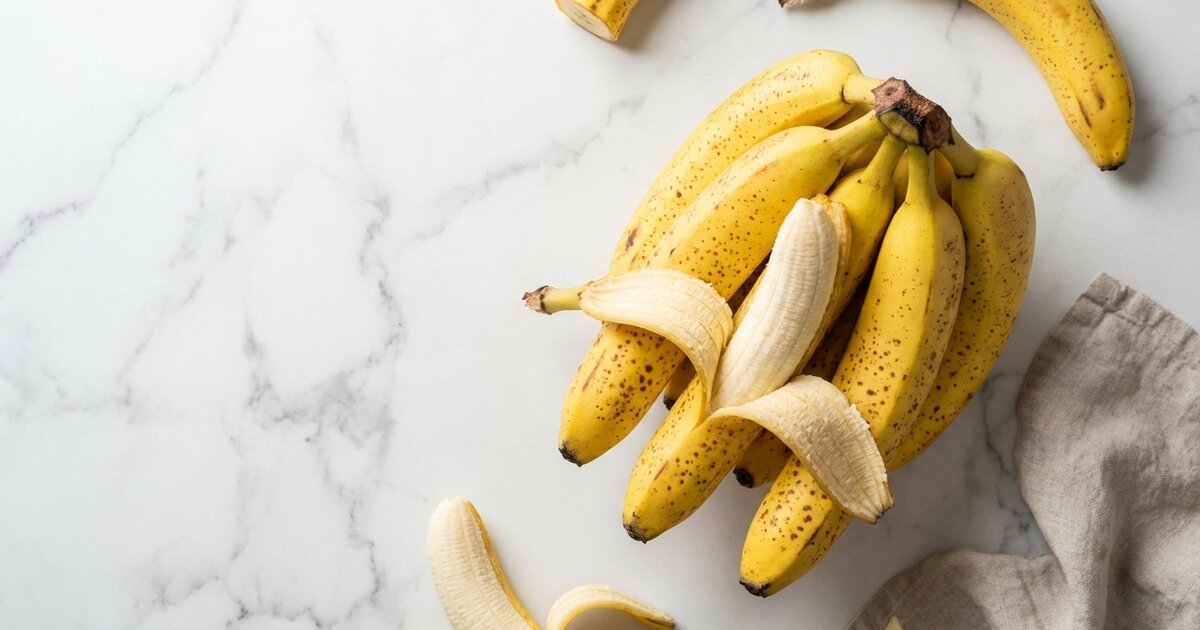
Bananas are nature’s perfect pre-workout snack and one of the most convenient carb sources available. Packed with natural sugars, potassium, and fiber, bananas provide quick energy while fitting easily into any macro-tracking lifestyle. Here’s everything you need to know about banana macros.
Related: Learn more about what macros are and how they impact your diet.
Quick Macro Summary
Per 100g (raw):
| Macro | Amount |
|---|---|
| Calories | 89 kcal |
| Protein | 1.1g |
| Carbohydrates | 23g |
| Fat | 0.3g |
| Fiber | 2.6g |
| Sugar | 12g |
Per medium banana (118g, without peel):
| Macro | Amount |
|---|---|
| Calories | 105 kcal |
| Protein | 1.3g |
| Carbohydrates | 27g |
| Fat | 0.4g |
| Fiber | 3.1g |
| Sugar | 14g |
Banana Size & Quantity Comparison: Every Common Serving
Most banana nutrition guides give you one number (“105 calories per medium banana”) and move on. The problem: bananas vary in size by more than 80% between extra-small and extra-large, and serious macro trackers eat them in combos (think 3-banana smoothies). Here’s the complete reference for every way you actually log bananas.
| Serving | Weight (no peel) | Calories | Protein | Carbs | Fiber | Sugar | Fat | Potassium |
|---|---|---|---|---|---|---|---|---|
| Per 100g (gold standard) | 100g | 89 | 1.1g | 23g | 2.6g | 12g | 0.3g | 358mg |
| Small banana (6-7”) | 101g | 90 | 1.1g | 23g | 2.6g | 12g | 0.3g | 362mg |
| Medium banana (7-8”) | 118g | 105 | 1.3g | 27g | 3.1g | 14g | 0.4g | 422mg |
| Large banana (8-9”) | 136g | 121 | 1.5g | 31g | 3.5g | 17g | 0.5g | 487mg |
| Extra-large banana (9”+) | 152g | 135 | 1.7g | 35g | 4.0g | 19g | 0.5g | 544mg |
| 3-banana protein shake (3 medium + 1 scoop whey + 1 cup milk) | ~480g + add-ins | 535 | 32g | 96g | 9g | 50g | 6g | 1,650mg |
| Sliced over oatmeal (1/2 medium) | 59g | 53 | 0.7g | 14g | 1.6g | 7g | 0.2g | 211mg |
| Banana smoothie bowl (2 medium + yogurt + granola) | ~420g | 460 | 18g | 78g | 8g | 42g | 9g | 1,050mg |
Macro insight: A medium banana is genuinely the safest default to log (105 cal, 27g carbs) — but if you eat bananas regularly, weighing without the peel ends 90% of macro tracking errors. The peel is ~35% of total fruit weight, which is why eyeballing without weighing routinely undercounts by 20-30 calories per banana.
Cooking & Preparation: How Bananas Change When You Cook Them
Bananas are unusual because preparation changes both their macros (when fat is added) and their glycemic impact (when starch converts to sugar). Frozen and raw bananas have identical macros — but baked into bread, the same banana is suddenly a 250-calorie slice. Here’s the real picture:
| Preparation | Base | Per Serving Calories | Protein | Carbs | Fat | Notes |
|---|---|---|---|---|---|---|
| Raw, ripe | 1 medium | 105 | 1.3g | 27g | 0.4g | Baseline |
| Frozen (peeled, then frozen) | 1 medium | 105 | 1.3g | 27g | 0.4g | Identical macros, smoother in smoothies |
| Banana “nice cream” (1 banana blended) | 1 medium | 105 | 1.3g | 27g | 0.4g | Texture changes, macros do not |
| Pancake batter (1 banana + 2 eggs blended, no flour) | 2-pancake serving | 245 | 13g | 28g | 11g | Banana becomes the binder — high-protein breakfast |
| Banana bread (1 slice, ~70g) | 1 slice (1/10 loaf) | 250 | 3g | 33g | 12g | Sugar + butter + flour transform it into a dessert |
| Dehydrated banana chips (1 oz, no oil) | 28g | 95 | 1g | 24g | 0.5g | Concentrated — easy to overeat by weight |
| Fried banana chips (1 oz, with oil) | 28g | 147 | 0.6g | 16g | 9g | Coconut oil adds calories — basically a chip |
| Caramelized in butter | 1 banana + 1 tsp butter | 140 | 1.3g | 27g | 4.4g | Healthy-ish if you stop at 1 tsp butter |
| Banana boat (banana + 1 tbsp PB) | 1 medium + PB | 200 | 5g | 30g | 9g | Best macro pairing for satiety |
Hidden trap: Banana bread tastes healthy but eats like cake. One slice of a typical banana bread loaf contains ~12g added sugar and 12g fat on top of the banana’s natural sugars. If you’re tracking carefully, treat banana bread as dessert, not breakfast.
Macros for Specific Goals
Weight Loss
Bananas catch a lot of unfair “too sugary for weight loss” flak. Reality: a medium banana is 105 calories, 3g fiber, 27g carbs — comparable to a slice of whole-grain bread, but with potassium and a satiety profile that’s actually better thanks to the resistant starch in slightly under-ripe fruit. The macro math: if your cut target is 1,500 calories and 130g protein, a banana is 7% of your daily calories for 1% of protein — fine if it’s paired strategically (banana + Greek yogurt + whey shake hits 280 cal, 35g protein), bad if it’s a standalone snack (105 cal, 1g protein leaves you hungry in 45 min). Choose smaller bananas (90 cal) when cutting strictly, and lean toward greener bananas because the higher resistant starch content slightly lowers the net effective carb count and slows digestion. Use our macro calculator to set your deficit, then see macros for weight loss for full templates.
Muscle Gain
For muscle gain, bananas are arguably the most efficient natural carb on the planet. They’re calorie-dense for fruit (89 cal/100g vs apple’s 52), pre-portioned by nature, require zero prep, and contain enough potassium (422mg per medium) to help with the cramping and water retention issues that come with high-volume training. The classic bulk smoothie — 2 large bananas + 1 cup whole milk + 1 scoop whey + 2 tbsp peanut butter + 1 tbsp honey — hits ~750 cal, 45g protein, 90g carbs, 25g fat in a single blender cup. That’s 27% of a 2,800-cal bulk target without chewing. For pre-workout, one medium banana 30-45 minutes before lifting delivers fast-access glycogen without the GI distress that solid food can cause. See our protein calculator and macros for muscle gain for full bulk programming.
Maintenance
At maintenance, bananas are the carb you don’t need to think about. 1-2 per day is essentially free — 105-210 calories, 27-54g carbs, no fat to displace, and enough potassium to cover 20-40% of daily needs. The strategic move at maintenance is variety: bananas before training (fast energy), oatmeal with banana for steadier breakfasts, and frozen bananas for smoothies in the evening. The single thing to avoid: stacking bananas onto already-carb-heavy meals (banana + bagel + orange juice = 90g carbs and almost no protein). Pair bananas with protein (cottage cheese, Greek yogurt, whey) and you’ll stay full and balanced.
Common Mistakes People Make Tracking Bananas
-
Logging “1 banana” without specifying size. A small banana (90 cal) and an extra-large banana (135 cal) differ by 50% — that’s a meaningful miscount if you eat one daily. If you don’t weigh, default to “medium” (105 cal) and accept ±15% error.
-
Forgetting the peel removes ~35% of weight. If your scale shows a 180g banana with peel, the edible portion is ~117g (close to medium). Tracking apps that default to “1 banana = 105 cal” already assume peeled weight, so don’t double-subtract.
-
Treating banana bread/muffins as banana macros. A slice of banana bread has 250 cal and 12g fat — three times the calories of the banana inside it. The added flour, sugar, and butter dominate. Log banana bread as banana bread.
-
Ignoring ripeness for blood sugar. Yellow-spotted bananas have nearly 2x the glycemic impact of green-tinged bananas. If you’re managing blood sugar or insulin sensitivity, choose firmer, less-ripe fruit and pair with protein or fat.
-
Assuming dried banana chips are “healthy” because they’re fruit. Most commercial banana chips are fried in coconut or palm oil. A 1-oz serving runs 145-160 calories with 9g fat — they eat like potato chips, not like fruit.
-
Stacking multiple bananas into pre-workout without protein. Two bananas pre-workout (210 cal, 54g carbs, 2.6g protein) will spike and crash blood sugar within an hour. Add even 15-20g of protein (whey shake, Greek yogurt) and the energy curve flattens dramatically.
“Bananas get over-villainized in cutting culture and over-glorified in bulking culture. The truth is they’re a near-perfect medium-energy carb — 27 grams in a tidy, portable package with potassium most people aren’t getting elsewhere. The only mistake I consistently see is eating them naked. Always pair a banana with protein and you’ve solved 90% of the ‘is banana good for me’ question.”
— Sarah Chen, MS, RD
What to Pair Bananas With for Balanced Macros
A banana on its own is a one-trick macro: pure carbs, almost no protein, no fat, no satiety past 60-90 minutes. Pair them right and they become some of the most efficient meal building blocks available. Four go-to combos:
- The 35g protein pre/post-workout shake: 1 medium banana + 1 scoop whey + 1 cup milk + ice. ~280 cal, 35g protein, 35g carbs, 4g fat. The most-used combo in lifting culture for a reason.
- The 200-calorie satiety snack: 1 medium banana + 1 tbsp natural peanut butter or almond butter. ~200 cal, 5g protein, 30g carbs, 9g fat. Fat slows the sugar absorption; keeps you full for 2-3 hours.
- The breakfast power bowl: 1 medium banana sliced over 1 cup Greek yogurt + 1/4 cup granola + cinnamon. ~340 cal, 22g protein, 50g carbs, 6g fat. Balanced, fast, no cooking.
- The high-rep training fuel: 1 banana + 2 dates + 10g protein powder blended with water 45 min pre-workout. ~200 cal, 12g protein, 40g carbs. Fast carbs, just enough protein, no GI distress.
For more on how bananas stack up against other portable carb sources, see our oatmeal macros and almond butter macros guides.
Detailed Nutritional Breakdown
Carbohydrate Profile
Bananas are primarily a carbohydrate source, with 23g per 100g of fruit. The carb composition varies based on ripeness:
Green/Unripe Banana:
- Higher resistant starch (up to 80% of carbs)
- Lower sugar content
- Lower glycemic index (around 30)
- Better for sustained energy
Yellow/Ripe Banana:
- Resistant starch converts to simple sugars
- Higher sugar content (12-14g per 100g)
- Moderate glycemic index (around 51)
- Better for quick energy
Brown/Overripe Banana:
- Almost all starch converted to sugar
- Highest glycemic index (around 62)
- Best for immediate energy needs
Fiber Content
Bananas provide 2.6g of fiber per 100g, including:
- Pectin: Water-soluble fiber that moderates blood sugar response
- Resistant starch: Acts like fiber, feeds beneficial gut bacteria
Protein and Fat
Bananas are not a significant protein or fat source:
- Protein: 1.1g per 100g (minimal)
- Fat: 0.3g per 100g (negligible)
This makes bananas ideal for filling carb macros without impacting protein or fat targets.
Key Micronutrients
Bananas are famously rich in:
- Potassium: 358mg per 100g (10% DV) — supports muscle function and hydration
- Vitamin B6: 25% DV — important for energy metabolism
- Vitamin C: 15% DV — antioxidant support
- Magnesium: 7% DV — muscle and nerve function
- Manganese: 14% DV — bone health and metabolism
Banana Size Guide and Macros
Banana sizes vary significantly. Here’s a breakdown:
| Size | Length | Weight (no peel) | Calories | Carbs | Protein |
|---|---|---|---|---|---|
| Extra Small | Under 6” | 81g | 72 | 19g | 0.9g |
| Small | 6-7” | 101g | 90 | 23g | 1.1g |
| Medium | 7-8” | 118g | 105 | 27g | 1.3g |
| Large | 8-9” | 136g | 121 | 31g | 1.5g |
| Extra Large | Over 9” | 152g | 135 | 35g | 1.7g |
Pro tip: The average banana at most grocery stores is medium-sized. When in doubt, log 105 calories and 27g carbs.
Banana Variations and Their Macros
By Type
| Banana Type | Calories/100g | Carbs | Notes |
|---|---|---|---|
| Cavendish (standard) | 89 | 23g | Most common variety |
| Baby bananas | 89 | 23g | Same macros, smaller portion |
| Red bananas | 90 | 23g | Slightly sweeter |
| Plantains (raw) | 122 | 32g | Must be cooked |
| Plantains (cooked) | 116 | 31g | Popular in Latin cuisine |
By Preparation
| Preparation | Calories/100g | Carbs | Fat | Notes |
|---|---|---|---|---|
| Raw | 89 | 23g | 0.3g | Standard |
| Frozen | 89 | 23g | 0.3g | Same macros |
| Dried/chips | 346 | 88g | 1.8g | Concentrated |
| Banana chips (fried) | 519 | 58g | 33g | High fat added |
| Mashed | 89 | 23g | 0.3g | Same macros |
Warning: Banana chips are a macro trap. Fried varieties have 6x the calories of fresh bananas due to added oil.
How Bananas Fit Your Macro Diet
For Pre-Workout Energy
Bananas are ideal 30-60 minutes before training:
- Quick-digesting carbs for immediate energy
- Potassium to prevent cramping
- Low fat and fiber means no stomach issues
Pre-workout combo: 1 medium banana + 20g whey protein = 130 cal, 27g carbs, 21g protein, 1g fat
For Post-Workout Recovery
Pair with protein for optimal recovery:
- Replenishes glycogen stores
- Natural sugars spike insulin for nutrient delivery
Post-workout combo: 1 banana + 1 cup Greek yogurt = 235 cal, 40g carbs, 19g protein, 1g fat
For Bulking
Bananas help hit carb goals easily:
- Calorie-dense compared to vegetables
- Easy to add to shakes and meals
- Convenient, no prep required
Mass gainer shake: 2 bananas + 2 cups milk + 1 scoop protein + 2 tbsp peanut butter = 700 cal, 80g carbs, 45g protein, 25g fat
For Cutting
Use strategically around workouts:
- Stick to smaller bananas (80-100 cal)
- Time around training when you need carbs
- Avoid overripe bananas (higher GI, less filling)
Meal Ideas Using Bananas
Breakfast Options
- Protein Pancakes: Mashed banana + eggs + oats blended and cooked
- Banana Oatmeal: Sliced banana over oatmeal with cinnamon
- Greek Yogurt Bowl: Banana slices + Greek yogurt + granola + honey drizzle
Smoothie Recipes
- Classic Protein Shake: Banana + milk + whey protein + ice
- Green Smoothie: Banana + spinach + almond milk + protein powder
- PB Banana: Banana + peanut butter + chocolate protein + oat milk
Healthy Desserts
- Frozen Banana Bites: Banana slices dipped in dark chocolate, frozen
- Nice Cream: Frozen banana blended = ice cream texture, no added sugar
- Banana Bread Protein Bites: Mashed banana + oats + protein powder, baked
Quick Snacks
- Banana + Peanut Butter: 200 cal, 30g carbs, 7g protein, 9g fat
- Banana + Almonds (14): 205 cal, 30g carbs, 5g protein, 9g fat
- Banana alone: 105 cal, 27g carbs, 1g protein, 0g fat
Comparison to Similar Carb Sources
| Food (per 100g) | Calories | Carbs | Fiber | Sugar |
|---|---|---|---|---|
| Banana | 89 | 23g | 2.6g | 12g |
| Apple | 52 | 14g | 2.4g | 10g |
| Orange | 47 | 12g | 2.4g | 9g |
| Mango | 60 | 15g | 1.6g | 14g |
| White rice (cooked) | 130 | 28g | 0.4g | 0g |
| Sweet potato | 86 | 20g | 3g | 4g |
| Oatmeal (cooked) | 68 | 12g | 1.7g | 0g |
Key insight: Bananas offer more carbs per 100g than most fruits, making them efficient for hitting carb goals. Their potassium content is also superior.
Tips for Tracking Banana Macros
Accurate Measuring
- Weigh without the peel — The peel accounts for about 35% of total weight
- Use a food scale — Banana sizes vary more than you’d think
- Log specific size — Don’t default to “medium” if yours is clearly large
Ripeness Matters for Goals
- Blood sugar management: Choose greener bananas (lower GI)
- Pre-workout: Choose ripe yellow bananas (faster energy)
- Baking: Overripe bananas are sweeter, no added sugar needed
Storage and Prep
- Room temperature: Ripens in 2-3 days
- Refrigerator: Slows ripening (peel darkens but fruit stays good)
- Freezer: Freeze peeled for smoothies (lasts months)
Common Banana Macro Questions
Do bananas make you gain weight? No — bananas have 89 calories per 100g, which is moderate for fruit. Weight gain comes from overall calorie surplus, not individual foods. Bananas are actually quite filling due to fiber and resistant starch.
Are bananas high in sugar? Bananas contain 12g of natural sugar per 100g, which is moderate. This sugar comes with fiber, vitamins, and minerals — unlike added sugars. For context, a can of soda has 39g of added sugar.
When should I eat a banana? Best times:
- Pre-workout (30-60 min before) for energy
- Post-workout for glycogen replenishment
- Breakfast for sustained morning energy
- As a snack when carb-focused
Can I eat bananas on keto? One medium banana has 27g carbs, which exceeds most keto daily limits (20-50g). Bananas are not keto-friendly.
Are green bananas better for macros? Same macros, different digestion. Green bananas have more resistant starch, which acts like fiber and has a gentler blood sugar impact. Choose based on your goals.
The Bottom Line
Bananas provide 89 calories and 23g of carbs per 100g, making them an excellent natural carb source for active individuals. Their potassium content, convenience, and versatility make bananas a staple for anyone tracking macros. Time them around workouts for best results, and choose ripeness based on your energy needs.
Macro summary (medium banana):
- Calories: 105
- Carbs: 27g (great for energy)
- Protein: 1.3g (minimal)
- Fat: 0.4g (negligible)
- Fiber: 3.1g (moderate)
Related Guides:
- Carbohydrates Explained — Understanding this energy macro
- Macros for Athletes — Fueling athletic performance
- Macro Calculator — Get your personalized targets
More Carb Sources:
- Sweet Potato Macros — Complex carb powerhouse
- Oatmeal Macros — Breakfast staple
- White Rice Macros — Quick-digesting carb
- All Food Guides — Browse our complete food database
Related tools: Compare any 2 foods side-by-side · Recipe Macro Calculator · Find your daily macros
Related Articles
2% Milk Macros
2% Milk per 1 cup (240ml): 122.0 cal, 8.0g protein, 12.0g carbs, 5.0g fat. Full macro...
Read guide →
Apple Juice (clean data) Macros
Apple Juice (clean data) per 1 cup (248ml): 114.0 cal, 0.2g protein, 28.0g carbs, 0.3g...
Read guide →
Avocado Oil Macros
Avocado Oil per 1 tbsp (14g): 124.0 cal, 0.0g protein, 0.0g carbs, 14.0g fat. Full macro...
Read guide →Note: Nutrition values are approximate and may vary based on preparation method and source.