Cereal Macros: Complete Nutrition Facts & Calories
Reviewed by Dr. Michael Torres, PhD
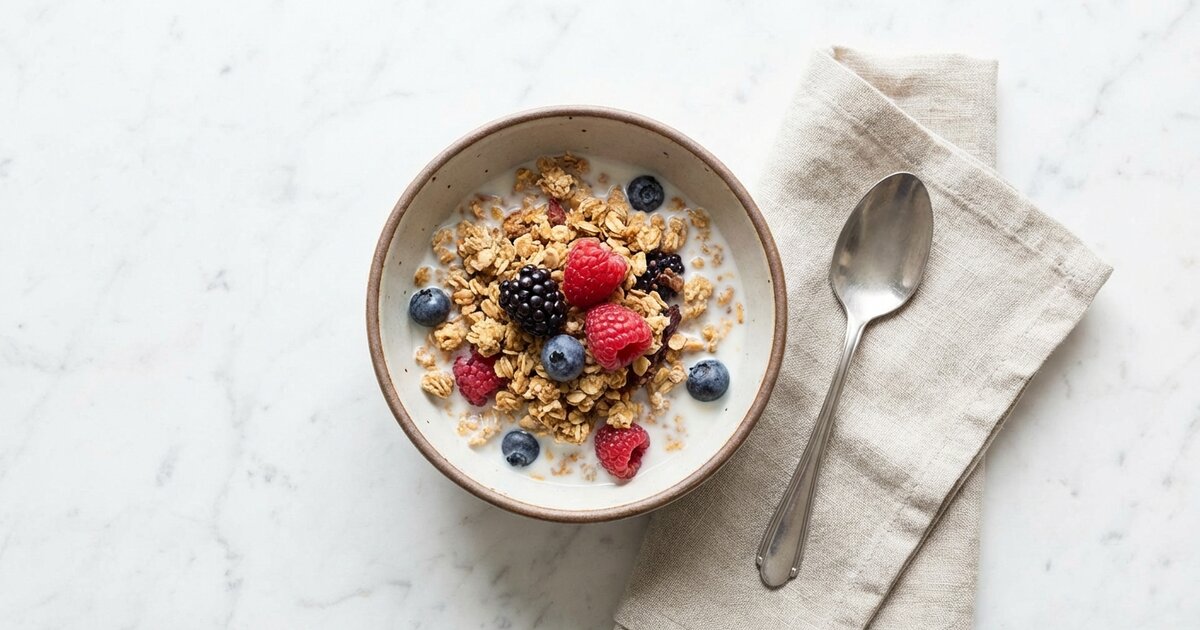
Cereal is a breakfast staple, but the macros vary wildly—from relatively healthy whole grain options to sugar-loaded desserts in disguise. Understanding cereal macros is essential because serving sizes are often smaller than you think, and those carbs add up fast.
This guide covers popular cereal brands with accurate nutrition data so you can make informed breakfast choices.
Cereal Macros: Quick Reference by Brand
Here’s the macro breakdown for popular cereals per labeled serving:
| Cereal | Serving | Calories | Protein | Carbs | Sugar | Fiber |
|---|---|---|---|---|---|---|
| Cheerios | 1 cup (28g) | 100 | 3g | 20g | 1g | 3g |
| Frosted Flakes | 3/4 cup (30g) | 110 | 1g | 27g | 10g | 0g |
| Honey Nut Cheerios | 3/4 cup (28g) | 110 | 2g | 22g | 9g | 2g |
| Special K | 1 cup (31g) | 120 | 6g | 23g | 4g | 1g |
| Raisin Bran | 1 cup (59g) | 190 | 5g | 46g | 18g | 7g |
| Grape-Nuts | 1/2 cup (58g) | 200 | 6g | 47g | 5g | 7g |
| Lucky Charms | 3/4 cup (27g) | 110 | 2g | 22g | 10g | 2g |
| Froot Loops | 1 cup (29g) | 110 | 1g | 26g | 12g | 2g |
| Life | 3/4 cup (32g) | 120 | 3g | 25g | 6g | 2g |
| Cinnamon Toast Crunch | 3/4 cup (31g) | 130 | 1g | 25g | 9g | 2g |
Important: These are dry cereal amounts. Add milk calories separately.
Healthier Cereal Options
| Cereal | Serving | Calories | Protein | Carbs | Sugar | Fiber |
|---|---|---|---|---|---|---|
| Fiber One | 1/2 cup (30g) | 60 | 2g | 25g | 0g | 14g |
| All-Bran | 1/2 cup (31g) | 80 | 4g | 23g | 6g | 10g |
| Kashi GO | 1 cup (52g) | 180 | 9g | 40g | 8g | 8g |
| Plain Shredded Wheat | 2 biscuits (47g) | 160 | 5g | 37g | 0g | 6g |
| Special K Protein | 3/4 cup (32g) | 120 | 10g | 14g | 7g | 3g |
| Grape-Nuts | 1/2 cup (58g) | 200 | 6g | 47g | 5g | 7g |
What makes a healthy cereal:
- High fiber (5g+)
- Low sugar (under 8g)
- Whole grains listed first
- Some protein (3g+)
Understanding Macronutrients
Cereal is primarily a carbohydrate source with varying amounts of fiber and sugar. To understand how carbs fit your diet, learn about what macronutrients are.
The Serving Size Problem
Here’s the issue with cereal tracking: labeled serving sizes are tiny compared to what most people actually pour.
| Cereal Bowl | Labeled Serving | Realistic Pour | Calorie Difference |
|---|---|---|---|
| Cheerios | 1 cup (100 cal) | 1.5-2 cups (150-200 cal) | +50-100 cal |
| Frosted Flakes | 3/4 cup (110 cal) | 1.5 cups (220 cal) | +110 cal |
| Granola | 1/3 cup (140 cal) | 1 cup (420 cal) | +280 cal |
Solution: Measure your cereal the first few times. Use a kitchen scale or measuring cup. You’ll likely be surprised how small a serving actually is.
Cereal + Milk: Complete Macros
Don’t forget the milk! Here’s what a complete bowl looks like:
Cheerios + 1 Cup Skim Milk
| Component | Calories | Protein | Carbs | Fat |
|---|---|---|---|---|
| 1 cup Cheerios | 100 | 3g | 20g | 2g |
| 1 cup skim milk | 83 | 8g | 12g | 0g |
| Total | 183 | 11g | 32g | 2g |
Frosted Flakes + 1 Cup 2% Milk
| Component | Calories | Protein | Carbs | Fat |
|---|---|---|---|---|
| 1 cup Frosted Flakes | 147 | 1g | 36g | 0g |
| 1 cup 2% milk | 122 | 8g | 12g | 5g |
| Total | 269 | 9g | 48g | 5g |
High-Fiber Option + Skim Milk
| Component | Calories | Protein | Carbs | Fat |
|---|---|---|---|---|
| 1/2 cup Fiber One | 60 | 2g | 25g | 1g |
| 1 cup skim milk | 83 | 8g | 12g | 0g |
| Total | 143 | 10g | 37g | 1g |
How Cereal Fits Different Diets
Keto and Low-Carb
Traditional cereals don’t fit keto:
- Even “healthy” cereals have 20-40g carbs
- That’s a full day’s carb budget in one serving
Keto alternatives:
- Nut-based cereals (like Magic Spoon, 4g net carbs)
- Coconut flakes with nuts
- Chia pudding
- Skip cereal, have eggs
Calorie Deficit / Weight Loss
Cereal can work for weight loss with discipline:
- Measure portions precisely
- Choose high-fiber options (more filling)
- Use skim or unsweetened almond milk
- Don’t go back for seconds
Best weight loss cereals: Fiber One, All-Bran, plain Cheerios
High-Carb / Athletes
Cereal is great for carb loading:
- Easy 40-60g carbs with milk
- Quick digesting before workouts
- Convenient post-workout refuel
- Can eat larger portions when bulking
Flexible Dieting
Cereal fits flexible dieting—track it accurately. That means measuring your actual pour, not assuming it’s one serving.
Meal Ideas with Cereal
Quick High-Fiber Breakfast (220 cal, 12g protein, 40g carbs, 2g fat)
- 1/2 cup All-Bran
- 1 cup skim milk
- 1/2 banana sliced
Protein-Boosted Bowl (350 cal, 25g protein, 38g carbs, 8g fat)
- 3/4 cup Special K Protein
- 1/2 cup Greek yogurt
- 1/2 cup skim milk
- Berries
Kids’ Cereal Portioned (250 cal, 10g protein, 42g carbs, 5g fat)
- 1 cup Honey Nut Cheerios (measured)
- 1 cup 2% milk
- Track and enjoy occasionally
Pre-Workout Carbs (300 cal, 10g protein, 58g carbs, 3g fat)
- 1.5 cups Cheerios
- 1 cup skim milk
- 1 tbsp honey
Calculate Your Macros
Use our macro calculator to determine your daily carb targets, then see how cereal fits your breakfast plan.
Cereal Shopping Tips
What to Look For
- Fiber: 5g+ per serving
- Sugar: Under 8g per serving
- Whole grain first ingredient
- Protein: 3g+ per serving (or fortified options 10g+)
- Short ingredient list
What to Avoid
- Sugar in first 3 ingredients
- Zero fiber
- Artificial colors (usually means kids’ cereal)
- “Frosted” or “honey” versions (always more sugar)
Better Choices by Aisle
| Instead Of | Try |
|---|---|
| Frosted Flakes | Corn Flakes + berries |
| Cocoa Puffs | Kashi Cocoa Crisp |
| Lucky Charms | Plain Cheerios + banana |
| Cinnamon Toast Crunch | Life Cinnamon |
| Froot Loops | Cascadian Farm Fruitful Os |
Cereal vs. Other Breakfasts
| Breakfast | Calories | Protein | Carbs | Time |
|---|---|---|---|---|
| Cheerios + milk | 183 | 11g | 32g | 2 min |
| Oatmeal | 158 | 6g | 27g | 5 min |
| 2 eggs + toast | 290 | 18g | 26g | 10 min |
| Greek yogurt + granola | 280 | 18g | 35g | 2 min |
| Protein smoothie | 300 | 30g | 35g | 5 min |
Cereal is quickest and easiest, but typically lower in protein than egg-based breakfasts.
Common Cereal Questions
Why Are Cereal Serving Sizes So Small?
Serving sizes are set to show reasonable calorie counts on labels. Manufacturers use smaller sizes to make nutrition facts look better. A “serving” isn’t necessarily what you’ll eat—it’s a reference point.
Is Cereal Processed Food?
Yes, most cereals are processed. Even “healthy” cereals go through extrusion and cooking. This doesn’t make them bad—but they’re not whole foods like eggs or oatmeal. Minimally processed options include plain shredded wheat and muesli.
Can Cereal Be a Healthy Dinner?
Macros don’t care about meal timing. If cereal fits your remaining macros for the day, it’s fine. However, most cereals are lower in protein than ideal dinner options, so consider adding a protein source.
How Do I Stop Overeating Cereal?
- Measure every time (use a scale or cup)
- Pour into a bowl, not eat from the box
- Buy individual-serve boxes
- Don’t keep trigger cereals in the house
- Pair with protein (Greek yogurt, milk) for satiety
Final Thoughts
Cereal can fit a macro-tracking lifestyle with honest portioning:
- Measure: One serving is smaller than you think
- Track milk: Add those calories and carbs
- Choose wisely: High-fiber, low-sugar options are more filling
- Be realistic: If you always eat 2 cups, track 2 cups
The biggest mistake with cereal is underestimating how much you actually eat. Pour into a measuring cup once, see what a real serving looks like, and track accordingly. With that awareness, cereal can absolutely be part of a balanced macro-friendly diet.
Related Articles

Dragonfruit Macros: Complete Nutrition Guide for Pitaya
Complete macro breakdown of dragonfruit (pitaya). Learn the calories, protein, carbs, and...
Read guide →
Bulgur Macros: Complete Nutritional Guide & Health Benefits
Discover bulgur's complete macro breakdown, nutritional benefits, and how to incorporate...
Read guide →
Radish Macros: Nutrition Facts and Health Benefits
Complete guide to radish macros and nutrition. Learn calories, protein, carbs, and health...
Read guide →Note: Nutrition values are approximate and may vary based on preparation method and source.