Milk Macros: Complete Nutrition Facts & Calories
Reviewed by Dr. Michael Torres, PhD
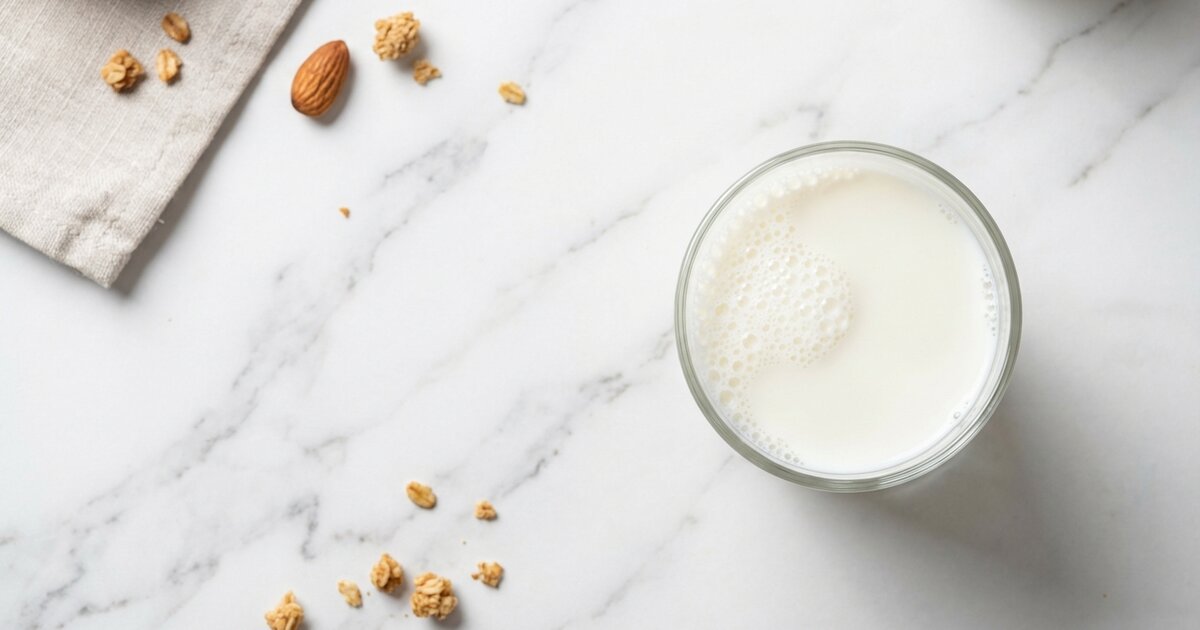
Milk is a macro tracking essential—8 grams of complete protein per cup with a solid hit of calcium and vitamin D. Whether you’re adding it to protein shakes, cereal, or drinking it straight, understanding milk macros helps you make the right choice among whole, 2%, 1%, and skim options.
The macros vary significantly by fat content. Whole milk has nearly double the calories of skim, yet both deliver identical protein. This guide breaks down every type so you can choose based on your goals.
Milk Macros: Quick Reference by Type
Here’s the complete breakdown for one cup (8 oz / 244ml) of each milk type:
| Milk Type | Calories | Protein | Carbs | Fat |
|---|---|---|---|---|
| Whole (3.25%) | 149 | 8g | 12g | 8g |
| 2% (Reduced Fat) | 122 | 8g | 12g | 5g |
| 1% (Low Fat) | 102 | 8g | 12g | 2.4g |
| Skim (Fat Free) | 83 | 8g | 12g | 0.2g |
| Half & Half | 315 | 7g | 10g | 28g |
| Heavy Cream | 821 | 5g | 7g | 88g |
Key insight: Protein and carbs stay constant across all dairy milk types. Only fat (and therefore calories) changes.
Whole Milk Macros
| Serving | Calories | Protein | Carbs | Fat |
|---|---|---|---|---|
| 1 cup (244ml) | 149 | 8g | 12g | 8g |
| 1/2 cup (122ml) | 75 | 4g | 6g | 4g |
| 1 tbsp (15ml) | 9 | 0.5g | 0.7g | 0.5g |
| 8 oz glass | 149 | 8g | 12g | 8g |
| 16 oz (large glass) | 298 | 16g | 24g | 16g |
Whole milk delivers satisfying richness with 8g of fat per cup. The fat helps with absorption of fat-soluble vitamins and keeps you fuller longer.
Best for: Muscle building, kids, those who need more calories, or anyone who prefers the taste.
2% Milk Macros
| Serving | Calories | Protein | Carbs | Fat |
|---|---|---|---|---|
| 1 cup (244ml) | 122 | 8g | 12g | 5g |
| 1/2 cup (122ml) | 61 | 4g | 6g | 2.5g |
| 8 oz glass | 122 | 8g | 12g | 5g |
| 16 oz (large glass) | 244 | 16g | 24g | 10g |
2% milk hits a middle ground—still creamy enough to enjoy, but with fewer calories than whole milk.
Best for: General health, moderate calorie diets, those who find skim milk too thin.
1% Milk Macros
| Serving | Calories | Protein | Carbs | Fat |
|---|---|---|---|---|
| 1 cup (244ml) | 102 | 8g | 12g | 2.4g |
| 1/2 cup (122ml) | 51 | 4g | 6g | 1.2g |
| 8 oz glass | 102 | 8g | 12g | 2.4g |
| 16 oz (large glass) | 204 | 16g | 24g | 5g |
1% milk is lean while retaining some richness. A good compromise for calorie-conscious drinkers.
Best for: Calorie deficit diets, protein shakes where you want some creaminess.
Skim Milk Macros
| Serving | Calories | Protein | Carbs | Fat |
|---|---|---|---|---|
| 1 cup (244ml) | 83 | 8g | 12g | 0.2g |
| 1/2 cup (122ml) | 42 | 4g | 6g | 0.1g |
| 8 oz glass | 83 | 8g | 12g | 0.2g |
| 16 oz (large glass) | 166 | 16g | 24g | 0.4g |
Skim milk maximizes protein per calorie—8g protein for only 83 calories is excellent efficiency.
Best for: Aggressive fat loss, high-protein/low-fat diets, protein shake bases.
Understanding Macronutrients
Milk provides all three macros in one convenient package. To understand how protein, carbs, and fat work together in your diet, check out what macronutrients are.
Non-Dairy Milk Alternatives
For comparison, here’s how plant-based milks stack up (per cup):
| Milk Type | Calories | Protein | Carbs | Fat |
|---|---|---|---|---|
| Dairy (whole) | 149 | 8g | 12g | 8g |
| Almond (unsweetened) | 30 | 1g | 1g | 2.5g |
| Oat | 120 | 3g | 16g | 5g |
| Soy | 80 | 7g | 4g | 4g |
| Coconut (unsweetened) | 45 | 0g | 2g | 4g |
| Cashew (unsweetened) | 25 | 1g | 1g | 2g |
Key differences:
- Protein: Dairy and soy milk lead; almond/coconut have almost none
- Carbs: Oat milk is highest; almond/coconut lowest
- Calories: Almond and cashew lowest; dairy and oat highest
For macro tracking, soy milk most closely resembles dairy nutritionally.
How Milk Fits Different Diets
Keto and Low-Carb
Milk is challenging for keto—12g carbs per cup adds up fast. Better options:
- Heavy cream: 0.4g carbs per tbsp
- Unsweetened almond milk: 1g carb per cup
- Half & half: 10g carbs per cup (use sparingly in coffee)
If you must have dairy milk on keto, limit to 1/4 cup (3g carbs) in coffee.
Calorie Deficit / Weight Loss
Choose based on your calorie budget:
- Skim milk: Best calorie efficiency (8g protein for 83 calories)
- 1%: Good balance of taste and calories
- 2%: Reasonable if calories allow
Milk is an easy way to add protein to your day, but the calories add up if you drink multiple glasses.
High-Protein Diets
Milk is convenient for hitting protein goals:
- Add to protein powder for 35-40g protein shakes
- Drink a glass with meals (+8g protein)
- Use in oatmeal instead of water
Consider Fairlife or similar ultra-filtered milks (13g protein per cup) for even more protein.
Muscle Building (Bulking)
Whole milk is a bulking classic:
- 149 calories per cup helps with calorie surplus
- Quality protein for muscle synthesis
- Easy to consume (drink your calories)
- GOMAD (gallon of milk a day) is an old-school bulking method
Meal Ideas with Milk
Post-Workout Shake (380 cal, 42g protein, 35g carbs, 8g fat)
- 1 cup whole milk
- 1 scoop whey protein
- 1 banana
- 1 tbsp peanut butter
High-Protein Oatmeal (350 cal, 18g protein, 45g carbs, 10g fat)
Overnight Oats (400 cal, 15g protein, 55g carbs, 12g fat)
- 1/2 cup oats
- 1 cup 2% milk
- 1 tbsp chia seeds
- Berries
Protein Coffee (150 cal, 8g protein, 12g carbs, 8g fat)
- 8 oz coffee
- 1 cup whole milk (or use it as a latte base)
Chocolate Milk Recovery (180 cal, 10g protein, 26g carbs, 5g fat)
- 1 cup 2% milk
- 2 tbsp chocolate syrup
- Classic post-workout drink
Calculate Your Macros
Use our macro calculator to determine your daily protein, carb, and fat goals, then decide which milk type fits best.
Special Milk Types
Lactose-Free Milk
Same macros as regular milk—just with lactase enzyme added to break down lactose. Choose your fat percentage as normal.
| Type | Calories | Protein | Carbs | Fat |
|---|---|---|---|---|
| Lactose-free whole | 149 | 8g | 12g | 8g |
| Lactose-free 2% | 122 | 8g | 12g | 5g |
| Lactose-free skim | 83 | 8g | 12g | 0.2g |
Ultra-Filtered Milk (Fairlife)
Higher protein, lower carbs through ultrafiltration:
| Type | Calories | Protein | Carbs | Fat |
|---|---|---|---|---|
| Fairlife whole | 150 | 13g | 6g | 8g |
| Fairlife 2% | 120 | 13g | 6g | 4.5g |
| Fairlife fat-free | 80 | 13g | 6g | 0g |
For macro trackers: Ultra-filtered milk is superior—more protein, fewer carbs. Worth the price premium if protein efficiency matters.
Organic Milk
Same macros as conventional milk. “Organic” refers to farming practices, not nutrition. Choose based on personal preference and budget.
Buying and Storage Tips
Choosing Milk
- Expiration date: Check carefully—milk spoils
- Ultra-pasteurized: Lasts longer unopened
- Grass-fed: Same macros, potentially more omega-3s
- A2 milk: Easier to digest for some; same macros
Storage
- Refrigerate immediately at 35-40°F
- Keep in back of fridge (coldest spot)
- Opened milk: Use within 7-10 days
- Never leave out more than 2 hours
Freezing Milk
You can freeze milk for up to 3 months:
- Leave room for expansion
- Thaw in refrigerator
- Shake well after thawing (fat separates)
- Best used for cooking after freezing
Common Milk Questions
Does Milk Help Build Muscle?
Yes. Milk provides:
- Complete protein with all essential amino acids
- Casein (slow-digesting) and whey (fast-digesting)
- Calories for muscle growth
- Calcium for bone health
Research shows milk is effective for muscle protein synthesis after exercise.
Is Whole Milk Unhealthy?
No. Recent research has moved away from vilifying full-fat dairy. Whole milk:
- Provides fat-soluble vitamin absorption
- May not increase heart disease risk
- Keeps you fuller than skim
- Fine for most healthy people
Choose based on your macro goals, not fear of fat.
Which Milk Is Best for Weight Loss?
Skim or 1% if calories are tight. But any milk can fit into a weight loss diet if tracked properly. Whole milk at 149 calories isn’t excessive—it’s about total daily intake.
Final Thoughts
Milk is a convenient, nutritious macro source that fits most diet approaches. The key is choosing the right type for your goals:
- Weight loss: Skim or 1% (maximize protein per calorie)
- Muscle building: Whole milk (extra calories help)
- General health: 2% (balanced approach)
- Keto: Avoid or use heavy cream/almond milk
- High protein: Ultra-filtered (Fairlife) for bonus protein
Track your milk consumption—those 8g protein cups add up, but so do the calories if you’re not paying attention. One glass fits almost any diet; four glasses changes the math significantly.
Related Articles

Dragonfruit Macros: Complete Nutrition Guide for Pitaya
Complete macro breakdown of dragonfruit (pitaya). Learn the calories, protein, carbs, and...
Read guide →
Bulgur Macros: Complete Nutritional Guide & Health Benefits
Discover bulgur's complete macro breakdown, nutritional benefits, and how to incorporate...
Read guide →
Radish Macros: Nutrition Facts and Health Benefits
Complete guide to radish macros and nutrition. Learn calories, protein, carbs, and health...
Read guide →Note: Nutrition values are approximate and may vary based on preparation method and source.