Spinach Macros: Complete Nutrition Facts & Calories
Reviewed by Dr. Michael Torres, PhD
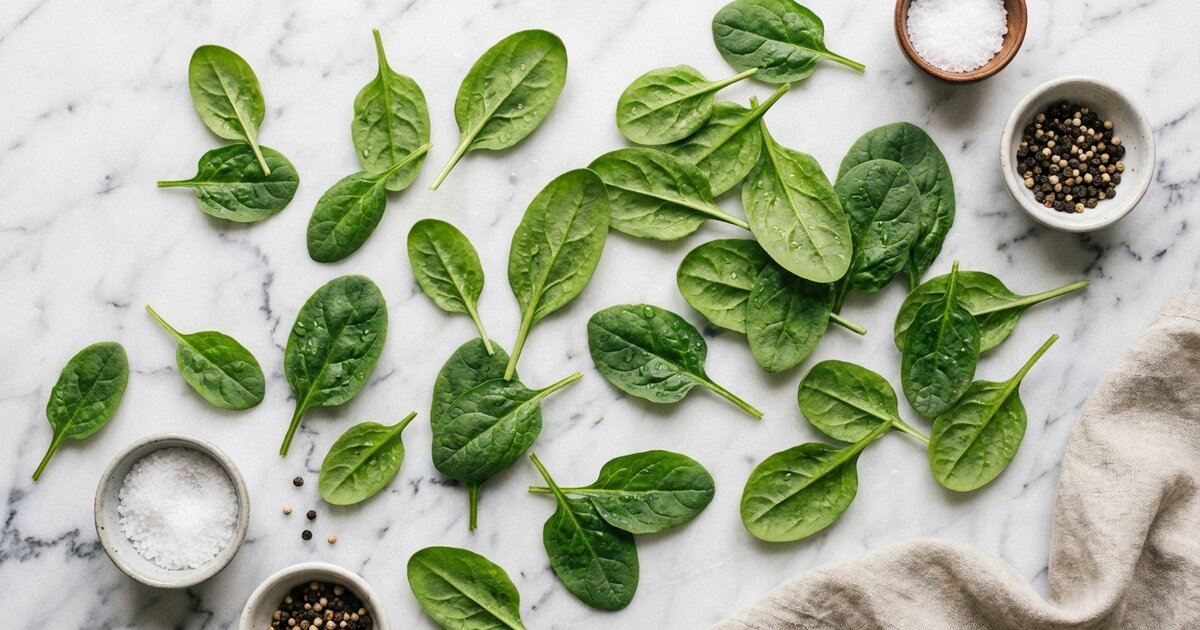
Spinach is the ultimate macro-friendly vegetable—7 calories per cup with nearly zero carbs and packed with vitamins and minerals. You can eat massive amounts of spinach without affecting your calorie or carb budget, making it perfect for volume eating on any diet.
This guide covers spinach macros so you can maximize this nutritional powerhouse.
Spinach Macros: Quick Reference
Here’s the complete spinach nutrition breakdown:
| Serving | Calories | Protein | Carbs | Fiber | Net Carbs |
|---|---|---|---|---|---|
| 1 cup raw (30g) | 7 | 0.9g | 1.1g | 0.7g | 0.4g |
| 2 cups raw (60g) | 14 | 1.8g | 2.2g | 1.4g | 0.8g |
| 1 cup cooked (180g) | 41 | 5.3g | 6.8g | 4.3g | 2.5g |
| 100g raw | 23 | 2.9g | 3.6g | 2.2g | 1.4g |
| 1 oz raw (28g) | 6 | 0.8g | 1g | 0.6g | 0.4g |
Key insight: Raw spinach is essentially free food from a macro perspective. Even 5 cups is only 35 calories.
Raw vs. Cooked Spinach
Cooking dramatically changes spinach volume:
| Form | Amount | Calories | Net Carbs |
|---|---|---|---|
| Raw | 1 cup | 7 | 0.4g |
| Cooked | 1 cup | 41 | 2.5g |
| Raw equivalent of 1 cup cooked | ~6 cups | 41 | 2.4g |
What this means: 1 cup cooked spinach = 6 cups raw spinach nutritionally. When tracking, note whether you’re measuring raw or cooked.
Understanding Macronutrients
Spinach is extremely low in all macros while being micronutrient-dense. To understand how this fits your nutrition, learn about what macronutrients are.
Spinach vs. Other Leafy Greens
| Green (1 cup raw) | Calories | Net Carbs | Protein |
|---|---|---|---|
| Spinach | 7 | 0.4g | 0.9g |
| Kale | 33 | 5.4g | 2.2g |
| Romaine | 8 | 0.7g | 0.6g |
| Arugula | 5 | 0.4g | 0.5g |
| Mixed greens | 9 | 0.8g | 0.7g |
Spinach is among the lowest-calorie greens with good micronutrient density.
How Spinach Fits Different Diets
Keto and Low-Carb
Spinach is a keto superfood:
- Virtually zero net carbs (0.4g per cup raw)
- Eat unlimited amounts
- Perfect base for salads
- Adds volume without carbs
Calorie Deficit / Weight Loss
Spinach is perfect for volume eating:
- 7 calories per cup—essentially free
- High fiber promotes fullness
- Add to any meal for bulk
- Makes portions look bigger
Volume eating tip: Add 2-3 cups spinach to meals to increase size without calories.
High-Protein Diets
While spinach isn’t high-protein, it:
- Adds nutrients without crowding protein foods
- Works as a base for high-protein meals
- Provides iron (pair with vitamin C for absorption)
Flexible Dieting
Spinach fits flexible dieting as a free food—track it if you’re precise, but most people don’t bother counting spinach calories.
Meal Ideas with Spinach
Giant Salad (150 cal, 15g protein, 10g carbs, 6g fat)
- 3 cups spinach: 21 cal
- 3 oz grilled chicken: 100 cal
- 1 oz feta: 30 cal
- Balsamic dressing (1 tbsp): 15 cal
Protein Smoothie (280 cal, 30g protein, 25g carbs, 4g fat)
- 2 cups spinach: 14 cal
- 1 scoop protein powder: 120 cal
- 1 banana: 105 cal
- 1 cup water
- Can’t taste the spinach!
Sautéed Spinach Side (80 cal, 6g protein, 5g carbs, 5g fat)
- 6 cups raw spinach (cooks to 1 cup): 41 cal
- 1 tsp olive oil: 40 cal
- Garlic, salt, pepper
Egg White Scramble (120 cal, 22g protein, 3g carbs, 2g fat)
- 1 cup egg whites: 105 cal
- 2 cups spinach: 14 cal
- Cherry tomatoes
Spinach Wrap Hack (Save ~100 cal)
Replace tortilla with large spinach leaves for wraps—saves 100+ calories vs. tortilla.
Calculate Your Macros
Use our macro calculator to set your daily targets, then fill with spinach freely.
Spinach Nutrition Beyond Macros
Spinach is a micronutrient powerhouse:
| Nutrient | Per Cup Raw | % Daily Value |
|---|---|---|
| Vitamin K | 145mcg | 121% |
| Vitamin A | 141mcg | 16% |
| Folate | 58mcg | 15% |
| Vitamin C | 8mg | 9% |
| Iron | 0.8mg | 4% |
| Magnesium | 24mg | 6% |
Vitamin K note: One cup provides more than a full day’s vitamin K. If you take blood thinners (warfarin), maintain consistent spinach intake rather than varying wildly.
Fresh vs. Frozen vs. Canned
| Form | Calories (1 cup cooked) | Notes |
|---|---|---|
| Fresh (cooked) | 41 | Best texture |
| Frozen | 41 | Similar nutrition, convenient |
| Canned | 44 | Higher sodium, softer |
Frozen is fine: Frozen spinach has nearly identical nutrition and is already washed/chopped. Great for cooking.
Tracking Spinach Accurately
Raw Measurement
- Very loose pack: 1 cup = ~30g
- Volume varies significantly
- Weigh for accuracy if it matters
Cooked Measurement
- 1 cup cooked = about 180g
- Much denser than raw
- Use cooked entries when applicable
When to Bother Tracking
For most macro trackers, spinach is so low-calorie you don’t need to track it precisely. Exception: if you’re eating very large amounts (5+ cups cooked), the calories do add up.
Spinach Storage Tips
Fresh Spinach
- Refrigerate immediately
- Keep in original container or loosely wrapped
- Use within 5-7 days
- Wilted spinach still works for cooking
Frozen Spinach
- Lasts 10-12 months in freezer
- Thaw and squeeze out excess water before cooking
- Don’t use frozen raw—texture is wrong
Washing Fresh Spinach
- Rinse even “pre-washed” spinach
- Soak briefly, lift out of water
- Spin dry in salad spinner
- Or buy baby spinach (cleaner, tender)
Common Spinach Questions
Is Spinach Really Good for Iron?
Yes and no. Spinach contains iron, but it’s non-heme iron that absorbs poorly (~2-5%). Spinach also contains oxalates that further block absorption. For iron, pair with vitamin C (lemon juice on salad) or rely on meat sources.
Does Cooking Spinach Destroy Nutrients?
Some vitamin C is lost, but cooking increases absorption of beta-carotene and makes certain minerals more available. Both raw and cooked spinach are nutritious—vary your preparation.
Can I Eat Too Much Spinach?
Excessive spinach (multiple cups daily, ongoing) could contribute to kidney stones in susceptible people due to oxalates. For most people, normal consumption is perfectly safe.
Why Does Spinach Shrink So Much When Cooked?
Spinach is 91% water. Heat releases that water and collapses the cell structure. This is why 6 cups raw becomes 1 cup cooked.
Is Baby Spinach Different from Regular?
Baby spinach is just young spinach leaves—same plant, harvested earlier. It’s more tender, milder flavor, and often cleaner. Macros are essentially identical.
Final Thoughts
Spinach is as close to a “free” food as you can get:
- 7 calories per cup raw—essentially nothing
- 0.4g net carbs—perfect for keto
- Loaded with vitamins K, A, C—exceptional nutrition
- Versatile—salads, smoothies, sautéed, soups
For macro trackers, spinach adds volume, nutrition, and satisfaction without affecting your numbers. Add it to everything, eat as much as you want, and enjoy one of the healthiest foods on the planet with zero guilt.
Related Articles
Dragonfruit Macros: Complete Nutrition Guide for Pitaya
Complete macro breakdown of dragonfruit (pitaya). Learn the calories, protein, carbs, and...
Read guide →
Bulgur Macros: Complete Nutritional Guide & Health Benefits
Discover bulgur's complete macro breakdown, nutritional benefits, and how to incorporate...
Read guide →
Radish Macros: Nutrition Facts and Health Benefits
Complete guide to radish macros and nutrition. Learn calories, protein, carbs, and health...
Read guide →Note: Nutrition values are approximate and may vary based on preparation method and source.